India in Central Asia: Time for a New Strategy
This paper introduces the dilemma of both India and Russia, whose state-owned energy companies are forced to operate in a region where Chinese government corporations have been dominant.

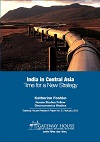 Courtesy: Gateway House
This paper introduces the dilemma of both India and Russia, whose state-owned energy companies are forced to operate in a region where Chinese government corporations have been dominant.
India and Japan have designed their collaborations over the years to be a win-win for both sides. Now, they are willing to collaborate on long-term initiatives, based on intrinsic factors of inter-dependent competencies – rather than on the defence of an extrinsic threat of a common enemy.
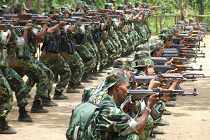 Courtesy: Manipur Police/WikimediaCommons
What have economic blockades in India's North East achieved? For one, they choked off the supply chain of an already isolated region. With Myanmar showing signs of warming towards India, New Delhi must establish ties with its eastern neighbour, but first, it needs to fix Manipur’s broken socio-political landscape.

Amidst myriad country groupings that already exist – BRICS, IBSA, APEC, SCO and many others – a new initiative in the Pacific is looking to integrate more powerful countries to form a multilateral free trade agreement – the Trans Pacific Partnership. How important is this towards the reshaping of trade and power?
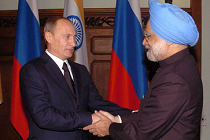 Courtesy: PMO
The India-Russia relationship has seen much progress over the past year - 30 MoU's were signed, two Russian nuclear reactors were set up in India and visa regimes have been eased considerably. But will this be enough to lift the relationship from the benign neglect of the past?
 Courtesy: Gateway House
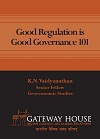
There is an immediate need for observance of good governance in regulation and a restructuring of the regulatory architecture. Key to this is the recovery of ground lost by the regulator in ensuring market integrity
Shipra Tripathi, Vice President - International Business for Kirloskar Brothers, writes from Myanmar on India's relationship with its neighbour and also the changes taking place in the country due to increasing investments, business opportunities and China's influence in the region.
 Courtesy: PMO
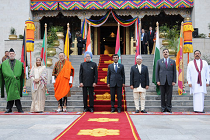
Creating a neighbourhood of compatible interests in South Asia isn’t easy, especially when intra-regional trade accounts for only 5% of total trade in the region. However, the region has seen considerable progress in the past year. India is well poised to lead the change, starting with the upcoming SAARC summit.
Gateway House’s Hari Seshasayee interviewed Nicolas Krul. A stout defender of European unity, Krul discussed the origins of the crisis, the lessons learned, possible solutions and the opportunities for the emerging world.
Ambassador Kishan Rana, a veteran diplomat and now Author, discusses the confluence of business and foreign policy in India in an exclusive interview with Gateway House.