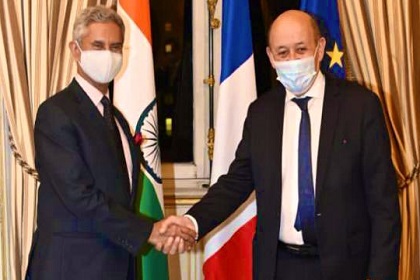
FM France and India Courtesy: S. Jaishankar/Twitter
14 March 2022

India-France partnership, galvanised by geopolitics

India and France have common interests bilaterally and multilaterally, and these are increasingly forging together. India must now step up its commitments to trade, technology and defence, all areas where France has an expertise and can make a greater contribution as India’s old allies like Russia become vulnerable.

TDB_car_151021 Courtesy: TDB
24 February 2022

Enhancing Regional Financial Intermediation in the Indo-Pacific

Financial intermediaries are critical lubricants for business, growth and development. The Indo-Pacific countries are industrializing, but smaller nations lag behind economically. The Quad countries can aid the advancement of the financial architecture in the Indo-Pacific by helping to develop an ecosystem, modelled on the examples of Japan and India.

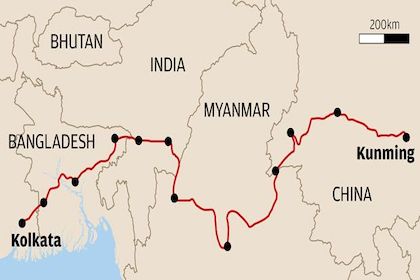
bcim corridor Courtesy: Institute of Peace and Conflict Studies
9 November 2021

Physical connectivity in the Bay of Bengal

China is a clear winner in the physical connectivity stakes in the Bay of Bengal, and there's a reason a why: Its projects are connected to one another, from rail to road to port. While India also has some successful cross-border road and rail infrastructure projects, they are often an extension of an existing railway line or highway, not specific to the connectivity needs of the region. India can win by focussing instead on building infrastructure to maximise the vast maritime potential of the Bay of Bengal, especially the Andaman and Nicobar Islands that give India access to critical sea channels and trade routes.

Growing Locally Courtesy: Shutterstock
7 October 2021

Growing locally

Geographical Indication (GI) tags can be ready revenue generators today, especially for India. The country's robust global e-commerce system and recent domestic drone policy can help build a strong GI ecosystem and boost India's soft power. The government must lend its support to the industry, learning from European and Chinese examples.

Sanctions,-,Just,Ahead Courtesy: Shutterstock
5 August 2021

Are counter-sanctions effective against sanctions?

Sanctions are an important foreign policy tool, used especially by the West against its adversaries. Now, these rivals are retaliating with counter-sanctions. Are these effective? How does this impact global politics? Where does India stand in this free-for-all sanctions era?

Countering China's Maritime Greyzone activities Courtesy:
22 July 2021

Countering China’s Maritime Grey Zone Activities

On 15 July, Gateway House co-hosted a webcast with Konrad-Adenauer-Stiftung (KAS) on 'Countering China’s Maritime Grey Zone Activities'. The panel discussed the potential strategies that smaller nations in the region can adopt to overcome the challenges of Chinese maritime grey zone activities, and the role of regional maritime powers in capability-building of maritime law enforcement agencies.

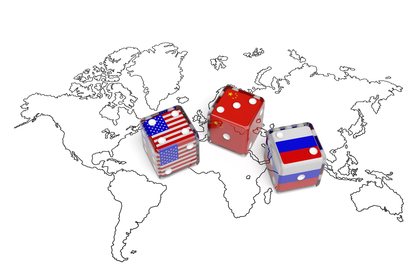
sanctions and counter-sanctions Courtesy: Shutterstock
15 July 2021

Sanctions and counter-sanctions

For years, Western countries have used sanctions as a means of economic warfare against their adversaries. Now, China and Russia are utilising the same tactic against the West. The United Nations Security Council is paralysed by differences between the five permanent members, leaving the tools of unilateral sanctions and counter-sanctions to proliferate at the cost of UN-approved multilateral sanctions.

India Italy Social media-2 Courtesy:
8 July 2021

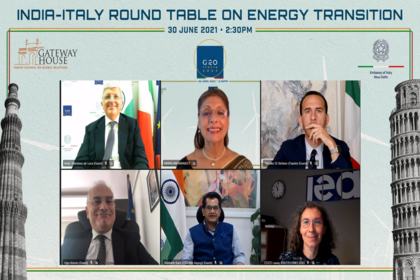
India-Italy Round Table on Energy Transitions

Gateway House and the Embassy of Italy in New Delhi co-hosted the India-Italy Round Table on Energy Transitions. Indian and Italian companies involved across in the energy ecosystem came together to discuss potential collaborations. India is energy dependent and Italy has an innovative energy industry. The two countries can partner on new technologies, trade, financing mechanisms and to update regulations for a new energy era.

Securing India's energy needs Courtesy: Shutterstock
8 July 2021

Securing India’s energy needs

India’s oil consumption and imports are likely to resume their upward trajectory as the economy opens up, after a temporary drop due to the pandemic. To secure its energy needs, the country should shift course from investing in oil and gas assets of emerging economies to those of developed nations. The oil-rich Organisation for Economic Co-operation and Development (OECD) countries, such as Canada, Norway, and the U.S. can be given special consideration.