bimstec climate Courtesy: @BimstecInDhaka
12 May 2022

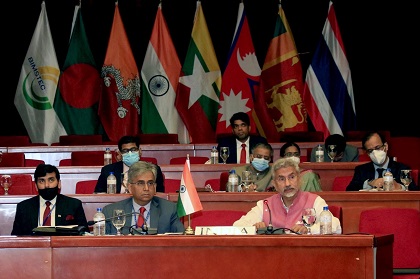
Mainstreaming the climate agenda in BIMSTEC

The rejuvenated BIMSTEC, with a new charter in hand, is now expanding its ambition and mission. One such area is climate change, which needs greater attention as it will have implications for the Bay of Bengal and beyond. With their unique climate conditions and action plans can together create a model for regional cooperation.


B508BED1-BCE9-4835-8B71-E687EAC37621 Courtesy: Twitter- Narendra Modi
7 May 2022

India and France are reliable partners

The strength and trust in the India-FRANCE bilateral was evident during the May 4th visit of Prime Minister Modi to Paris. Beyond the difficult discussions on multilateral issues, the partnership has been deepened in several key areas of cooperation, from defence to education, climate, energy, digitalisation and technical collaboration. Energy and digitalisation are two particularly bright spots for future collaboration.

unnamed (1) Courtesy: Ministry of External Affairs, India
7 April 2022

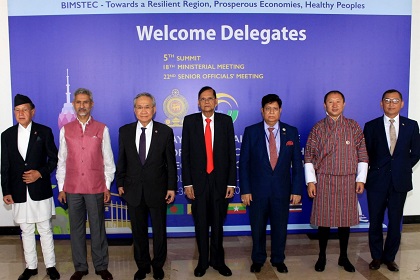
A formal, opportune BIMSTEC

The recently concluded BIMSTEC summit is now a regional intergovernmental organization with a formal charter, giving it a clear mission and legality and a destiny linked to South and South East Asia. It is now better equipped to accelerate economic development for the fifth of the world’s population, which contributes only 4% of global GDP.

bimstec 2022 Courtesy: BIMSTEC
31 March 2022

BIMSTEC steps forward

BIMSTEC is of special importance to India as it is a crucial link between the Neighbourhood First and Act East policies. This almost 25 year old multilateral can contribute to the Indo-Pacific region by addressing challenges in strategic areas of regional connectivity, security cooperation, free trade, and geoeconomic ties with external partners.

DRUK HYDRO DAM Courtesy: Druk Green Power Ltd
18 November 2021

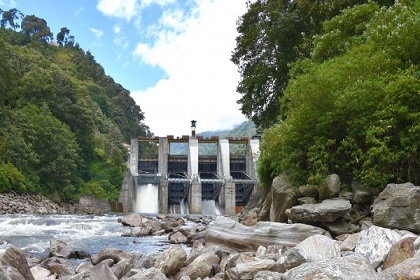
Bay of Bengal connectivity

The Bay of Bengal is gaining relevance as a significant sub-region within the Indo-Pacific. Despite its importance to regional security, there is inadequate financial, physical, and energy connectivity. India must use its strategic and political pre-eminence and influence in the sub-region to pursue deeper connectivity with Bangladesh, Myanmar, Thailand, Nepal, and Sri Lanka and to block China's growing influence.

The Bay of Bengal: The next battle Courtesy: Shutterstock
28 October 2021

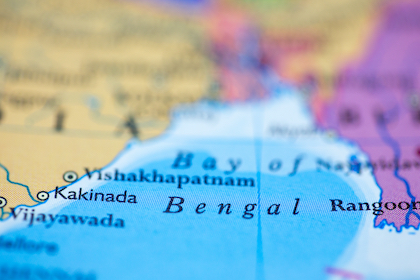
Bay of Bengal: Building tech connectivity

The Bay of Bengal is a natural bridge between South and South-East Asia, which New Delhi seeks to optimise. But progress on India's Act East policy has been slow, creating a space for China's Belt and Road Initiative to step into. While India cannot match China’s cheque-book diplomacy, it can use its start-up industry to pursue a combination of physical, technological and financial projects to improve regional connectivity.

Growing Locally Courtesy: Shutterstock
7 October 2021

Growing locally

Geographical Indication (GI) tags can be ready revenue generators today, especially for India. The country's robust global e-commerce system and recent domestic drone policy can help build a strong GI ecosystem and boost India's soft power. The government must lend its support to the industry, learning from European and Chinese examples.

Indian Tech’s China Divergence Courtesy: Shutterstock
9 September 2021

India-China: Diverging tech trajectories

The simultaneous rise of India's tech unicorns with the unexpected crackdown by China on its star tech players, is an interesting study. India will certainly be a beneficiary of China's move, which is likely to scare foreign capital away. There's plenty on offer in India, with nearly 60 IPOs scheduled for a 2021 listing.

jpg Courtesy: The Times of India
12 August 2021

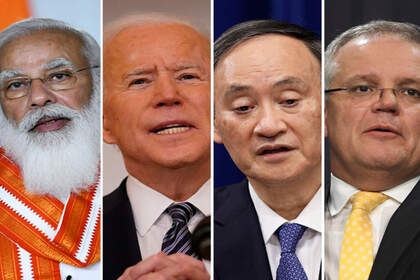
Deep dive: The Quad

In an interview with Garrison Moratto of The New Diplomatist, Amb. Rajiv Bhatia, Distinguished Fellow, Foreign Policy Studies, counters China's claims that the Quad is an "Asian NATO." He highlights how the India-U.S.-Japan-Australia Quadrilateral initiative aims to increase cooperation in the Indo-Pacific on international law and security. This podcast delves into the history of the Quad's formation, current strategic characteristics, and future geopolitics, ahead of the fall in-person Leaders' Summit in the U.S.