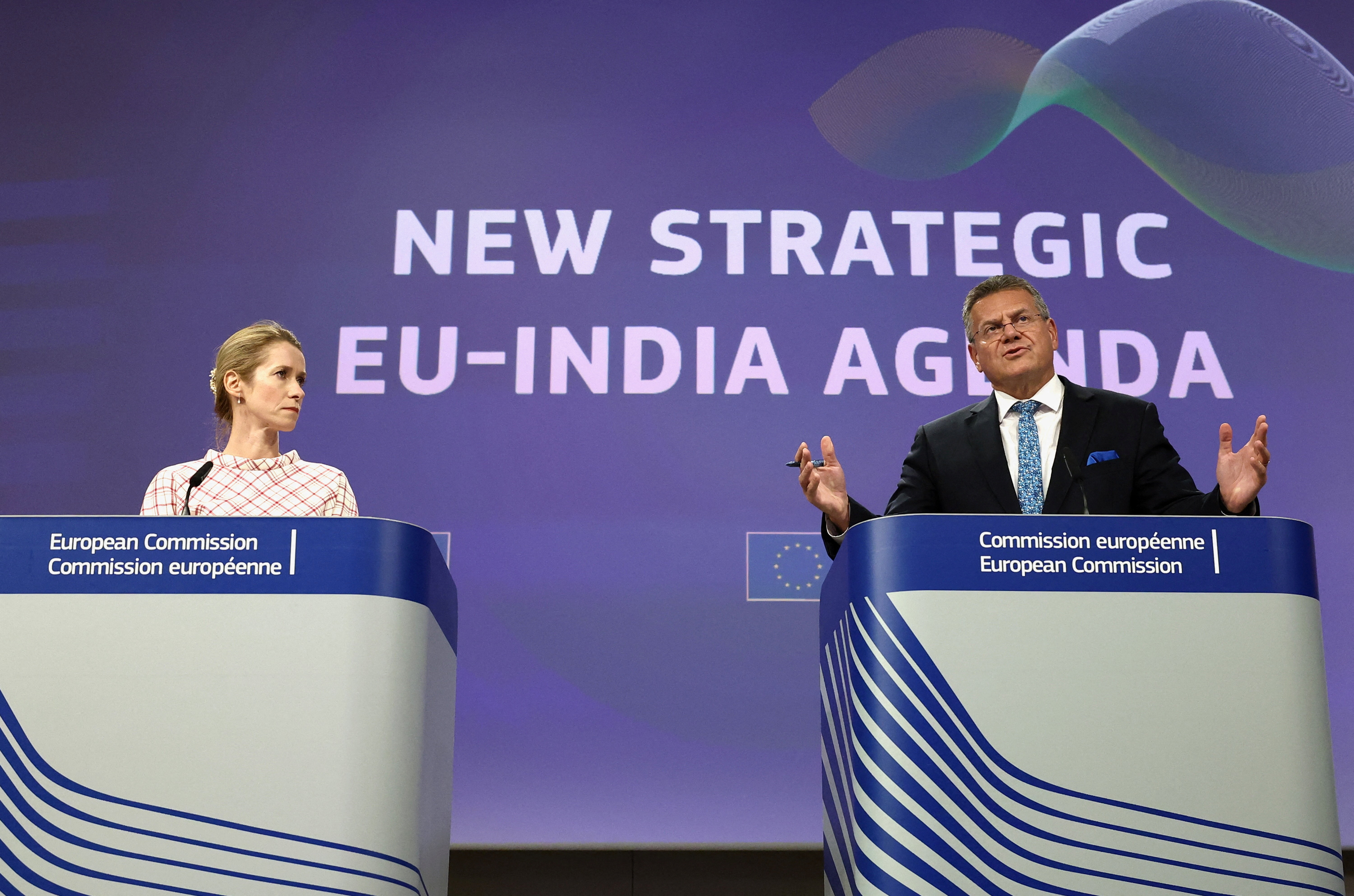
EU's India Strategy Courtesy: Reuters
30 October 2025

EU’s new India strategy

Despite over a decade of negotiations, the EU-India FTA remains stalled. The New Strategic EU–India Agenda released in October 2025 seeks to elevate ties, positioning India as central to Europe’s multipolar vision. Yet contradictions persist: Europe’s normative approach and India’s multi-alignment strategy diverge. Connectivity and infrastructure remain conceptual. Now, success depends on the EU’s ability to match rhetoric with resources, flexibility, and strategic patience. 
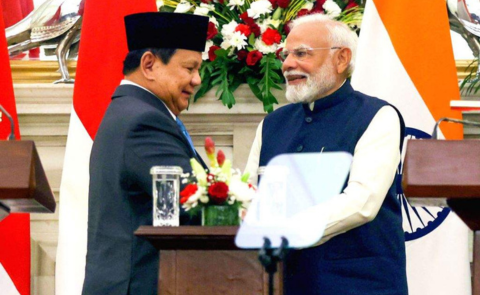
Koerber Stiftung (5) Courtesy: AFP
23 October 2025

India and Indonesia guide southern consensus

India and Indonesia sit at the heart of the Indo-Pacific, and participate  in multiple global and regional frameworks that ensure developing countries remain part of governance debates. The two countries can use these platforms to craft a southern consensus, a framework for cooperation that prioritises resilience, equality and cooperation over competition and coercion. This can reduce vulnerabilities among developing countries and strengthen them against future disruptions.

AFP (1) Courtesy: ANI
16 October 2025

Uncertainty around the Quad

The Quad summit is expected to be hosted by India in the second half of 2025, possibly in November. However, the grouping faces turbulence that transcends the current flow of India-U.S. relations. The relevance of Australia and Japan, too, needs to be factored in. Beijing considers the Quad as “the Asian NATO” that aims to contain China. Since the commencement of Trump 2.0, the grouping has been struggling to redefine its role and mandate.

Koerber Stiftung Courtesy: Koerber Stiftung
16 October 2025

Bandung at 70, still hopeful

While the Bandung Conference’s vision remains unrealised, its spirit can be an inspiration to reform and innovate in the international system as well as to ensure the survival of multilateralism – not only for today’s multi-aligned descendants of the conference participants but also for countries in Europe and beyond.

Website articles  (10) Courtesy: Metro Vaartha
9 October 2025

Unseen opportunities in UK-India trade

UK Prime Minister Keir Starmer is in India Oct 8-9, to discuss geopolitics with his Indian counterpart and also to boost bilateral trade. The UK-India Comprehensive Economic and Trade Agreement (CETA) signed in July 2025 marks a milestone in the relationship. The deal, however, omits reference to the creative industries which contribute significantly to UK GDP and play a vital role in the UK-India corridor.

Koerber Stiftung (2) Courtesy: IndoIndians
6 October 2025

The unbreakable Indonesia-India bond

India and Indonesia are bound by history, culture, trade, and shared values. Their relationship must now add a new dimension — higher education and research. Both nations have long relied on outdated Western models. With a tech-savvy generation and receding colonial memory, the two largest democracies must build research bridges and empower students to become the leaders, innovators and humanitarians of tomorrow.

VOA Courtesy: Gateway House
3 October 2025

No tears over H-1B visas

The September announcement from the White House that H-1B petitions would carry a fee of $100,000 per employee, hit India hard. India’s IT services companies are heavy users, capturing 71% of the 65,000 H1B visas issued annually. This shock move is a chance for Indian IT services companies to update their outsourcing model and invest at home, where their R&D-to-sales ratio remains abysmal.

VOA Courtesy: VOA
2 October 2025

Time to re-burnish Global South credentials

The year 2025 is often compared to the Bandung moment of 1955, and for good reason. With the U.S. reordering traditional relationships, the opportunity for greater emphasis on the Global South is now. It is therefore time for India, Africa and ASEAN among others to re-burnish their Global South credentials and use that identity as a platform to engage each other more deeply.

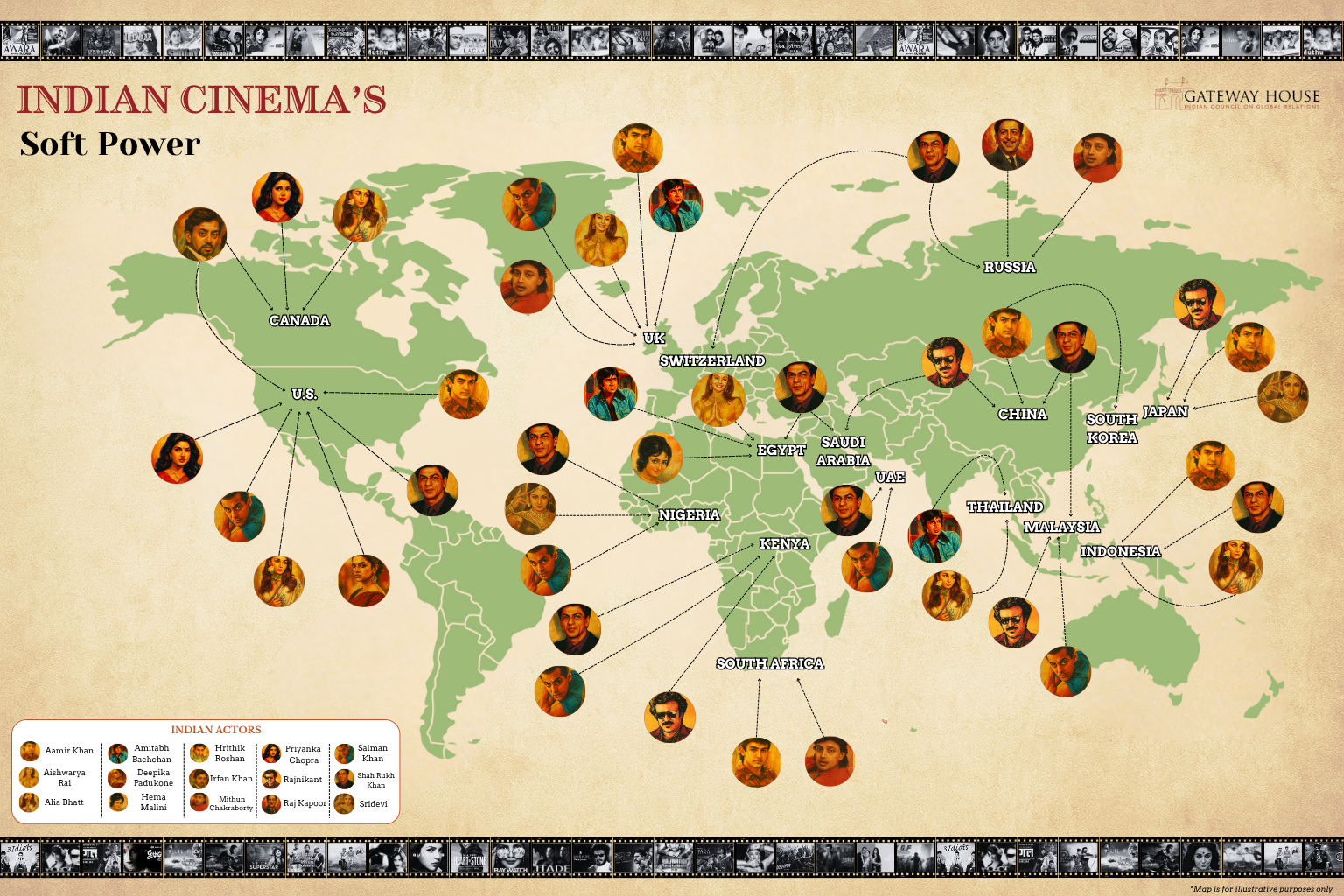
Most popular Indian actors worldwide Courtesy: Gateway House
1 October 2025

Indian Cinema as Economic Catalyst

As India seeks leadership in a multipolar world, cultural credibility is as vital as economic clout. Cinema gives India an edge with vivid storytelling, music, and empowering narratives, fostering understanding in a polarised world. Its popularity correlates with trade, as seen in the U.S., Russia, and Middle East. The more popular the cinema, the bigger the boost to trade.

U.S. Tariffs on Brics+ countries Courtesy: Gateway House
25 September 2025

U.S. Reciprocal Tariffs on BRICS+ countries

Under U.S. President Donald Trump’s reciprocal trade policy, the original five BRICS member countries account for the highest U.S. tariffs globally. India and Brazil are facing the highest tariffs of 50%, while China follows with a tariff of 34%, down from 145% earlier in the year. This infographic details the U.S. reciprocal tariff rates for each BRICS+ member and the sectors that are impacted.