IMG-1700 Courtesy: @BIMSTECInDhaka
8 June 2022

BIMSTEC@25

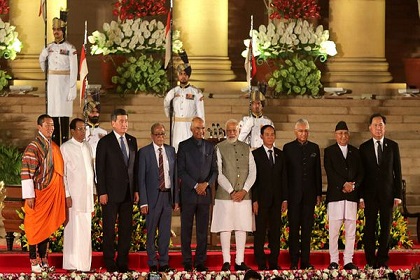
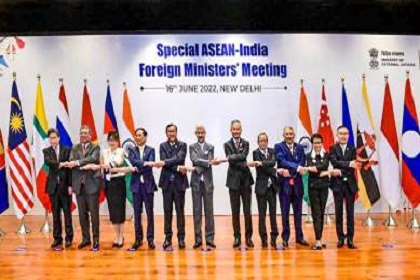
June 6, 2022, marks 25 years since India, Bangladesh, Sri Lanka, Bhutan, Nepal, Myanmar and Thailand joined hands to create BIMSTEC and infuse South Asia with economic and institutional cooperation. The strategic geography of this grouping has the potential to bring new synergy between South Asia and the recently-instituted Indo Pacific Economic Framework, ASEAN and the Quad, for a prosperous, secure Bay of Bengal Community.

bimstec 2 Courtesy: Twitter- BIMSTEC
19 May 2022

Incorporating the Blue Economy into BIMSTEC

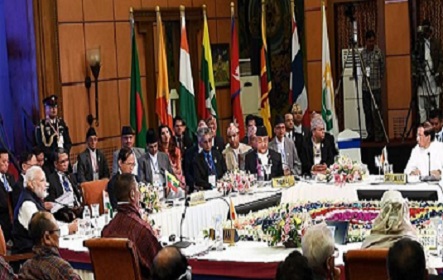
The BIMSTEC charter has laid the foundations for a prosperous, peaceful, and sustainable Bay of Bengal region, a goal that can be achieved by greater integration and deeper collaboration. While ensuring continuity with past efforts and strengthening economic cooperation is necessary, it must also realise its potential in newer areas such as the blue economy, which has three interlinked pillars— connectivity, prosperity, and regional stability.

ASEAN FINAL Courtesy: asean.org
17 May 2022

Is the U.S. central or peripheral to ASEAN?

The recently concluded ASEAN-U.S. Summit has raised the bilateral cooperation to a strategic comprehensive partnership. Key areas of cooperation were identified and global health, SDGs, maritime security and connectivity, and the Ukrainian war dominated the dialogue. The meeting is significant in light of the May 24 Quad Summit, where it is important for the US to have its engagement with ASEAN visible.

bimstec climate Courtesy: @BimstecInDhaka
12 May 2022

Mainstreaming the climate agenda in BIMSTEC

The rejuvenated BIMSTEC, with a new charter in hand, is now expanding its ambition and mission. One such area is climate change, which needs greater attention as it will have implications for the Bay of Bengal and beyond. With their unique climate conditions and action plans can together create a model for regional cooperation.

china-solomon Courtesy: Financial Times
21 April 2022

Economic and human security in the Indo-Pacific

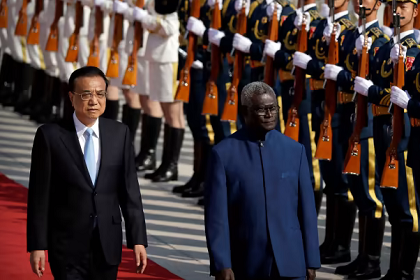
China has established a dominant presence in the Indo-Pacific through exploitative economic engagements. This has destabilised smaller nations in the region and made them dependent on Chinese support. For a free and open Indo-Pacific, India must press its advantage in human and economic capacity building.

Logistics,And,Transportation,Of,Container,Cargo,Ship,And,Cargo,Plane Courtesy: Shutterstock
10 March 2022

India in the Resilient Supply Chain Initiative

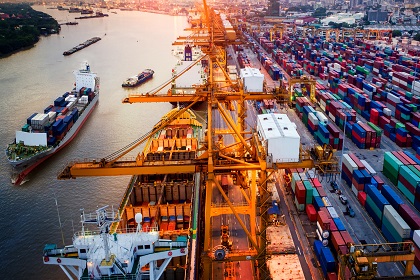
Concerns of global supply chains being overdependent on China has shifted the focus to India. This became clear in 2021 when Australia, Japan and India together launched the Resilient Supply Chain Initiative. India must now leverage its unique position in the Indo-Pacific region by incorporating well-planned industrial clusters and models.

TDB_car_151021 Courtesy: TDB
24 February 2022

Enhancing Regional Financial Intermediation in the Indo-Pacific

Financial intermediaries are critical lubricants for business, growth and development. The Indo-Pacific countries are industrializing, but smaller nations lag behind economically. The Quad countries can aid the advancement of the financial architecture in the Indo-Pacific by helping to develop an ecosystem, modelled on the examples of Japan and India.

0014 Courtesy: Gateway House
17 February 2022

Financial connectivity in the Bay of Bengal

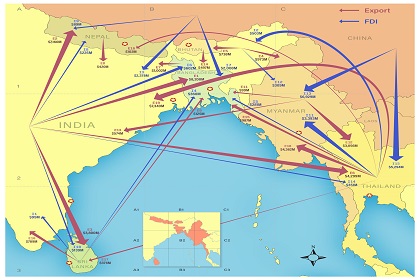
Multilateral funding can aid regional financial connectivity between the Bay of Bengal states, where financial networks are scarce. India's successful fintech can be mobilised to create a local ecosystem of startups with better access to funds and strong ties to the Indian market.

Chinese Port invesments Courtesy: The Maritime Executive
19 August 2021

China’s ports in the Indian Ocean

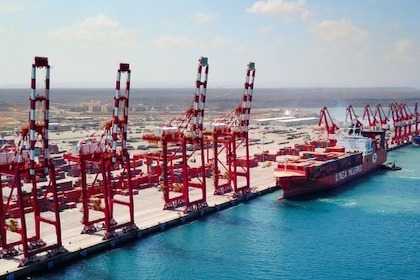
China is rapidly expanding its influence in the Indian Ocean Region, as its massive investment in ports starts to materialise. From smaller investments of $78 million in Djibouti to large ones like $1.6 billion in Gwadar, these are funded largely by Chinese state-owned enterprises. This infographic shows the 17 ports being built by China, which are now important strategic, economic and political outposts for the country.