revised design Courtesy: Gateway House
27 November 2025

Rise of the Davos Competitor

U.S. health secretary Robert Kennedy Jr. called the World Economic Forum a “billionaires’ boys club” imposing totalitarian controls. Indeed, since 1971, the elite platform shaped geopolitics. But its Western-centricism kept out the concerns of the rest. This gave rise to alternative forums, which look beyond financial agendas to the perspectives shaping the Global South. Here are 45 of biggest, half of which began just two decades ago.

Founding India’s  Gateway House Courtesy: Gateway House
26 November 2025

Founding India’s Gateway House

A former diplomat and a journalist came together in 2009 to build what would become Mumbai’s first foreign policy think tank – Gateway House. It is India’s first women-founded think tank, and among the few globally established by two women. In this conversation with Akshobh Giridharadas of USISPF, co-founders Manjeet Kripalani and Neelam Deo reflect on Gateway House’s origins and the epiphany that India needed to shape global conversations with its own perspective, one that extended beyond New Delhi.

Gateway House Courtesy: Telegrafi
6 November 2025

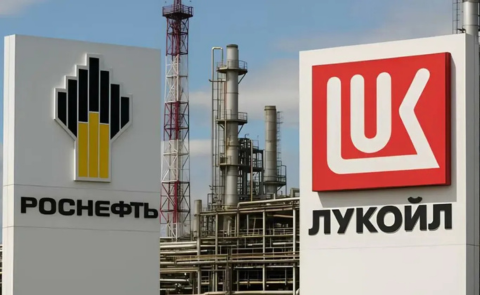
U.S. Sanctions on Russian oil giants

On October 22, 2025, U.S. President Donald Trump imposed sanctions on Russia’s oil giants, Rosneft and Lukoil. The move has clear geopolitical motives—to remove a major supplier from an oversupplied oil market. Indian oil companies, key buyers of Russian crude, now face pressure to cut imports, undermining India’s energy diversification and shaking global oil markets, including the U.S. economy.

EU's India Strategy Courtesy: Reuters
30 October 2025

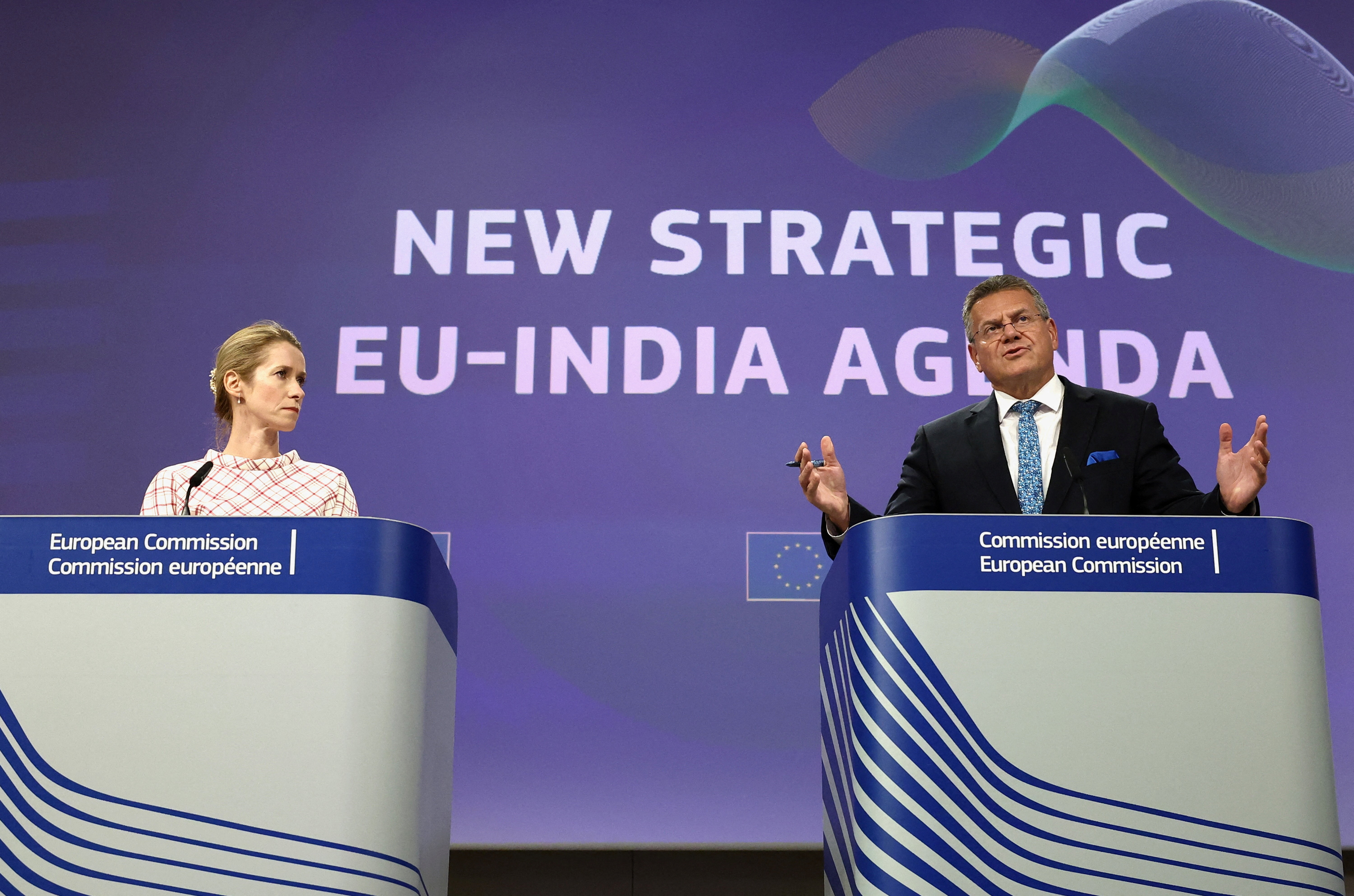
EU’s new India strategy

Despite over a decade of negotiations, the EU-India FTA remains stalled. The New Strategic EU–India Agenda released in October 2025 seeks to elevate ties, positioning India as central to Europe’s multipolar vision. Yet contradictions persist: Europe’s normative approach and India’s multi-alignment strategy diverge. Connectivity and infrastructure remain conceptual. Now, success depends on the EU’s ability to match rhetoric with resources, flexibility, and strategic patience. 

Koerber Stiftung (5) Courtesy: AFP
23 October 2025

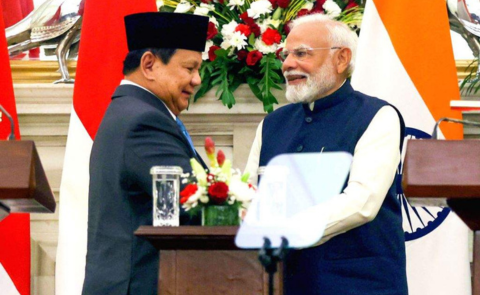
India and Indonesia guide southern consensus

India and Indonesia sit at the heart of the Indo-Pacific, and participate  in multiple global and regional frameworks that ensure developing countries remain part of governance debates. The two countries can use these platforms to craft a southern consensus, a framework for cooperation that prioritises resilience, equality and cooperation over competition and coercion. This can reduce vulnerabilities among developing countries and strengthen them against future disruptions.

AFP (1) Courtesy: ANI
16 October 2025

Uncertainty around the Quad

The Quad summit is expected to be hosted by India in the second half of 2025, possibly in November. However, the grouping faces turbulence that transcends the current flow of India-U.S. relations. The relevance of Australia and Japan, too, needs to be factored in. Beijing considers the Quad as “the Asian NATO” that aims to contain China. Since the commencement of Trump 2.0, the grouping has been struggling to redefine its role and mandate.

Koerber Stiftung Courtesy: Koerber Stiftung
16 October 2025

Bandung at 70, still hopeful

While the Bandung Conference’s vision remains unrealised, its spirit can be an inspiration to reform and innovate in the international system as well as to ensure the survival of multilateralism – not only for today’s multi-aligned descendants of the conference participants but also for countries in Europe and beyond.

Koerber Stiftung (2) Courtesy: IndoIndians
6 October 2025

The unbreakable Indonesia-India bond

India and Indonesia are bound by history, culture, trade, and shared values. Their relationship must now add a new dimension — higher education and research. Both nations have long relied on outdated Western models. With a tech-savvy generation and receding colonial memory, the two largest democracies must build research bridges and empower students to become the leaders, innovators and humanitarians of tomorrow.

VOA Courtesy: Gateway House
3 October 2025

No tears over H-1B visas

The September announcement from the White House that H-1B petitions would carry a fee of $100,000 per employee, hit India hard. India’s IT services companies are heavy users, capturing 71% of the 65,000 H1B visas issued annually. This shock move is a chance for Indian IT services companies to update their outsourcing model and invest at home, where their R&D-to-sales ratio remains abysmal.