revised design Courtesy: Gateway House
27 November 2025

Rise of the Davos Competitor

U.S. health secretary Robert Kennedy Jr. called the World Economic Forum a “billionaires’ boys club” imposing totalitarian controls. Indeed, since 1971, the elite platform shaped geopolitics. But its Western-centricism kept out the concerns of the rest. This gave rise to alternative forums, which look beyond financial agendas to the perspectives shaping the Global South. Here are 45 of biggest, half of which began just two decades ago.

VOA Courtesy: VOA
2 October 2025

Time to re-burnish Global South credentials

The year 2025 is often compared to the Bandung moment of 1955, and for good reason. With the U.S. reordering traditional relationships, the opportunity for greater emphasis on the Global South is now. It is therefore time for India, Africa and ASEAN among others to re-burnish their Global South credentials and use that identity as a platform to engage each other more deeply.

U.S. Tariffs on Brics+ countries Courtesy: Gateway House
25 September 2025

U.S. Reciprocal Tariffs on BRICS+ countries

Under U.S. President Donald Trump’s reciprocal trade policy, the original five BRICS member countries account for the highest U.S. tariffs globally. India and Brazil are facing the highest tariffs of 50%, while China follows with a tariff of 34%, down from 145% earlier in the year. This infographic details the U.S. reciprocal tariff rates for each BRICS+ member and the sectors that are impacted.

G20.Org Courtesy: G20.org
28 August 2025

Appraising Brazil’s G20 Presidency

The G20’s current cycle is unique, with four Global South nations presiding consecutively: Indonesia, India, Brazil, and now South Africa. Brazil’s 2023-24 presidency exhibited both achievements and struggles, prioritising social inclusion, hunger, energy transition, and governance reform. The handover to South Africa marks a significant milestone in G20 history. Will the momentum be followed by the U.S., the next G20 president but also a G20 sceptic?

PM 5 nation visit (1) Courtesy: Gateway House
7 August 2025

India becomes strategic with Latin America

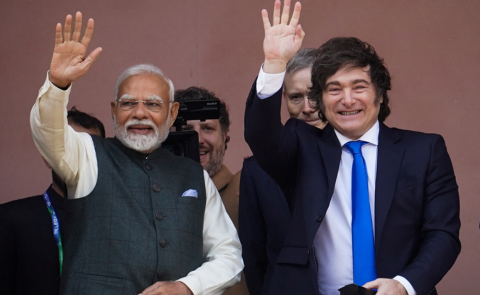
India’s engagement with Latin America is gaining momentum, marked by PM Modi’s recent visits to Brazil, Argentina, and Trinidad & Tobago. Amid rising Chinese influence, sustained political engagement and targeted investments are key to unlocking Latin America’s potential for India’s benefit. India needs a multifaceted strategy that blends economic engagement with public diplomacy and more official visits at higher political levels.

Global South World Courtesy: Global South World
17 July 2025

Argentina-India grow the strategic partnership

Prime Minister Modi’s visit to Argentina is a boost to the growing bilateral. Modi and Argentinian President Javier Milei are committed to their countries’ economic and political advancement, and see trade with each other as key. Argentina being in the lithium triangle gives India access to critical minerals.

APEC 2024 Courtesy:
28 November 2024

 Power play at APEC

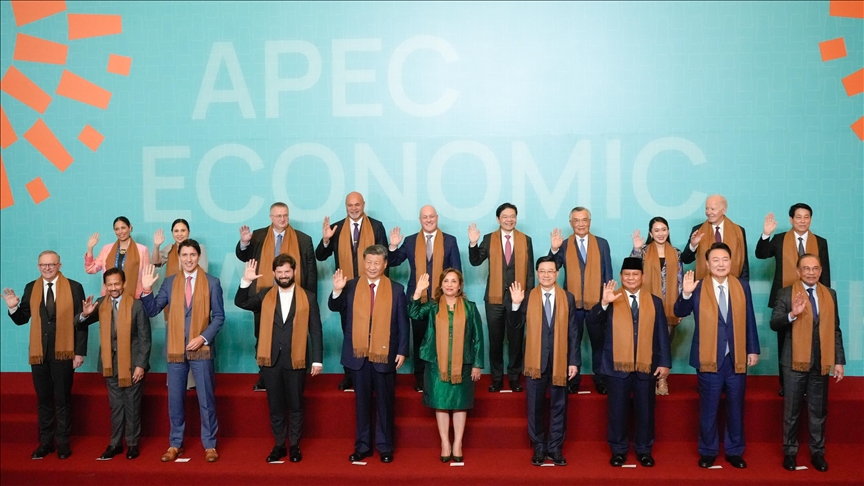
The Asia Pacific Economic Community summit, held in Peru from Nov 13-15, attracted many leaders, but most eyes were on President Xi Jinping of China who cut the ribbon on a Peruvian port, China’s largest investment in South America. Meanwhile the APEC CEO Forum was more interested in the impact of incoming U.S. President Donald Trump on their economies and on the region.

IBSA 1 Courtesy: PTI
20 October 2022

IBSA, G20 and the Global South

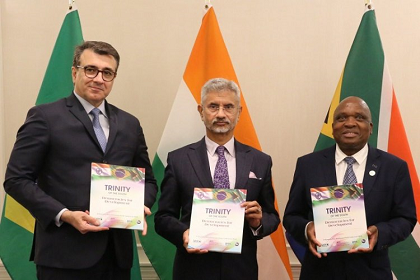
The consecutive Presidencies of the G20 for India, Brazil and South Africa provides a rare, unique opportunity to forge an agenda common to both the G20 and IBSA. The timing is coincident: with Russia and China consumed by conflict and zero-Covid respectively, BRICS has receded. IBSA can convert both crises into an opportunity and become relevant to the Global South’s current and future challenges.

Bolsi and Lula Right left Courtesy: Reuters
13 October 2022

Brazil elections, looking ahead

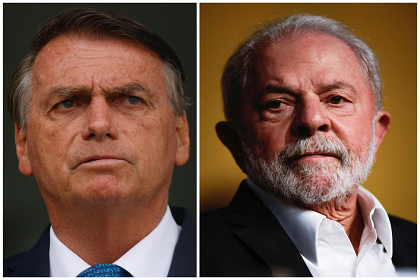
Brazil will head to the polls in a runoff this month to choose its next president. Will it be incumbent Jair Bolsonaro, or former president Lula da Silva? Both are popular with their voter bases, but both have hurdles to overcome, most notably the economy, and have differences on their global political alignment – particularly important as Brazil will be the G20 President in 2024.