renergy crisis photo Courtesy: Economic Times
26 May 2022

India in the global commodity shock

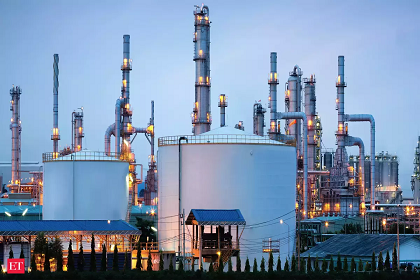
The warning signs were visible long before the Ukraine conflict. Years of insufficient investment into oil and gas production resulted in high price, and shortages. With investors keeping away from traditional fuels, the conflict in Ukraine precipitated the inevitable. Energy-dependent India must now insulate its supply chains.

bimstec climate Courtesy: @BimstecInDhaka
12 May 2022

Mainstreaming the climate agenda in BIMSTEC

The rejuvenated BIMSTEC, with a new charter in hand, is now expanding its ambition and mission. One such area is climate change, which needs greater attention as it will have implications for the Bay of Bengal and beyond. With their unique climate conditions and action plans can together create a model for regional cooperation.

suiso frontier Courtesy: TIME
24 March 2022

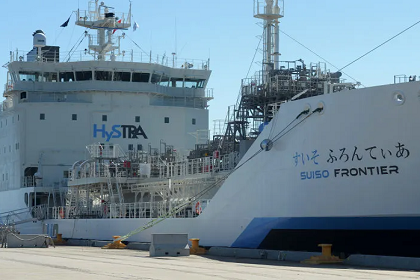
Green Hydrogen in the Indo-Pacific

Last month, the Government of India released its Green Hydrogen Policy with the goal of boosting energy self-reliance and inspiring clean energy transitions. The time is right for the Indo-Pacific economies to finance green hydrogen projects and integrate them into supply chains.

amb saurabh kumar Courtesy: Ministry of External Affairs, Government of India
3 February 2022

India’s Indo-Pacific vision

Saurabh Kumar, Secretary (East), Ministry of External Affairs, Government of India, delivered the keynote address at the panel discussion on India in the Indo-Pacific: Pursuing Prosperity and Security, organised by Gateway House and the U.S. Embassy, New Delhi, on 1 February 2022. He outlined India's vision for a free and inclusive Indo-Pacific, and the initiatives undertaken to further cooperation among nations in the region.

Energy connectivity in Bengal Courtesy: Symbior Solar
2 December 2021

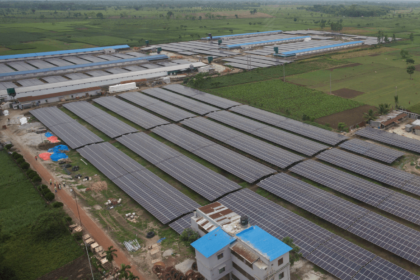
Energy connectivity in the Bay of Bengal

While several Bay of Bengal countries are rich in hydropower and thermal electricity generation, others are net energy importers with large markets. India can lead creative energy projects with its eastern neighbours, supported by regional and international institutions.

DRUK HYDRO DAM Courtesy: Druk Green Power Ltd
18 November 2021

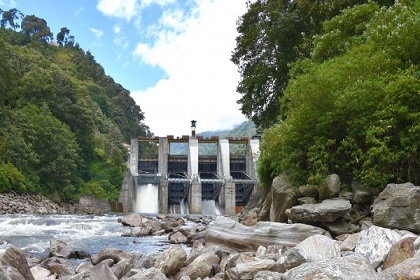
Bay of Bengal connectivity

The Bay of Bengal is gaining relevance as a significant sub-region within the Indo-Pacific. Despite its importance to regional security, there is inadequate financial, physical, and energy connectivity. India must use its strategic and political pre-eminence and influence in the sub-region to pursue deeper connectivity with Bangladesh, Myanmar, Thailand, Nepal, and Sri Lanka and to block China's growing influence.

shutterstock_83614519 Courtesy: Shutterstock
10 October 2019

Climate engineering vs. geoengineering

The United Nations’ Paris Agreement of 2015 had nations committing to reduce emissions of greenhouse gases to slow the rise in global temperatures. But terrestrial geoengineering – or the use of “carbon capture” technologies and developing carbon sinks to remove gases already in the atmosphere – and atmospheric climate engineering are technologies which also seek to slow global warming

ibc-center-oil-gaz-4-696x392 Courtesy: ibctrain.com
2 April 2019

India & the influential SCO Energy Club

The main objective of the Shanghai Cooperation Organisation’s (SCO) Energy Club, when Russia formed it, was to market its member states’ substantial oil and natural gas reserves. This map shows some of the important natural gas pipelines, originating from Russia and its neighbouring countries that are not members of the SCO. What can India do to secure supplies from these abundant but currently inaccessible natural gas reserves?

359864_3622116_akhbar Courtesy: thenews.com.pk
7 March 2019

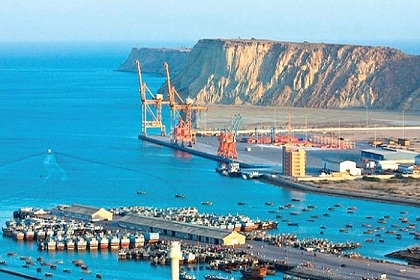
Gwadar 2.0: Pakistan’s Saudi vs. China play

Pakistan’s aspirations for oil and gas prospecting off its Makran coast, south-western Balochistan, are diverging from those of China, which has had a nearly two-decade long presence in Gwadar as an infrastructure provider. To turn Gwadar into the petrochemical hub it desires, Pakistan has sought out other benefactors, changing geopolitical equations in the region

IMG_6681 - Copy Courtesy: Gateway House
12 July 2018

China’s focus on stability

Yuan Peng, Vice President, and Dr. HU Shisheng, director, respectively of the Institute of South & Southeast Asian and Oceanian Studies, China Institute of Contemporary International Relations, Beijing, spoke to Gateway House about working towards ‘the final goal of denuclearisation’, India-China relations since the Doklam stand-off and addressing security concerns raised by the Belt and Road Initiative