Book review: Our Moon Has Blood Clots
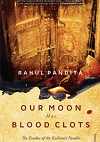
D. P. Satish in his review of Rahul Pandita’s latest book writes that it is a bold attempt at voicing despair about a nation that mouths lofty platitudes but does little to protect its persecuted communities.

 Courtesy:
D. P. Satish in his review of Rahul Pandita’s latest book writes that it is a bold attempt at voicing despair about a nation that mouths lofty platitudes but does little to protect its persecuted communities.
 Courtesy:
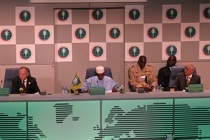
India’s relations with Islamic nations, many of which are members of the Organisation of Islamic Cooperation (OIC), have become even more prolific over the last decade. While India does not visualise becoming a member of a religious international body, many reasons militate against our formally joining the OIC.
 Courtesy: Kukster/Flickr
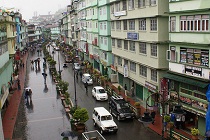
‘Sikkimisation’ is a term often used by the Chinese and Nepalese politicians to refer to India's purported Himalayan expansionism. However, Sikkim's economy has set an example that India's Himalayan neighbours would do well to follow, rather than deride

In December, massive protests erupted in India following the brutal gang rape of the 23-year old student in New Delhi. The case fuelled hopes of a much-needed change in the country’s outlook towards violence against women. More significantly, however, will the mindset towards rape change? Nandini Deo blogs.
 Courtesy: WikimediaCommons
Pakistan’s recent violation of the ceasefire, by killing two Indian soldiers and beheading one of them, has triggered knee-jerk reactions by the government and armed forces, media frenzy, and public outcry. What makes this 60-year old problem tough to resolve, and how can those obstacles be overcome?
 Courtesy: lecercle/Flickr
The Armed Forces Special Powers Act, introduced decades ago in India’s northeastern states and Kashmir to control militancy and turbulence, often has undemocratic side-effects. By the government’s own account, the situation in the northeast has improved. Why is the Act still in place, despite calls for a repeal?
 Courtesy: Officer/WikimediaCommons
U.S. Senator John Kerry will officially take office as the Secretary of State, later this month, replacing Hillary Clinton. Given his background of foreign policy, and his proven competency in related matters, what can India and South Asia look forward to, during his term in his new office?
 Courtesy: Cyfraw/WikimediaCommons
Despite heavy opposition from several factions, Egyptian President Mohamed Morsi’s propositions for altering the constitution have been approved. Although the alterations have democratic elements, the liberals and secularists bear responsibility in taking forward Egypt’s journey to complete democracy.
India’s governance and newest social revolution, led by the country’s youth and middle class, is being watched by the world. But will the incumbent government be able to respond with emotion and convert the movement into tangible policies and institutionalise them? Manjeet Kripalani blogs
 Courtesy: Satish Padmanabhan/Outlook
Narendra Modi, the chief minister of Gujarat, returned to office for an unprecedented fourth term. With this victory, the fate of India’s two national political parties has changed, and the battles within and without will play out over next few months leading up to the national elections in 2014.