India’s Corona-diplomacy
Over the last month, India’s Corona-diplomacy has been evident. The government’s two-point plan is to protect its citizens and help its neighbours and friends.
Courtesy: Shutterstock
Over the last month, India’s Corona-diplomacy has been evident. The government’s two-point plan is to protect its citizens and help its neighbours and friends.
Courtesy: MEA/Flickr
The first-ever virtual summit of leaders from member-states of the South Asian Association for Regional Cooperation on March 15 was an innovative exercise in showing solidarity in containing a pandemic. Here is an assessment of its tangible outcomes – and longer-term ways to prepare for SAARC’s revival
Courtesy: Shutterstock
The second-most important issue on everyone's mind after the Coronavirus, is Rare Earths - those metallic elements like scandium and cerium, used in every aspect of modern electronics like our cell phones, rechargeable batteries, florescent lighting. The reason is: China. China has the world's largest deposits and production of rare earths, and has not hesitated to withhold its export to countries that disagree with it in the past.
Courtesy: Shutterstock
The COVID-19 pandemic has exposed the deficiencies of India’s precision instrument import-dependency and the global supply-chain vulnerabilities of international high-tech manufacturing giants. New Delhi can incentivise such companies to manufacture under the Make in India and Assemble for the World in India programmes
Courtesy: Twitter/MEA
The Indian government, has, under challenging circumstances, evacuated, all through March 2020, nearly 3,000 Indian citizens, stranded in the hotspots of the coronavirus epidemic. These rescue operations, which have been performed adeptly since 1990, are a mark of a developed-country mindset with confidence-inspiring governance structures
Courtesy: Twitter/Narendra Modi
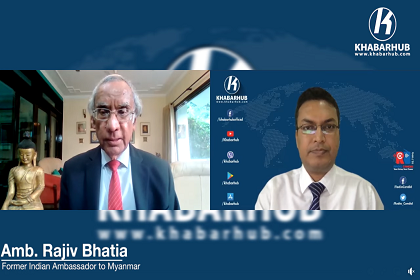
The Coronavirus Disease (COVID-19), which has spread to more than 160 countries, is a global challenge, calling for coordinated intervention at the national, regional and global levels. Rajiv Bhatia, Distinguished Fellow, Gateway House, in this interview, outlines four aspects of the calamity
Courtesy: MEA/Flickr
India has responded swiftly to contain the spread of the Corona Virus Disease. The government’s prompt and well-coordinated response, including in the diplomatic realm, shows direction from the highest political leadership. Yet, there is no room for complacency or slackening of vigilance
Courtesy: Sage Publishing
This book offers a bird’s-eye view of India’s strivings to forge close relations with the East, but covering a vast region and swathe of history has inherent drawbacks. The result is a haphazard narrative, focusing more on the contemporary period and lacking in insight or analysis
Courtesy: Shutterstock
As part of our weekly series of podcasts in the run-up to the U.S. elections, in this episode on the first month of the Democratic Party’s primaries, Ambassador Neelam Deo, Director and Co-founder of Gateway House, on Biden’s candidature, how the U.S. appears still unready for a woman president and why the Indian American community, which has traditionally voted Democrat, may be ambivalent this time
Courtesy: Shutterstock
President Trump enjoyed every moment of the hype that attended his February 2020 visit to India, says Ambassador Neelam Deo, Director and Co-founder of Gateway House, in this podcast, even as the focus was on concrete outcomes, such as defence purchases and oil procurement deals. She discusses the geopolitical implications of a closer India-U.S. strategic relationship and the weaknesses of the U.S.-Taliban peace deal