5825395379_5d725a53f4_z Courtesy: Flickr/freeedomania
21 April 2012

UN: a return to ‘mandated colonialism’

By forcing regime change in Libya, and attempting the same in Syria, and by promiscuously arming disparate groups of Wahabbis and Salafists to achieve this aim, NATO is creating more room for instability in the region. What Syria needs is engagement, not isolation; it needs dialogue and not the arming of rebels.

IMG_4820 Courtesy: Gateway House
20 April 2012

Deciphering today’s Middle East

What are the implications for India if Iran is attacked? How effective has the response been by gulf nations to their own protests? Ambassador Talmiz Ahmad, India’s former Ambassador to Saudi Arabia, discusses the dynamics of West Asia with Gateway House’s Alisha Pinto and Azadeh Pourzand.

xerxes piece defence2 Courtesy: Ministry of Defence, India
10 April 2012

India: A unified defence command?

India must revisit the need for a unified command structure, to effectively use the enormous combat power it is developing at such astronomical cost. A balanced force-restructuring based on operational needs can enable the armed forces to project itself as a single, viable, effective war machine.

Courtesy: IAEA Imagebank
9 April 2012

Iran: An opportunity for BRICS

The scope for any process on nuclear talks with Iran to founder on distrust, misunderstanding and political in-fighting in both Tehran and Washington remains formidable. Equally disturbing are the wider political realities. Can the upcoming talks in Istanbul launch a process that can, over time, lead to agreement?

zardari feature Courtesy: U.S.ArmedForces/WikimediaCommons
6 April 2012

Petit, not grand geste on India-Pakistan

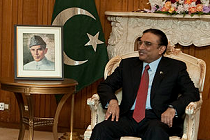
Asif Ali Zardari, who previously made sound pronouncements on Indo-Pakistan ties, will soon be the first Pakistani President to visit India since 2005. Though he has a reputation and interest in business affairs, a modest, innocuous deal may work better this time than the lofty promises made in the past.

wisner interview Courtesy: Gateway House
2 April 2012

India-U.S.-Iran Impasse?

Given the immediacy of rising tensions around Iran’s nuclear programme, what can India and the U.S. do to resolve the issue? Gateway House’s Manjeet Kripalani talks to Ambassador Frank Wisner about the possibilities of a strike against Iran and its effects on the India-U.S. relationship.

BRICS: Their case against the U.S. Courtesy: Presidential Press and Information Office/Wikimedia Commons
30 March 2012

BRICS: Their case against the U.S.

If not dominated by China’s renminbi, what would nations with bills called renminbi, real, rupee, ruble and rand call their common currency? The BRICS quest for an alternative to the dollar is rooted in a belief that America’s printing press economy and mega banks are mega dangers to global stability.

Brics_Summit_-_2012 copy Courtesy: Saurabh Das/AP Photo
30 March 2012

BRICS: Moving in the right direction?

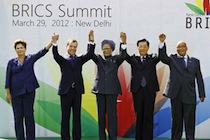
The 4th BRICS Summit in New Delhi has brought a new dimension to emerging markets. The author explains why the summit was perhaps the most significant of the BRICS meetings so far – and one that should have the developed world really worried about their eroding position at the top of the global heap.

botopoulos Courtesy: www.botopoulos.gr
28 March 2012

“Greeks do not want to leave the Eurozone”

Kostas Botopoulos, Greece’s point-man in money markets, speaks to Gateway House's Akshay Mathur about Greece's bailout process, building consensus within the European Union, the reforms demanded by stakeholders and what it all means for India and the global economy.