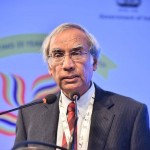
Ambassador Rajiv Bhatia is Distinguished Fellow, Foreign Studies Programme at Gateway House. He is a member of CII’s International Advisory Council, Trade Policy Council and Africa Committee. He is theChair of FICCI’s Task Force on Blue Economy, and served as Chair of Core Group of Experts on BIMSTEC. He is a founding member of the Kalinga International Foundation and a member of the governing council of Asian Confluence. As Director General of the Indian Council of World Affairs (ICWA) from 2012-15, he played a key role in strengthening India's Track-II research and outreach activities. During a 37-year innings in the Indian Foreign Service (IFS), he served as Ambassador to Myanmar and Mexico and as High Commissioner to Kenya, South Africa and Lesotho. He dealt with a part of South Asia, while posted as Joint Secretary in the Ministry of External Affairs. A prolific columnist, he is also a regular speaker on foreign policy and diplomacy in India and abroad. He was Senior Visiting Research Fellow during 2011-13 at the Institute of South East Asian Studies (ISEAS), Singapore. He holds a master’s degree in political science from Allahabad University.His first book India in Global Affairs: Perspectives from Sapru House(KW Publishers, 2015) presented a sober and insightful view of India’s contemporary foreign policy. His second book, India-Myanmar Relations: Changing contours(Routledge 2016) received critical acclaim. His third book, India-Africa Relations: Changing Horizons (Routledge 2022) has also been receiving positive reviews.
Expertise
Foreign Policy, Quad & Indo-Pacific, South & South-East Asia, Africa, Blue Economy
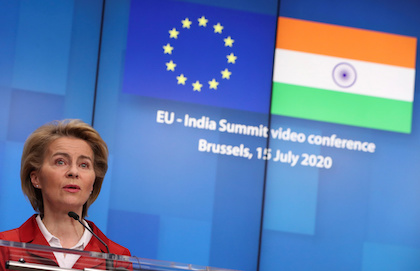
Europe's increased focus on the Indo-Pacific and the deepening economic and technological collaboration with India offer mutual benefits. However, the EU's ambivalent approach towards China, and the desire of most European states to maintain neutrality in the U.S.-China rivalry might not be sustainable in the long run.
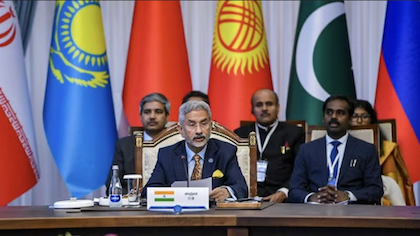
At the meeting of the Shanghai Cooperation Organisation (SCO) on October 26, Foreign Minister S. Jaishankar stressed the importance of maintaining regional stability and enhancing economic cooperation in Central Asia. Achieving its economic and strategic objectives in the SCO will become a challenge for Indian diplomacy next year, when Pakistan takes on the chairmanship of the grouping.
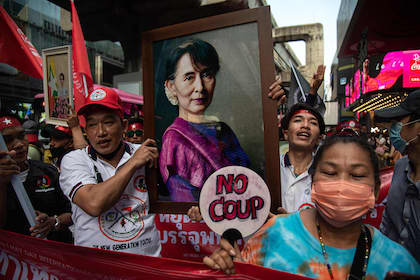
Prolonged violence between the military and opposition forces in Myanmar has eroded political stability in the country and led to large-scale displacement within the country. Despite diplomatic efforts led by ASEAN and other nations to find effective solutions, Myanmar’s on-ground situation appears unlikely to see any significant improvement in the near future.
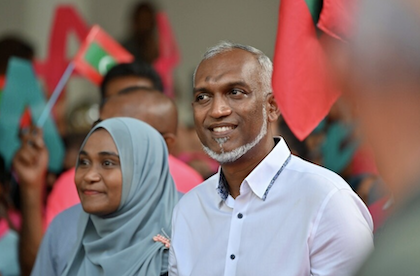
The recent presidential election outcome in the Maldives reflected a thriving democracy driven by voters' concerns for key domestic issues like employment, housing, education and healthcare. To portray the election as a football match between China and India resulting in the latter’s defeat is to ignore how South Asia's smallest state functions.
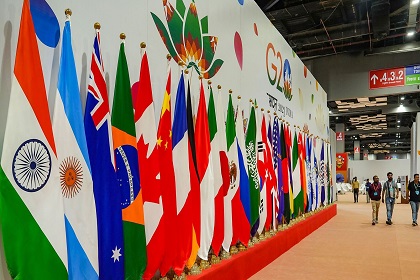
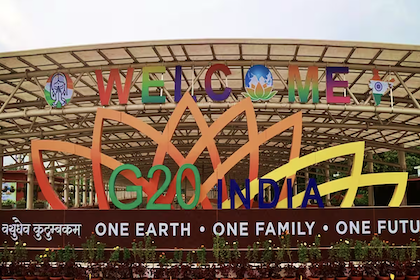
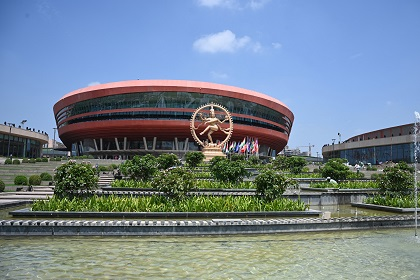
The G20 summit in India and developments on its sidelines like the announcement of the IMEC, multiple bilateral meetings held by Prime Minister Modi, will all have long term geoeconomic and geopolitical impact. These, along with the summit deliberations and outcome are key to assess the future prospects of great power relations.
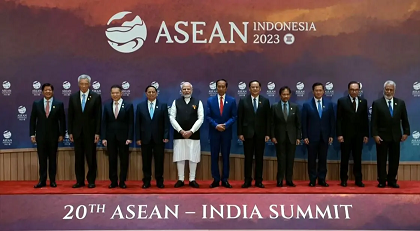
The recent ASEAN Summit and East Asia Summits stressed the region's centrality and unity while also revealing its principal challenge: managing strategic contestation between the U.S. and China. The outcomes of both summits are reflective of ASEAN's diplomatic and strategic dilemmas in Southeast Asia and the Indo-Pacific.
The New Delhi Leaders' Declaration breaks new ground key areas like climate finance, digital public infrastructure, trade, and multilateral reform. While the declaration is backed by unanimous consensus and outlines ambitious and wide-ranging goals, the actual extent of its implementation can only be assessed in the medium term.
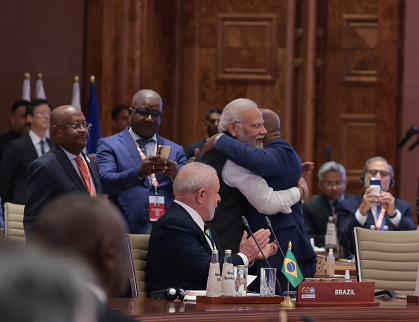
The admission of the African Union to the G20 marks the multilateral's first ever expansion. The G20 will now speak for 80% of the world's population. For Africa, this means an opportunity to mainstream its concerns and priorities in global decision-making. Lastly, as the inclusion of AU in G20 took place during India’s presidency, New Delhi can enjoy the fruits of its creative diplomacy as Voice of the Global South.
India’s presidency of the G20 has put a premium on its role as “the voice of the Global South”, even as it serves as the bridge between the Global South and the Global North. The upcoming Delhi Summit’s success will depend on India’s ability to balance diverse interests while broadening the areas of convergence and narrowing those of disagreement within the grouping.
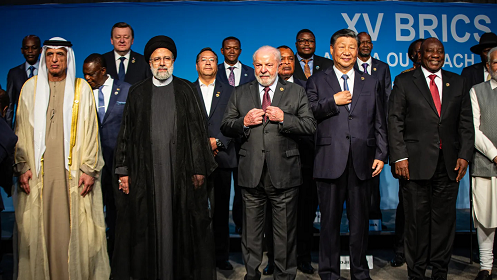
The decision to invite six countries — Argentina, Egypt, Ethiopia, Iran, Saudi Arabia, and the UAE — to join BRICS as full members has opened the grouping to a new geopolitical era. India can now play a seminal but challenging role in this evolved dynamic, given its growing cooperation with the West on the one hand and its active pursuit of the interests of the Global South on the other.