100713-N-3446M-139 Courtesy: SurfaceForces/Flickr
2 September 2011

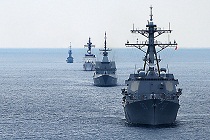
China’s aircraft carrier changes the balance

The turbulent waters of the South China Sea may soon see a major addition: an aircraft carrier, from China. The carrier - already seventy percent complete - is sure to change the equation and further Beijing's Four Modernisations programme.

sino india article pic_0 Courtesy: PMO
5 August 2011

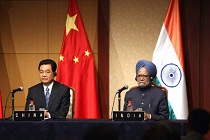
India-China: Look East with caution

As India's engagement with countries in China's periphery increases, fora like the Shanghai Cooperation Organisation, spear-headed by China, have also cropped up. Gateway House's Madhura Joshi speaks to former Ambassador Vinod C. Khanna, to understand the Indo-Chinese paradigm and examine current policies.

pragati Courtesy: Pragati
5 August 2011

After the Great Earthquake

Both Tokyo and New Delhi see each other as reliable partners, and continue to do so after the Japanese earthquake and nuclear disaster. The Japan-India relations in the post-disaster environment must be understood in terms of humanitarian, economic and strategic dimensions.

mao pic jayadeva Courtesy: gill_penney/Flickr
29 July 2011

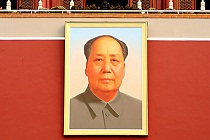
China’s Red revival

A clash of ideologues in China’s ruling Communist Party of China is emerging, though many remain unwavering in their loyalty to the Party. What does this mean for India? A tougher, non-compromising stance by Beijing on issues perceived as affecting Chinese sovereignty and territorial issues.

sreeram chaulia pic Courtesy: UN Photo: Eskinder Debebe
29 July 2011

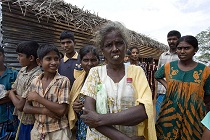
Conflict zones: Intentions vs. outcome

Sreeram Chaulia, Vice Dean of the Jindal School of International Affairs, talks to Gateway House’s Samyukta Lakshman about his new book titled, "International Organisations and Civilian Protection".

foreign affairs july Courtesy: Foreign Affairs
20 July 2011

What China Wants

Henry Kissinger's new book argues that the United States should yield gracefully to China's rise; Aaron Friedberg's gives the opposite advice. By focusing on intentions instead of capabilities, both books overstate China's actual power.

pragati july issue Courtesy: Pragati
19 July 2011

What nuclear no first use tells us

On May 1998, as India declared itself as a nuclear weapons state, it also committed its nuclear program to the No First Use of nuclear weapons policy. Consequently, the policy has been viewed as a democratic option, but what does this say about India?

Courtesy:
7 July 2011

India: Miscalculating the nuclear future

The Fukushima Daiichi nuclear disaster has sparked debate in the field of energy security all over the world. As Germany and Switzerland announce plans to phase out nuclear power, India's nuclear’s debate, and its looming water crisis, remains largely unopened.

schengen spirit of openness Courtesy: FourthFloor/Flickr
23 June 2011

The Schengen spirit of openness

Despite their economic downturns, domestic tensions keep developed countries from embracing the revitalizing potential of foreign workers. Ambassador Neelam Deo argues that India should continue to leverage its history of diversity and capitalize on a world more open to the free flow of goods and services.

brics leaders_210x140 Courtesy: dilmarousseff/Flickr
6 June 2011

BRICS: Convergence or dissonance?

As Europe stands united in its support for France's Finance Minister Christine Lagarde as a candidate to head the International Monetary Fund, many have begun to question if BRICS is truly an effective and united bloc. Will they be able to put forth a candidate all emerging countries can support?