Countering military cyber espionage
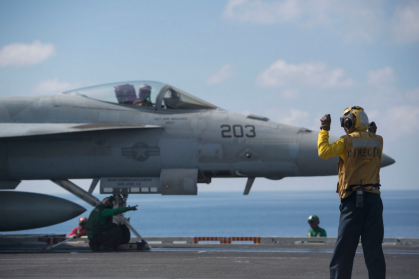
The Indian military faces persistent cyber espionage challenges, especially from social media platforms. It’s time for a pro-active approach.
Courtesy: Wikipedia
The Indian military faces persistent cyber espionage challenges, especially from social media platforms. It’s time for a pro-active approach.
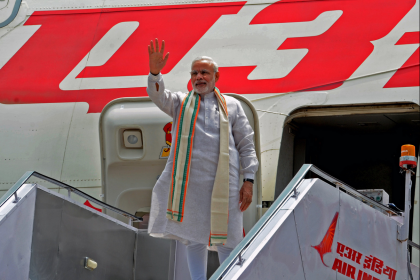
Courtesy: Narendra Modi / Flickr
The Indian government and businesses should stay away from giving an overly “mercantile” attitude to foreign policy and investments abroad. A deal secured by only economic heft and preying on weakness is likely to produce only bitter fruit later on.
Courtesy: Wikipedia
Is China actively building up its maritime presence in the Arabian Sea, to dominate vital sea lanes and perhaps encircle India with a chain of naval bases? There can be little doubt that China views Gwadar as a potentially useful asset. China, however, will know better than anyone that Gwadar has two considerable limitations.
Courtesy: Wikipedia
In his last and final State of the Union address, President Obama reasserted the United States’ global supremacy as a military and political power. He claimed credit for the historic Iran deal while conceding that Congress had maneuvered efforts on many crucial fronts
Courtesy: Flickr/ MEAPhotogallery
The Pathankot attack reflects a new template of terrorism and is a reminder that India needs a well-coordinated approach to security emergencies. This is particularly necessary as the country has embarked on a bold foreign policy path, daring to tread where we have not gone before, intensifying existing and new engagements and trying to functionalize dysfunctional bilaterals like Pakistan
Courtesy: MEA / Flickr
If India enters the Afghanistan-Pakistan Trade and Transit Agreement, as external affairs minister Sushma Swaraj said at conference in Islamabad in December, it will boost regional trade and connectivity—both priorities of the Modi government. But Pakistan stridently opposes India’s entry into the agreement. What are the alternatives?
Courtesy: Wikipedia
On 14 December, Saudi Arabia announced the formation of an anti-terrorism coalition of 34 Islamic countries. But with key potential partners such as Algeria, Lebanon, and Pakistan refusing to join, the hastily-assembled group has put Saudi credibility in the spotlight instead of deflecting western criticism of the kingdom’s inaction against Sunni jihadism
The unfolding coup in Turkey demonstrates the instability that the nation has fallen into. Terror attacks like the one in Istanbul airport was the most high profile targeting of Turkey by ISIS and other extremists. This is the outcome of Turkey’s crackdown on internal popular protest, on allowing itself to become the highway for extremists, refugees and weapons to disparate terrorist groups and being a willing proxy for the major powers contending in Syria. The increasing frequency of the attacks in Turkey reveals a similar pathology to Pakistan, which is now in a low-grade civil war. Is Turkey going down the path of Pakistan?
Courtesy: Twitter
The brief interaction between Modi and Sharif in Paris paved way for a meeting between the NSAs of the two states in Bangkok on 6 December. It is these unobtrusive talks by empowered envoys in neutral venues which will achieve real results
Courtesy: Wikipedia
Barely three weeks after Pakistan’s Prime Minister Nawaz Sharif’s official visit, the other Sharif -- General Raheel Sharif -- sets foot on U.S. soil, albeit without an official invitation. Will Gen. Sharif get what he wants from the U.S. to further his game plan?