India’s next 100 space missions
If its space assets are used effectively, India could have a formidable fleet of five to 10 satellites dedicated for military use and dozens more for the advancement of its economy.

 Courtesy: PIB
If its space assets are used effectively, India could have a formidable fleet of five to 10 satellites dedicated for military use and dozens more for the advancement of its economy.
 Courtesy: Columbia/WikimediaCommons
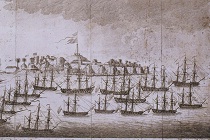
In the 1700s, one man antagonized the European powers, and insisted on the Maratha Empire’s rights to taxation and sovereignty over Maharashtra’s coast. He was Kanhoji Angre, the head of the Maratha navy. How did he, 283 years ago, set an important precedent for the Subcontinent’s local powers?
As the media focused on key negotiations between political leaders, at the Rio +20 Summit, several significant events tangential to the summit went unreported. Gateway House’s Renu Modi explains why these side-events were relevant to Indians in particular.
 Courtesy: Gateway House
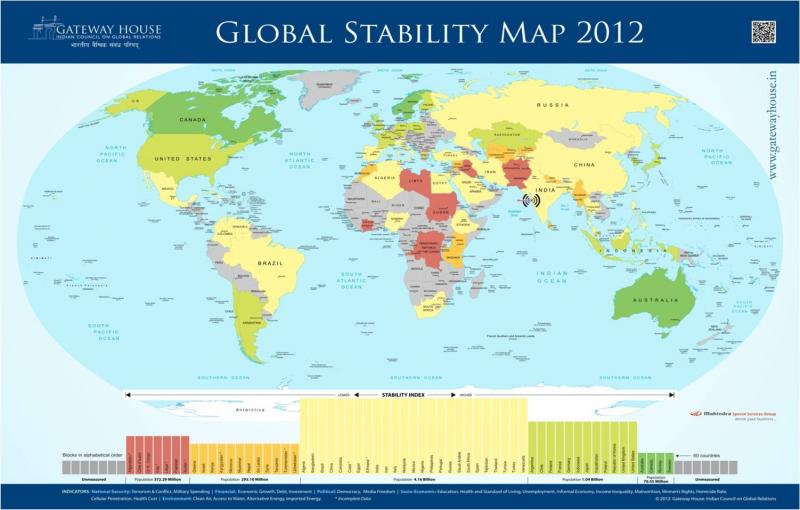
Gateway House prepared a Global Stability Map, using 20 differing indicators, to analyze the stability of 60 countries around the world. Using criteria that are important to the emerging economies of the world, the map provides an Indian perspective of the world today.
 Courtesy: BlatantWorld.com/Flickr
The concern with piracy is in our waters is three-fold: the threat to Indian-owned vessels and Indian citizens; the difficulty in dealing with piracy and hostage-taking on the high seas; and finally, squeezing the organized industry. Can India play a leadership role in this effort?
China has affirmed its status as one of the world’s leading space powers by sending three astronauts into space this week. Should India – which has one of the world’s six major space programs – take efforts to imitate its neighbour? Can it develop such capabilities? At what cost though, and for what benefit?
 Courtesy:
This article attempts to explain the current crisis facing the world, and in particular many European countries, relating to sovereign debt and the consequent crisis, in simple layman’s terms. It also suggests how best India can weather this crisis.
 Courtesy: Foreign Affairs
The author explains in detail the functions of the World Bank and how it has evolved over the years. He also argues that while the bank has adapted to shifts in economic influence and the rise of emerging markets, it must become even more innovative and representative.
 Courtesy: Grj23/WikimediaCommons
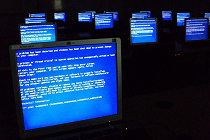
India’s national security is heavily dependent on the proper development of its infrastructure, which is currently backed by weak technologies that are susceptible to cyber threats. What can India do to tackle cyber crime and strengthen its technological infrastructure?
Gateway House’s Alisha Pinto interviews former Somali Ambassador to India, Mohammad Osman Omar, on piracy issues and maritime security from the coast of Somalia to the waters of the Indian Ocean.
