financial-chart-backgrounds-wallpapers Courtesy: Northernminer
14 February 2017

Global taxation and the perversion of capital flows

In the wake of trade-based globalisation followed by financial globalisation, a large volume of capital began moving from developing to advanced countries. This has resulted in relatively poor developing countries effectively becoming net creditors to the rest of the world. Reversing this massive outflow of capital requires governments to strengthen governance in all its dimensions and have closer international collaboration to tighten the regulatory oversight of tax havens for greater transparency

3W7A1047 Courtesy: Gateway House
13 February 2017

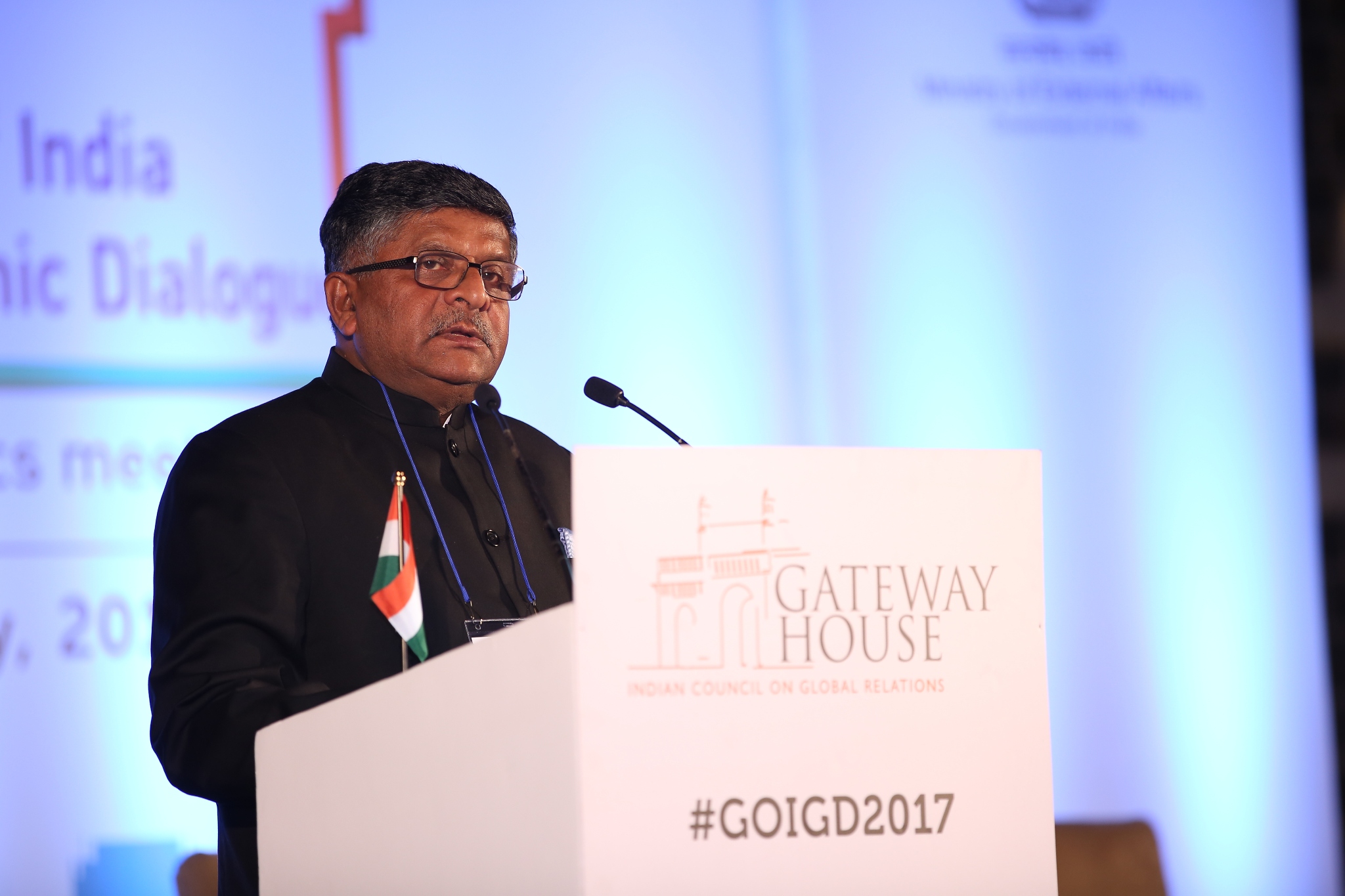
GOIGD 2017: Inaugural Keynote by Hon’ble Ravi Shankar Prasad

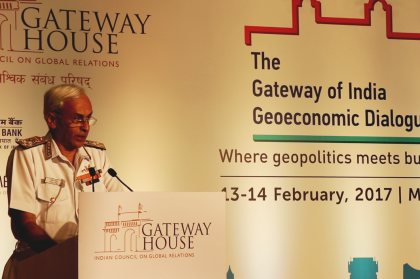
Hon’ble Ravi Shankar Prasad is the Minister of Law & Justice and Minister of Electronics & Information Technology at the Government of India. He delivered the Inaugural Keynote II at India’s second Gateway of India Geoeconomic Dialogue conference in Mumbai, organised in association with the Ministry of External Affairs.

Donald_Trump_swearing_in_ceremony Courtesy: Wikipedia
9 February 2017

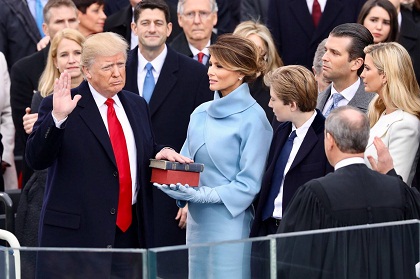
The West and the rest: resetting the order

There is a stark divergence between how the West views the world and how those outside it do. It is possible to oversimplify the equation, to portray the West as cynically self-interested. The West and countries like India need to reach a shared understanding of how the liberal international order can be reformed so it may be salvaged

Reversal of Globalisation2 Courtesy: Systemic Alternatives
8 February 2017

Is globalisation in reverse?

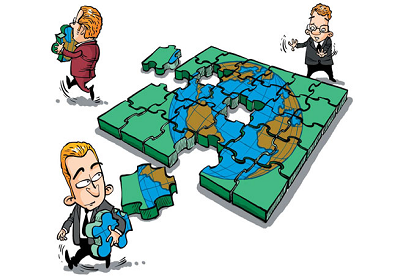
The contours of globalisation are being reshaped. The Brexit vote and the election of Donald Trump mark a strong anti-globalisation sentiment even as leaders in China, India and Russia successfully marry nationalist rhetoric with a cleverly crafted overseas strategy, premised on the very tenets of globalisation. There seems to be a ‘pause’ in the unbalanced progress of globalisation of the last three decades—and this could have many positive outcomes

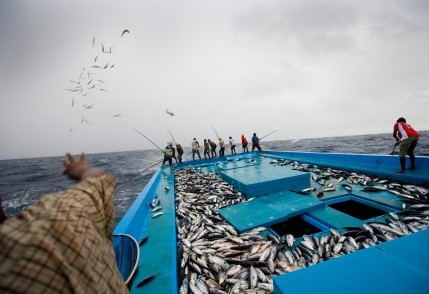
Fishermen release bait fish during pole and line fishing practice to catch skipjack tuna. Pole and line fishing is a selective and therefore more sustainable way to catch tuna as only fish of a certain size are caught, leaving juveniles to grow to spawning age and replenish the stock in the future. Small bait fish are thrown over the side of the boat to lure the tuna to the water surface. The fishermen use the acceleration of the fish as they race to get their prey, hook them and fling them onto the ship's flat deck. Courtesy: Wikimedia Commons
19 January 2017

‘Blue Diplomacy’ to boost Blue Economy

The first ever summit of the Indian Ocean Rim Association, to be held in Indonesia in March 2017, will cast light on how India and other like-minded nations can develop oceanic resources sustainably. This event offers scope for India to mould outcomes

Space commentary cover Courtesy: Wikipedia
12 January 2017

India-EU: space cooperation

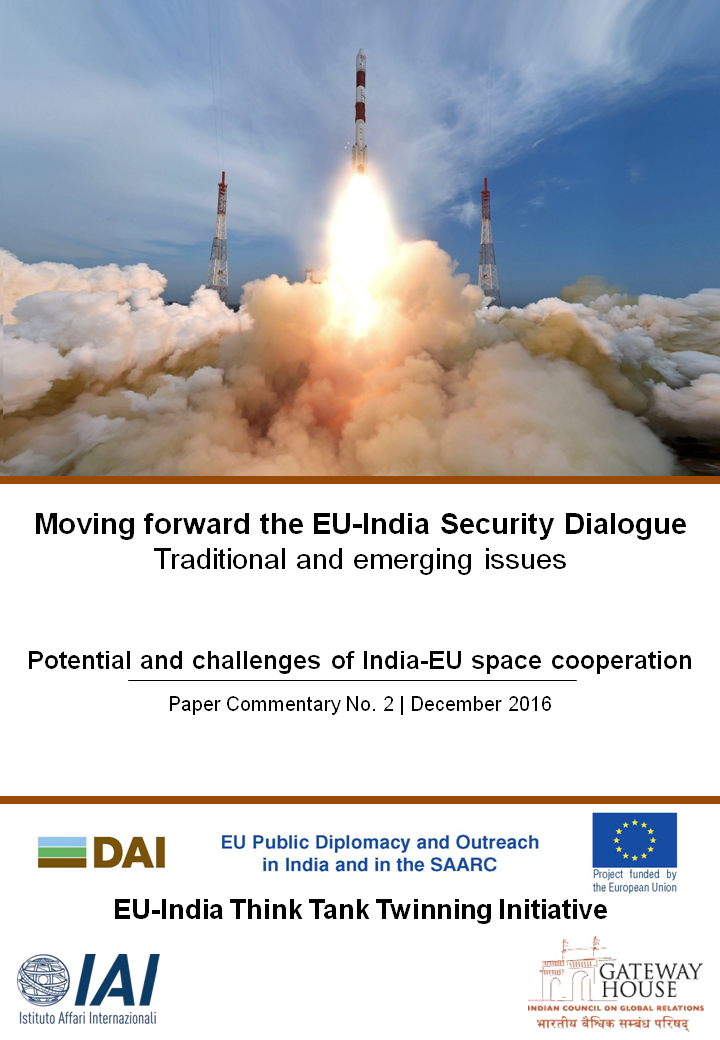
India-EU space collaboration is still nascent largely due to the EU’s limited autonomy over its space programme. Astro-geopolitics, an inevitable successor to geopolitics, requires confidence-building and furthering strengthening of bilateral linkages

Maritime Cover Courtesy: Wikipedia
22 December 2016

India-EU: maritime security cooperation

With common objectives in the Indo-Pacific, the maritime sphere is a good opportunity for India and the EU to deepen cooperation. They must focus on preventing outbreak of an inter-state armed conflict; addressing maritime piracy; adhering to the UNCLOS; and developing maritime infrastructure and the blue economy in the region

GH_Carbon-Emissions-1970-2015 Courtesy: Gateway House
24 November 2016

Carbon emissions: from intention to action

November was a significant month for climate change negotiations: the Paris Agreement of 2015 came into effect, and at this year’s COP22, heads of state reaffirmed their commitment to a plan of action. Gateway House traces the history of climate change negotiations and CO2 emission trends over the last four and a half decades.

Trusteeship-Small Courtesy: Gateway House
23 September 2016

Trusteeship: business and the economics of well-being

This paper reviews if and how trusteeship can be a lodestar for globally navigating businesses and public policies through a period of technology-driven disruptions and the uncertainties unleashed by climate change.