China in IOR: ‘peaceful rise’ no more
China has expanded its presence in the Indian Ocean Region. President Xi Jinping has abandoned Deng Xiaoping’s conciliatory posture for an aggressive, money-fuelled search for super power status

 Courtesy: Western Naval Command
China has expanded its presence in the Indian Ocean Region. President Xi Jinping has abandoned Deng Xiaoping’s conciliatory posture for an aggressive, money-fuelled search for super power status
 Courtesy: Gateway House
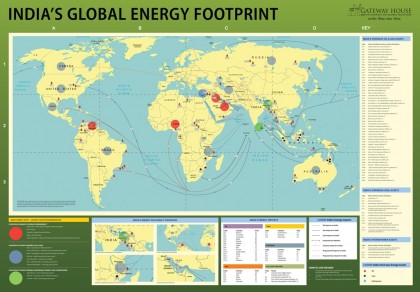
Trends in technology, geopolitics and geoeconomics have dramatically transformed the global energy scenario in the last two years. This means favourable conditions for import-dependent India, which must use the opportunities available to reduce its vulnerability to high energy prices. The jump in oil prices past the $60 mark suggests that India must act with alacrity. India’s Energy Footprint Map offers a profile of India’s global trade and investment in energy, and indicates what India can do to access cheap and reliable supplies
 Courtesy: Flickr/ResoluteSupportMedia
The Russians have concluded that the Afghan Taliban offer a better shield against the Islamic State than the old Northern Alliance. A negotiated settlement in Afghanistan could be achieved if Washington and New Delhi join Moscow, Beijing, Islamabad and Tehran in a joint effort.
 Courtesy: Yahoo
The July coup in Turkey did not achieve its objective of eliminating President Erdogan, who has, ironically, emerged a ‘national hero.’ Does this signal a new beginning? An analysis of the factors impending upon the colossal repair-and-rebuild task before the country.
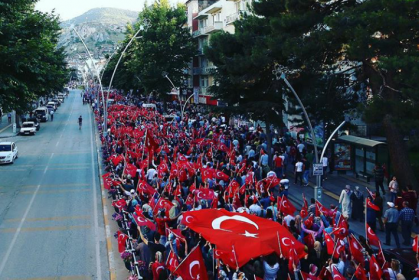 Courtesy: Wikipedia
The attempted coup on July 15 in Turkey as well as its aftermath have irreparably dented President Erdogan’s international image and impacted Turkey's standing as a democratic state, a military power, a NATO member, an EU aspirant, and an emerging economy. This downtrend is unlikely to be reversed in the near future and the country is in for an extended period of instability
 Courtesy: Wikipedia
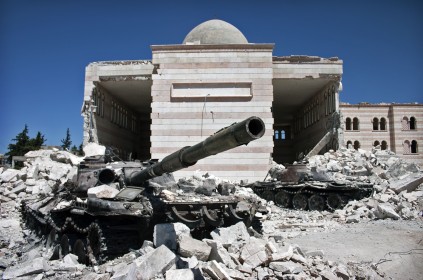
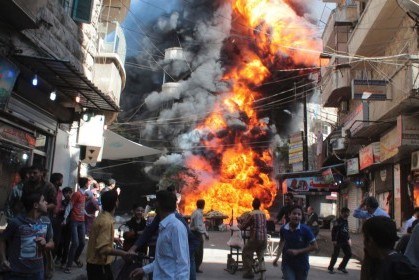
With a cessation of hostilities been brokered by Russia and the United States, the conflict in Syria has entered a tense pause. India has had a bystander attitude to the conflict in Syria. However, with the truce expected to be short, does India have the incentive or the option to depart from its current position, and deepen its engagement in Syria?
 Courtesy: Wikimedia
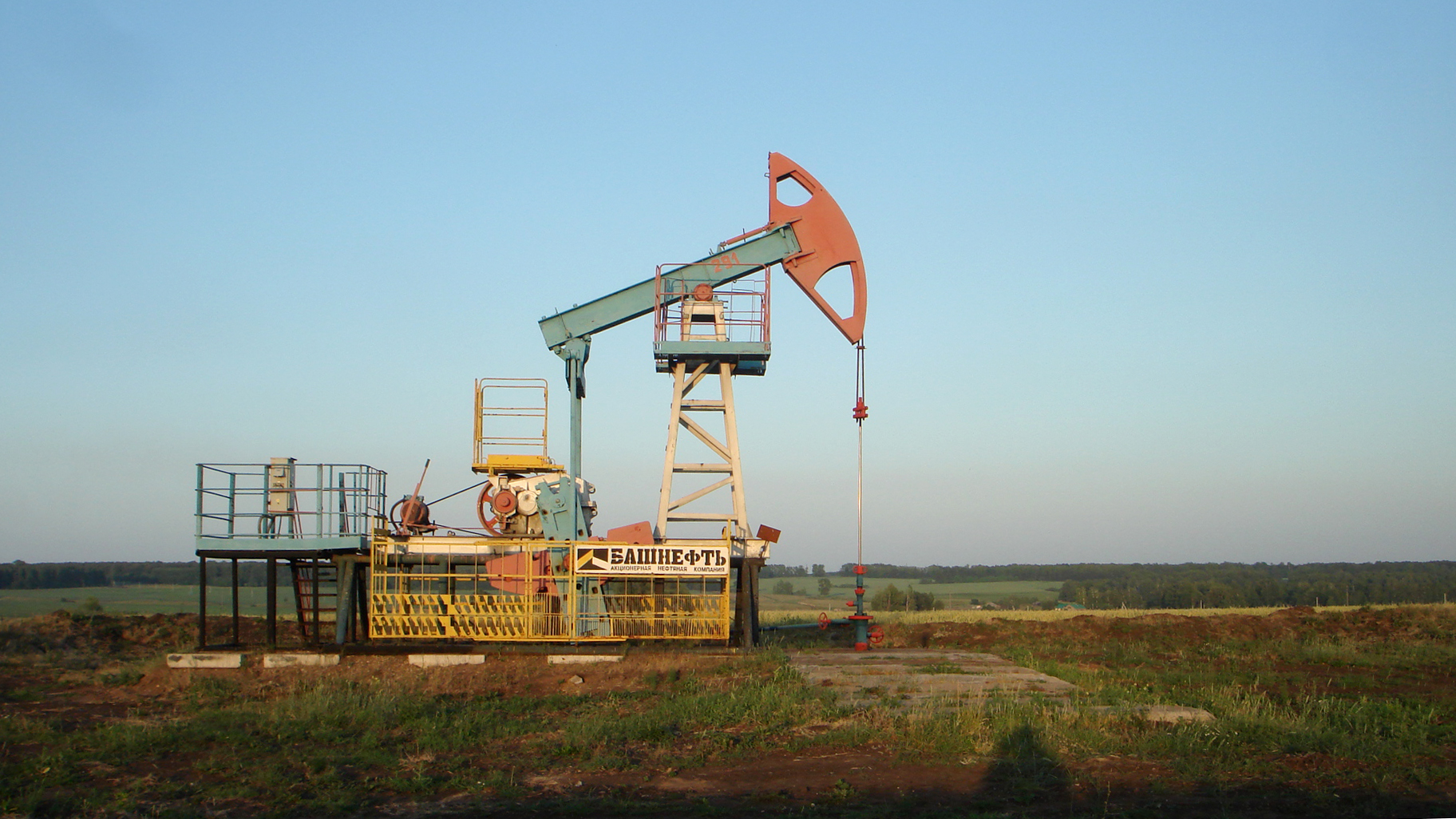
Saudi Arabia, Russia and other oil producers are trying to cap oil production to support prices. Such distortions are unlikely to work. India should be more concerned about the long term rise in oil prices due to falling investment in exploration and production – and should protect itself by acquiring oil and gas assets to cover its energy needs.
 Courtesy: Youtube
The world has witnessed a number of upheavals in the past few years, precipitating widespread global political turbulence stemming from geo-economic instability. Over the next couple of months, Gateway House experts will attempt to deconstruct these events and how India and its foreign policy can work to take advantage of these trends.
 Courtesy: Dawn Endico
Today ISIS is the gravest international security threat. To defeat ISIS, the world should pay heed to India’s experience of the need to isolate state sponsors of terrorism. Ultimately, only when Saudi Arabia acknowledges the danger to its own survival from past policies of alleged support to extremist groups, can it be a reliable partner in the fight against ISIS.
 Courtesy: Wikipedia
The sanctions against Iran impacted the country’s oil, banking, aviation, and other sectors, and had a major humanitarian impact. But neither is armed attack a more suitable method in most instances to address allegedly recalcitrant states. What then is the middle ground? And can the UNSC assume a more proactive role in this context?