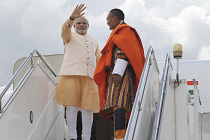
Modi departure_Bhutan Courtesy: MEA/Indian Embassy Thimphu
18 June 2014

Modi: charting a new foreign policy course

Narendra Modi’s first month in office has seen him deftly handle India’s neighbours, accept an invitation to visit Washington, enhance relations with Bhutan and accord due importance to China. In the same manner, Modi will also have to move quickly and firmly to reassure foreign investors of the dependability of India’s fiscal environment
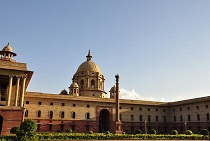

southblock Courtesy: rajkumari1220/Flickr
18 April 2014

Circles & Corridors of Economic Diplomacy

India’s political and economic future will be determined over the next few weeks. Gateway House recommends a priority diplomacy agenda for the next government – one which puts economics at the heart of our foreign policy

milanspikecallusnavy Courtesy: Spike Call U.S Navy/Wikimedia Commons
21 February 2014

Shaping regional diplomacy

The Indian Navy, through multi-lateral exercises, is increasing its sphere of influence and becoming a regional force. Yet, it needs to be supported by policy decisions that enable it to achieve its potential as a state-of-the-art establishment and a powerful tool in India’s diplomatic repertoire

securityrisks Courtesy: Press Information Bureau/Wikimedia Commons
16 January 2014

India’s top security risks in 2014

What are the implications for India of the scaling down of U.S. forces from Afghanistan, the continuing tension with China at the border, and the political turmoil in Bangladesh? How should India address these and other upheavals in its neighbourhood, which are potential challenges to the country’s security?

corridorsmap2 Courtesy: Gateway House
11 July 2013

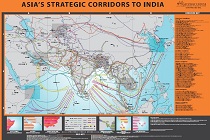
Asia’s Strategic Corridors to India

The map – Asia’s Strategic Corridors to India – has emerged from Gateway House’s study of India’s strategic links with other parts of Asia. It highlights the progress India has made in forging multiple links with six strategic regions – Central Asia, West Asia, East Africa, South-East Asia, East Asia, and our immediate neighbourhood

Li manmohan abe Courtesy: Ministry of External Affairs, India
31 May 2013

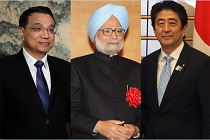
Li and Abe

While the recent India-Japan Joint Statement contains significant breakthroughs, the China-Pakistan Joint Statement reveals the absence of warmth between India and China. With the current flurry of bilateral exchanges, India is fine-tuning its approach to emerging regional realities, as are others.

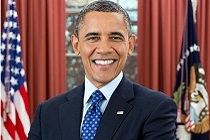
obama Courtesy: Pete Souza/The White House
22 February 2013

The pacific pivot: A decade late and five years too soon

The announcement of the Pacific pivot by the U.S. in 2001 has led to several nations making bold political moves. However, the U.S. isn’t yet ready to be a regional protector against China. What does Washington have to do to prepare itself for the Pivot?

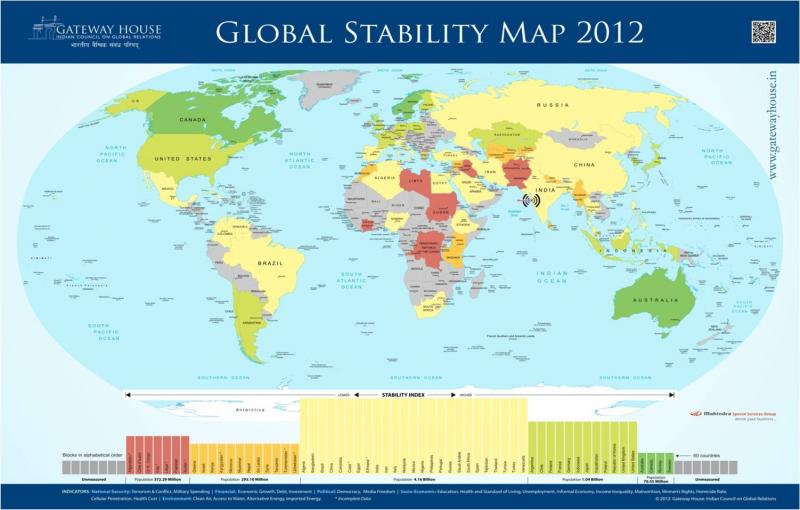
Global Stability Map Courtesy: Gateway House
1 August 2012

Global Stability Map 2012

Gateway House prepared a Global Stability Map, using 20 differing indicators, to analyze the stability of 60 countries around the world. Using criteria that are important to the emerging economies of the world, the map provides an Indian perspective of the world today.

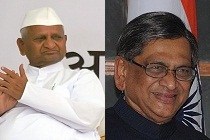
anna hazare 2 Courtesy: nazeah/Wikimediacommons - Ramesh Lalwani/Flickr
30 December 2011

2011’s Top Foreign Policy Cheers and Jeers

The year 2011 saw various events - the Arab Spring, anti- corruption protests, Europe's sovereign debt crisis - transform countries and reshape the world order. Gateway House takes a look at what these events mean for India, and presents India's top foreign policy cheers and jeers for the year.