Book review: Iran from a new Indian perspective
In the absence of a debate in India on Iran’s nuclear programme, ‘Troubling Tehran' is a significant first attempt to go beyond Western narratives and ask pertinent questions

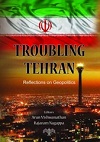 Courtesy: Pentagon Press
In the absence of a debate in India on Iran’s nuclear programme, ‘Troubling Tehran' is a significant first attempt to go beyond Western narratives and ask pertinent questions
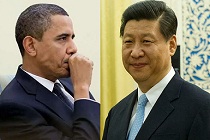 Courtesy: Systemman, Erin A. Kirk-Cuomo/Wikimedia Commons
The U.S. government shutdown and President Obama’s absence gave China immense diplomatic and political space at the APEC and East Asia Summit meetings. China’s declaration of a “de-Americanised” world may be premature but the crumbling old order is doing little to dispel this notion
 Courtesy: Jerchel/WikimediaCommons
India often finds itself in the right place at the wrong time or vice versa, as our dogma of non-alignment trumps honest calculations of self-interest in policy-making – rendering it unfavourable. The national interest, hence, calls for selective alignment on some issues with Washington and on others with Beijing
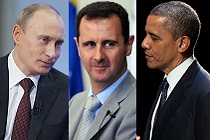 Courtesy: WikimediaCommons
Can the world aspire to a future where the use of force is not seen as leadership? Can the U.S. and former colonial powers like France and UK, think differently and reject the use of force as first resort? Can China and India craft alternatives?
Gateway House's Akshay Mathur interviews Benn Steil, Senior Fellow and Director of International Economics, Council on Foreign Relations (CFR), on his latest book, ‘The Battle Of Bretton Woods’ on how the IMF and the World Bank came to be.
 Courtesy: Asitimes/ Flickr
Indian and Chinese companies routinely bid against each other in their quest to secure oilfields and other resource pools resulting in rising prices. However, a preferable recourse would be for the nations, along with ASEAN, to collaborate as there is enough for all
 Courtesy: greenenergyfutures/Flickr
Policy Perspectives from Gateway House give an overview of a global issue that has implications for India’s policy-making and business community. This edition examines the implications of shale gas for India's energy scenario
 Courtesy: NASA's Marshall Space Flight Center/Flickr
An increase in the global demand for rare earth elements, used in high-technology industries, coupled with limited supplies on Earth, has accelerated extra-terrestrial exploration. International cooperation and competition for these space-based resources will determine the next human footprint and race in space.
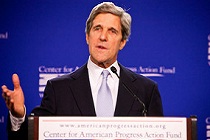 Courtesy: Center for American Progress Action Fund/Flickr
The U.S. Secretary of State’s visit to India comes at a time when India is witnessing significant realignments in its domestic politics while the U.S. is busy tackling its cyber-spying allegations. Amidst these preoccupations, will the upcoming India-U.S. talks churn out substantive outcomes?

This daily column includes Gateway House’s Badi Soch – big thought – of the day’s foreign policy events. Today’s focus is on the negotiations for a free trade agreement between the E.U. and the U.S.