Does the WTO have a future?
Don Stephenson, former Chief Trade Negotiator, India-Canada Comprehensive Economic Partnership Agreement, discusses how India and Canada can work together on effecting reform in the World Trade Organization

Don Stephenson, former Chief Trade Negotiator, India-Canada Comprehensive Economic Partnership Agreement, discusses how India and Canada can work together on effecting reform in the World Trade Organization
Rohinton Medhora, President, Centre for International Governance Innovation (CIGI), Waterloo, Canada, and co-host of the second edition of the India-Canada Track 1.5 Dialogue in Mumbai, spoke to Gateway House on how data management and governance around new technologies, such as Artificial Intelligence, are the issues of the future
 Courtesy: MEA/Flickr
The second edition of the India-Canada Track 1.5 Dialogue, held in Mumbai last month, drew many ideas from experts and government officials on diversifying and deepening the strategic partnership. A summary of some of the outcomes
 Courtesy: Flickr/MEA
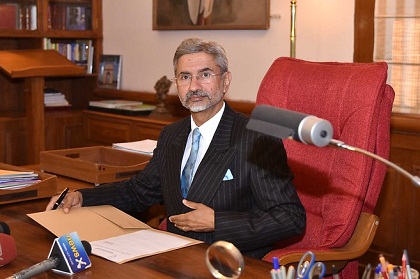
The India-Canada Track 1.5 Dialogue on Innovation, Growth and Prosperity, an initiative agreed upon in February 2018 by the two prime ministers, provides an opportunity for the bilateral relationship to grow through geopolitical convergence, greater economic collaboration and people-to-people interaction. A statement by External Affairs Minister S. Jaishankar for the second edition of the Dialogue, held in Mumbai on 22 November 2019
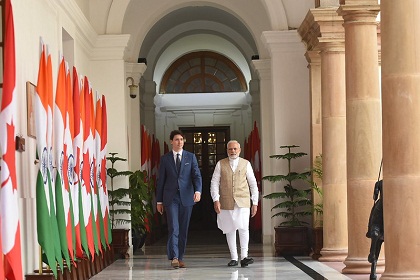 Courtesy: Flickr/MEA
It’s time to start moving on matters in which Canada is a natural ally for India - trade liberalization, energy investments, intellectual property and the rules around e-commerce in particular and big data governance in general.
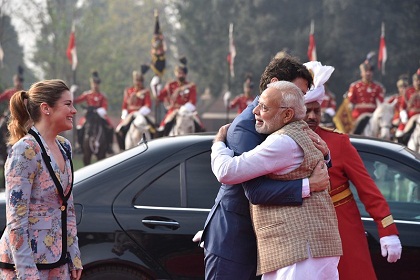 Courtesy: MEA/Flickr
Canada, a middle power, and India, an aspiring middle power, have much to offer each other. The India-Canada Track 1.5 Dialogue, the second edition of which will be held on November 22 in Mumbai, is designed to advance the relationship. Manjeet Kripalani, Executive Director, Gateway House, in conversation with Cleo Paskal, Associate Fellow, Chatham House, who is in the city for the Dialogue and to lead a second initiative, called the Indo-Pacific Engagement
 Courtesy: MEA/Flickr
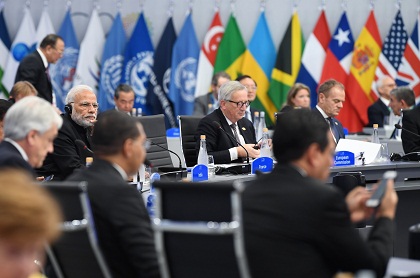
The 2019 G20 Summit in Osaka on June 28-29, is the 14th meeting of the Group of 20 leaders. The G20 is the world’s most influential economic multilateral forum. It is the agenda-setting forum that develops and guides rules of global economic governance. Under the Japanese Presidency, this summit will be the first to discuss and establish the rules for the worldwide governance of data, including current hot-button issues like data localisation and data sovereignty. India has both a preparatory and a contributory role to play in the G20 this year. For in 2022, it will be the President of the G20. India must identify its agenda early on; its a weighty responsibility but also an opportunity to set the global economic agenda.
 Courtesy: exit.al
Digital black markets or “dark net marketplaces” which facilitate the transaction of contraband and illegal services, pose a silent, relatively unnoticed threat to the economy. Hackers, organised criminal networks and terrorist groups use these sites, their advanced security features enabling anonymity when executing cybercrimes. This infographic looks at some of the security crackdowns that have eliminated only some of these sites as they have proved to be resilient
 Courtesy: thinkprogress.org
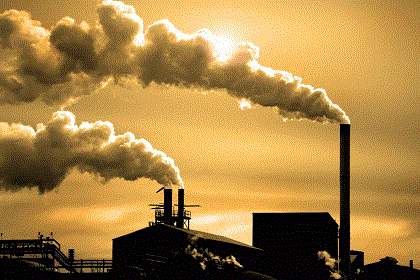
Earth Day, which fell on April 22, is an apt time to take stock of carbon emissions. This infographic offers a comparative look at two countries and what their carbon emissions convey about their approach to carbon mitigation
 Courtesy: Gateway House & CIGI
The use of climate intervention technologies has not taken into sufficient account the social dimensions of climate intervention research, which includes citizen participation and pooling of knowledge resources. To fill this lacuna, Canada and India can examine what participation in climate intervention research means in the context of an African country to be able to evolve a more international view; urge both countries to conduct national policy discussions on climate intervention research; and increase public awareness of climate intervention technologies