revised design Courtesy: Gateway House
27 November 2025

Rise of the Davos Competitor

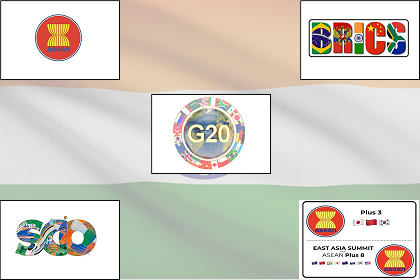
U.S. health secretary Robert Kennedy Jr. called the World Economic Forum a “billionaires’ boys club” imposing totalitarian controls. Indeed, since 1971, the elite platform shaped geopolitics. But its Western-centricism kept out the concerns of the rest. This gave rise to alternative forums, which look beyond financial agendas to the perspectives shaping the Global South. Here are 45 of biggest, half of which began just two decades ago.

Website articles  (4) Courtesy: Indian Embassy in Moscow / FB
30 October 2025

India in Russia’s polycentric world order

The Valdai 2025 conference’s single confirmation was this: Russia believes the post-Western world is already functioning. It is no longer seeking to re-enter Western-led institutions; it is building around them. The polycentric world is like a network, not a hierarchy. No one needs to choose a camp.

Koerber Stiftung (3) Courtesy: Getty
16 October 2025

Labour Corridors: India-Russia’s Next Bet

The labour movement in the India-Russia corridor is a new element in the bilateral. It is already visible in the Delhi–Moscow flights. The usual students and tourists now share the cabin with welders, salon workers, and builders, many on their first overseas assignment. The trend signals a shift in Russia’s migration geography and opens a corridor linking India’s skill base with Russia’s industrial demand.

President of Russia Courtesy: President of Russia
2 October 2025

Valdai frames Russia’s global doctrine

Each autumn, Russia convenes its flagship Annual Summit — a gathering of global leaders, business elites and intellectuals. Often compared in scale to Davos or Shangri-La, what sets Valdai apart is President Vladimir Putin’s extended, unscripted dialogue with the audience. Over the years, India has moved to the centre of this dialogue, reflecting its strategic weight and offering rare insight into Moscow’s evolving worldview.

Pashtun Book 12 Courtesy: HarperCollins Publishers India
3 November 2022

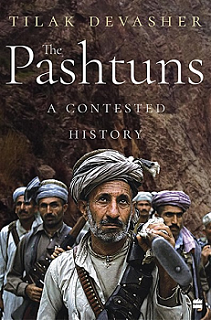
The Pashtuns: A Contested History

Tilak Devasher’s book on the Pashtuns brings out the dynamics of the Pashtun, their code, their relationship with Islam and with Pakistan. It contextualizes the current geo-political challenges in South Asia, making it required reading for those who want to understand not only the Pashtuns but regional strategic and security dynamics.

Raisi-Putin Version 1 Courtesy: TASS
25 August 2022

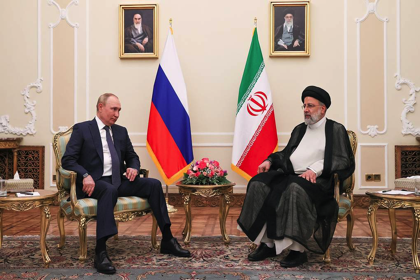
Iran-Russia pas de deux

Russian President Vladimir Putin’s July visit to Iran was a geopolitical reset for both countries. The collapse of the JCPOA and the Ukraine crisis has strategically united Iran and Russia against their common adversary, the U.S. Russia is now a credible alternative to fill the investment vacuum for Iran’s defence, trade and energy sectors.

huri afghanistan Courtesy: AP News
16 February 2022

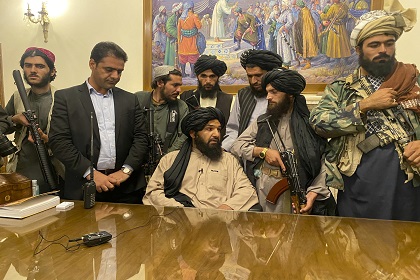
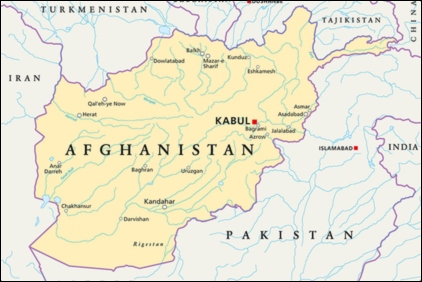
Afghanistan in the Sino-U.S. contestation

Themes of rivalry between China and the U.S., of China's readiness to fill the void left by the U.S. withdrawal in Afghanistan, dominate accounts of recent developments in that country. What does China's inclusion in the power game in Asia, with a geopolitical vision remarkably different from that of the West, mean for the developments in Afghanistan?

shutterstock_1091235845 Courtesy: Shutterstock
15 October 2020

UN: Necessary but reformed

The UN turned 75 this year but instead of grand celebrations, the world witnessed an empty UNGA with world leaders addressing it via video screening because of the pandemic. The UN is under unprecedented stress and being shown up for its inability to tackle the challenges of today like the pandemics, climate change, terrorism or global peace and security. The institution's key governing structures, especially the UN Security Council, are inadequate and demand reform. India must now use gritty resolve to ensure its place in these governing structures.