India-Pakistan: false equivalency
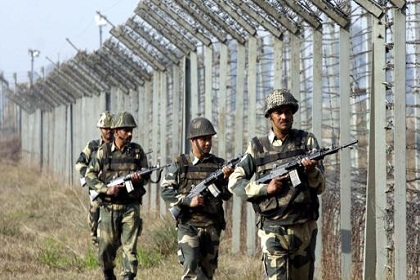
Pakistan's righteous indignation about national sovereignty—over India's Myanmar counterinsurgency program—is out of sync with the country's actions in the past. Experiences from history serve as proof

 Courtesy: livemint.com
Pakistan's righteous indignation about national sovereignty—over India's Myanmar counterinsurgency program—is out of sync with the country's actions in the past. Experiences from history serve as proof
 Courtesy:
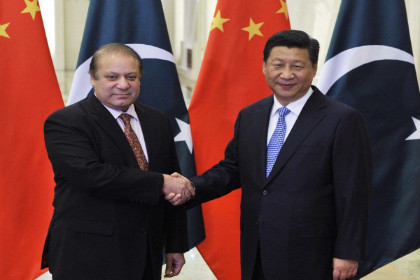
While China will seek India’s cooperation on its ambitious ‘One Belt, One Road’ project during Prime Minister Modi’s visit this week, Indian policy makers must soon articulate a definite stand on this transnational corridor by bridging the country’s security concerns and the benefits of such an engagement with China.
 Courtesy:
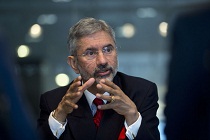
Indian foreign secretary S. Jaishankar’s visit to SAARC countries from March 1 is an opportunity to examine the political trajectories in the region. While democracy in some countries like Sri Lanka is on an upswing, in others, like Bangladesh, it is in decline. With China’s growing economic influence in South Asia, can Indian democracy be an effective counterpoint?
 Courtesy: Saddahaq.com
The SAARC Yatra to be undertaken by foreign secretary S. Jaishankar from March 1 is an opportunity for India to improve relations, resurrect stalled projects and create new synergies with its neighbourhood. An initiative like this could hold the key to India shedding the ‘hegemon’ tag and pursuing mutually beneficial policies with its neighbours
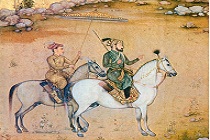 Courtesy: Victoria and Albert Museum, London.
The story of Darah Shikoh, heir-apparent to the Mughal throne in the mid-17th century , enacted by the National Theatre in London, offers insights on how to get beyond the increasingly polarising global discourse on faith, reason and Islam
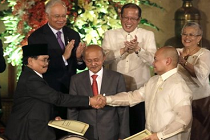 Courtesy: khabrsoutheastasia
The Islamic State’s violence dominated 2014’s news headlines, masking important non-violent initiatives around the world. But endeavors for peaceful solutions are thriving, and India, with its legacy of a non-violent freedom struggle, must contribute to this process as a counter-force against the advocates of violence
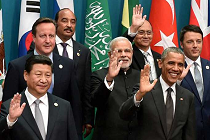 Courtesy: Ministry of External Affairs/GoI
The style and substance of the foreign policies of Narendra Modi’s six-month-old government have been remarkably different from those of his predecessors. Gateway House examines the changes in India’s equations with three critical countries—the US, China and Pakistan—and outlines a foreign policy forecast for 2015
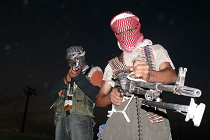 Courtesy: Wikimedia Commons
This year has seen a disturbing increase in brutal violence by terrorist groups across the world—the Islamic State in Iraq and Syria, Boko Haram in Nigeria and the Tehreek-e-Taliban in Pakistan. With non-traditional terror targets like Belgium, Canada and Australia also being attacked this year, 2015 could see a more lethal spread of jihadist terror
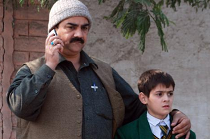 Courtesy: Khuram Parvez
The massacre of 134 children in the early morning attack in Peshawar should prompt Pakistan’s military and political leaders to reconsider their conflicted approach to the insurgency that is threatening the entire region
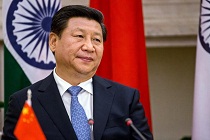 Courtesy: Livemint
The shifting geopolitics in Asia presented an opportunity for China to rebalance its relations with India during the visit of President Xi Jinping to New Delhi in September. However, the meeting proved to be another missed opportunity for the two countries.