The Right Way Out of Afghanistan
To leave behind a stable government in Afghanistan in 2014, the U.S. needs to work towards electoral reforms, negotiations with the Taliban, and a regional settlement involving Pakistan.
Courtesy: Foreign Affairs
To leave behind a stable government in Afghanistan in 2014, the U.S. needs to work towards electoral reforms, negotiations with the Taliban, and a regional settlement involving Pakistan.
Courtesy: Open Democracy
The NATO withdrawal from Afghanistan in 2014 should be done tactically so that it doesn't destabilize Pakistan. Despite having accepted Pakistani help in the past, the Taliban might empathize with Pakistani Pashtuns and spread the very secessionist tendencies which Pakistan’s Afghan policy was designed to prevent.
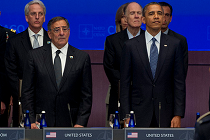
Courtesy: Secretary of Defense/Flickr
Pakistan’s refusal to re-open NATO supply routes into Afghanistan has made the country an instant pariah in the U.S. at the NATO Summit. The communiqué released confirms a withdrawal of 130,000 troops by as early as mid-2013. Can the remaining soldiers help maintain peace when a force much larger could not?
Courtesy: Ministry of External Affairs, India
U.S. Secretary of State Hillary Clinton's recent visit to China, India, and Bangladesh is keeping with the U.S. pivot to Asia. The choice of countries has strategic significance for the U.S., where India is flagged as balancing the rise of China, and Bangladesh as a strategic base in the Bay of Bengal.
Courtesy: U.S. Department of Defense
An important take-away from the preliminary pact reached by Kabul and Washington is that unlike the 1990s, the Americans are not just packing their bags and leaving. This is good news in terms of regional stability, and the upcoming NATO summit may answer some questions this draft agreement raises.
Courtesy: U.S.ArmedForces/WikimediaCommons
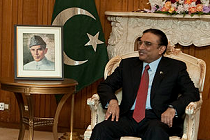
Asif Ali Zardari, who previously made sound pronouncements on Indo-Pakistan ties, will soon be the first Pakistani President to visit India since 2005. Though he has a reputation and interest in business affairs, a modest, innocuous deal may work better this time than the lofty promises made in the past.
Courtesy: Gateway House
Given the immediacy of rising tensions around Iran’s nuclear programme, what can India and the U.S. do to resolve the issue? Gateway House’s Manjeet Kripalani talks to Ambassador Frank Wisner about the possibilities of a strike against Iran and its effects on the India-U.S. relationship.
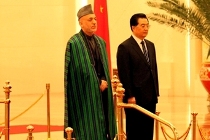
Courtesy: Afghanistan Goverment/WikimediaCommons
Afghanistan has become the first significant theatre of effective confrontation between the West and China. But with its deep-rooted economic ties, could the U.S. and NATO actually confront China?
Rather than flounder, “India and Indians really do want Pakistan to win” blogs Prashant Agarwal. Here are five pieces of brotherly advice for our neighbour.
Courtesy: IIP State/Flickr
The current standoff between the Pakistani Government and the Supreme Court is yet another sign of Pakistan’s instable democracy. Will this lead to another transition to military rule? Or will the pillars of the media and the judiciary be able to bring about a balance?