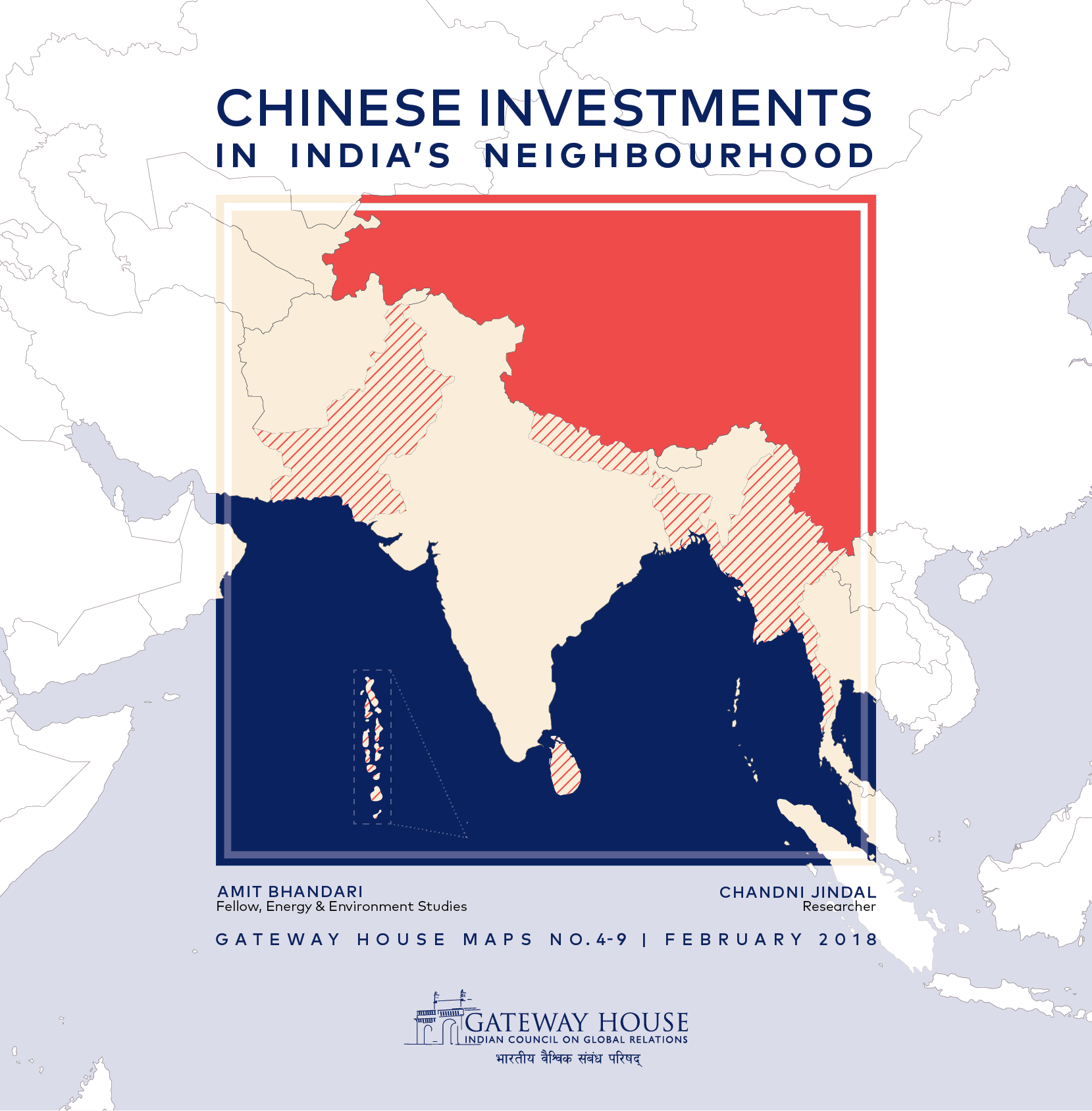
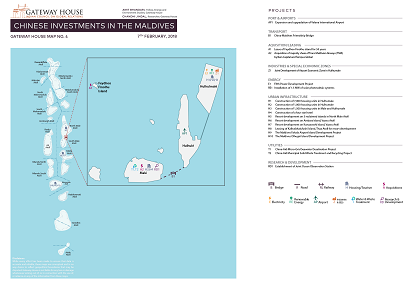
Gateway House's research on Chinese investments in India's Neighbourhood. Researched by Amit Bhandari and Chandni Jindal. Courtesy: Gateway House
12 March 2018

Chinese Investments in India’s Neighbourhood

India and the world have watched China’s growing investment in Asia and beyond with a mix of awe and apprehension. The unprecedented scale of these investments are reshaping political arrangements around South Asia.

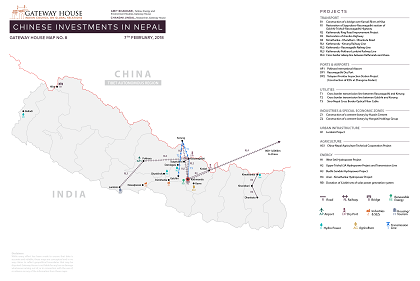
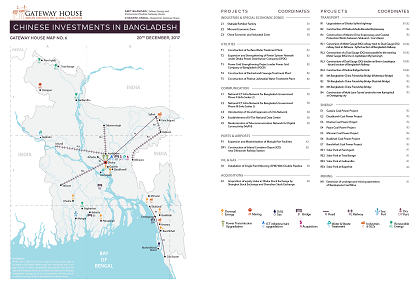
Gateway House's research map on Chinese investments in Nepal. Researched by Amit Bhandari and Chandni Jindal. Courtesy: Gateway House
7 February 2018

Nepal: Exploiting The Elite

Nepal has historically enjoyed close economic ties with India. An open border and the large number of Nepalis in the Indian army testify to the two countries’ economic and social proximity. But as with other countries in India’s neighbourhood, Chinese investment is leading Nepal to tilt towards China.

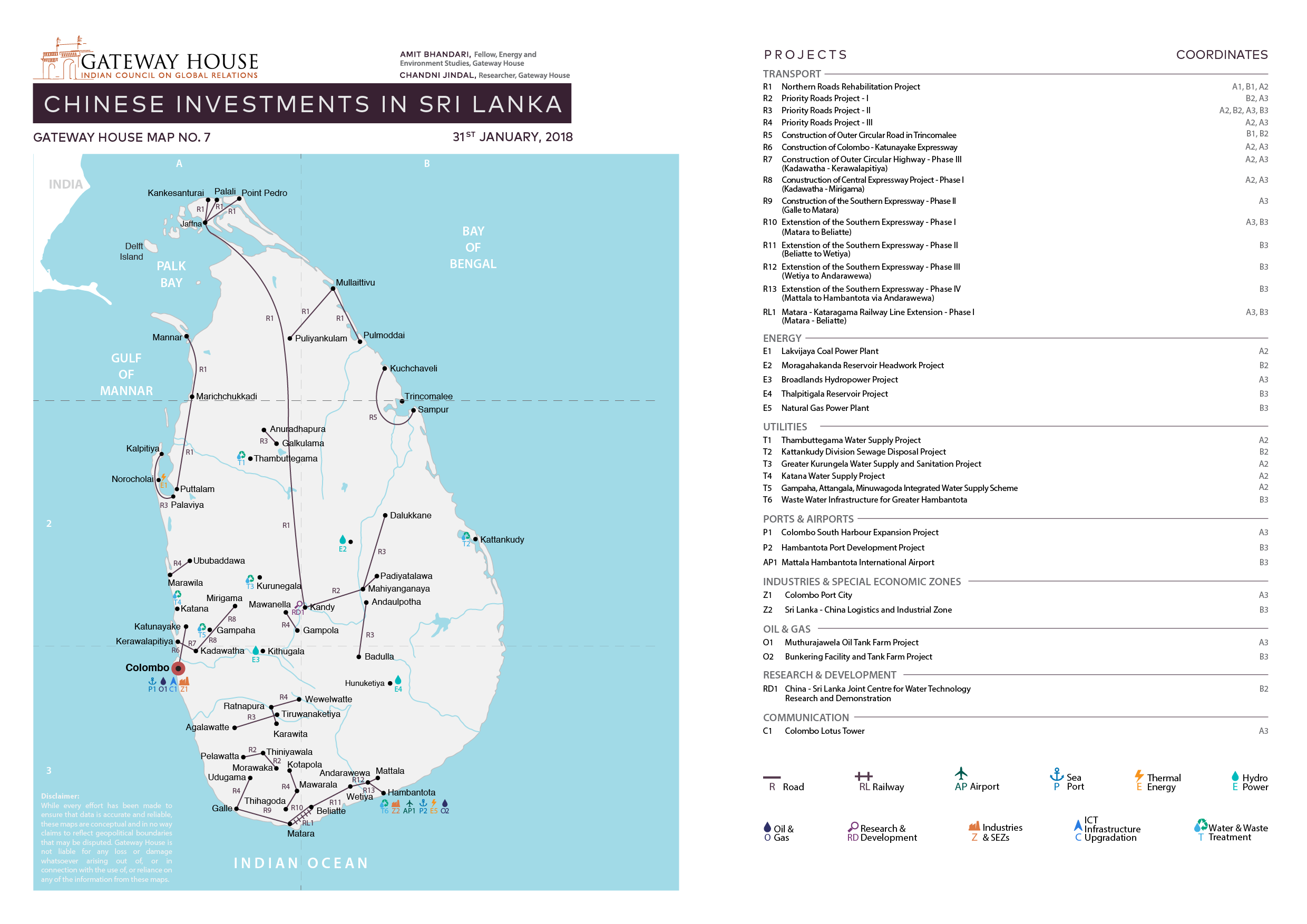
Gateway House's research map on Chinese investments in Sri Lanka. Researched by Amit Bhandari and Chandni Jindal. Courtesy: Gateway House
31 January 2018

Sri Lanka: Debt-trapped

China has replaced India as Sri Lanka’s biggest economic partner. It is gaining control of Sri Lanka’s ports, which can give it leverage over India’s external trade

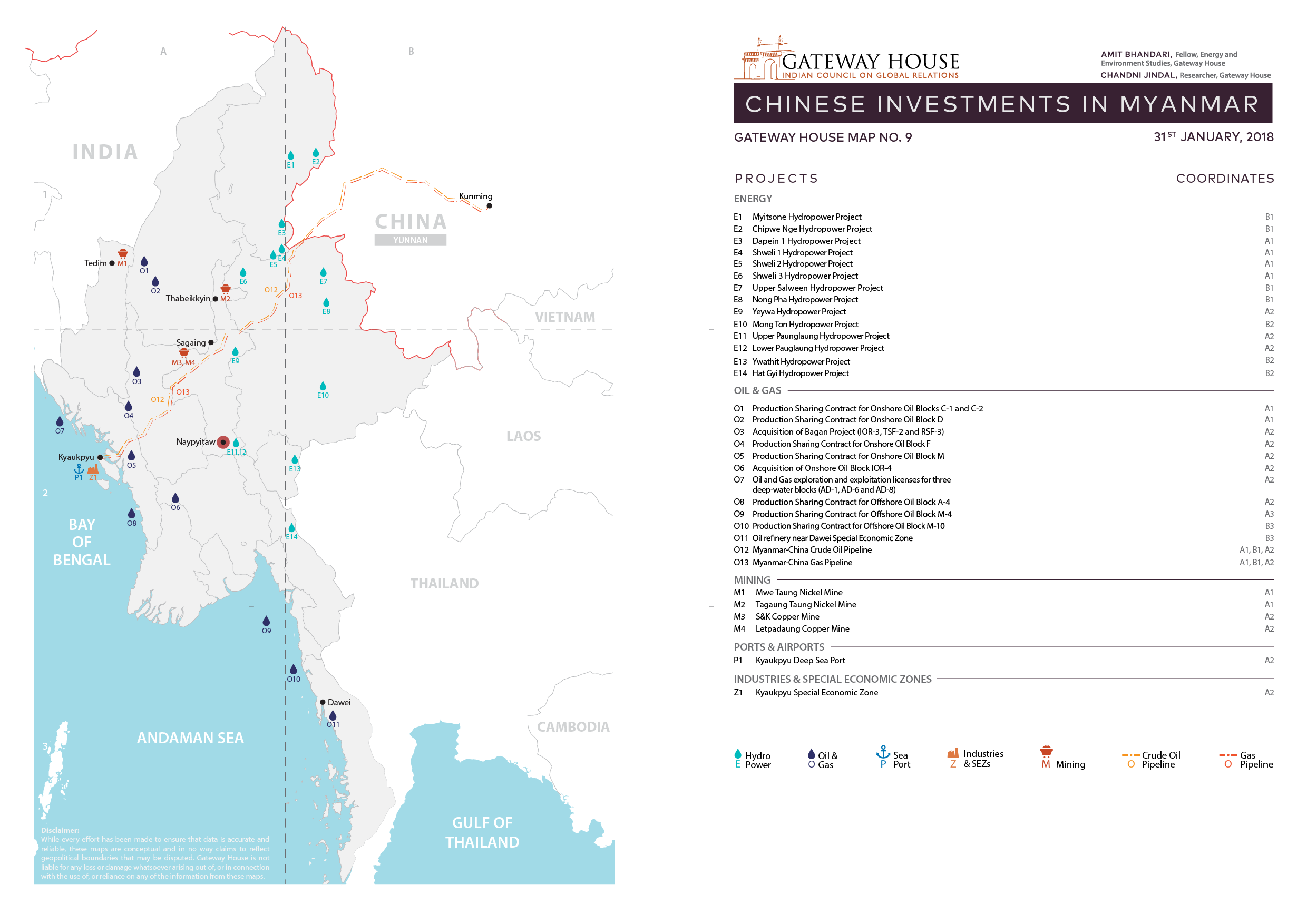
Gateway House's research map on Chinese investments in Myanmar. Researched by Amit Bhandari and Chandni Jindal. Courtesy: Gateway House
1 January 2018

Myanmar: Resisting Chinese Primacy

While most Asian countries studied by Gateway House are moving toward greater dependence on China, Myanmar is moving in the opposite direction. For decades, China has been one of the few countries willing to do business with Myanmar, sanctioned by Read more

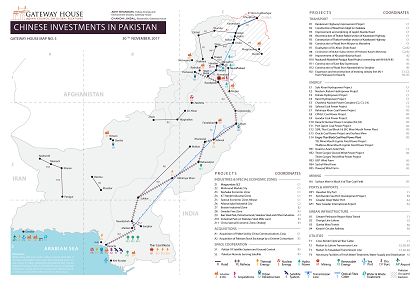
Gateway House's research map on Chinese investments in Pakistan. Researched by Amit Bhandari and Chandni Jindal. Courtesy: Gateway House
30 November 2017

Pakistan: A Reckless Mortgage

The China-Pakistan Economic Corridor is a strategic play by China disguised as an economic corridor. It may bring some economic benefits to Pakistan in the short run, but will almost certainly cost the country – and India – a big political price in the long run

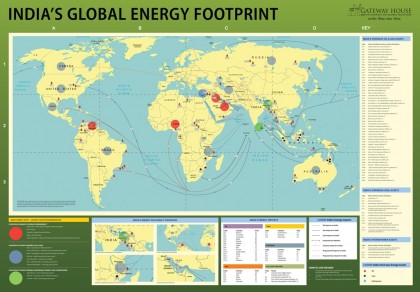
indias-global-energy-footprint Courtesy: Gateway House
14 February 2017

India’s global energy footprint

Trends in technology, geopolitics and geoeconomics have dramatically transformed the global energy scenario in the last two years. This means favourable conditions for import-dependent India, which must use the opportunities available to reduce its vulnerability to high energy prices. The jump in oil prices past the $60 mark suggests that India must act with alacrity. India’s Energy Footprint Map offers a profile of India’s global trade and investment in energy, and indicates what India can do to access cheap and reliable supplies

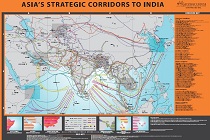
corridorsmap2 Courtesy: Gateway House
11 July 2013

Asia’s Strategic Corridors to India

The map – Asia’s Strategic Corridors to India – has emerged from Gateway House’s study of India’s strategic links with other parts of Asia. It highlights the progress India has made in forging multiple links with six strategic regions – Central Asia, West Asia, East Africa, South-East Asia, East Asia, and our immediate neighbourhood

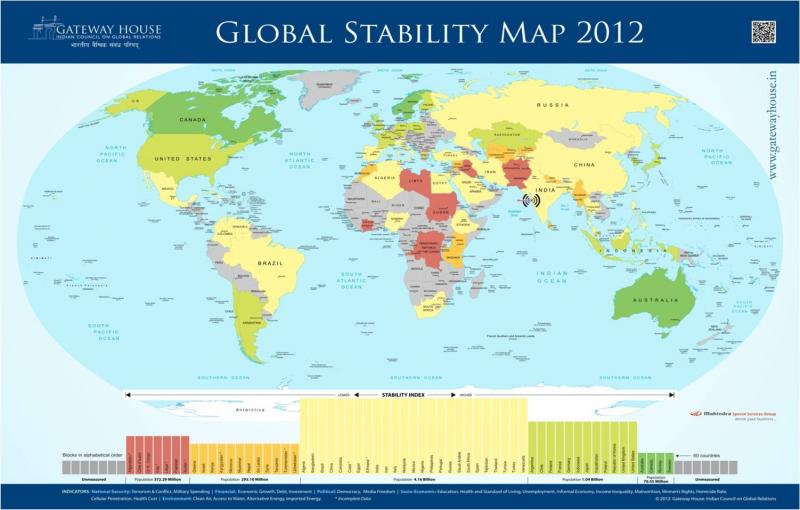
Global Stability Map Courtesy: Gateway House
1 August 2012

Global Stability Map 2012

Gateway House prepared a Global Stability Map, using 20 differing indicators, to analyze the stability of 60 countries around the world. Using criteria that are important to the emerging economies of the world, the map provides an Indian perspective of the world today.