kcmodi0312_0 Courtesy: Flickr/MEA
28 November 2019

Assessing the 35th ASEAN Summit

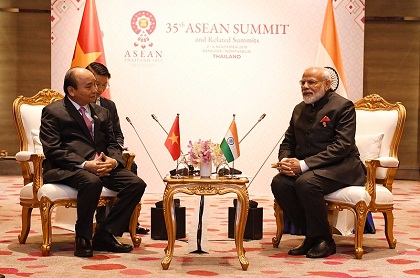
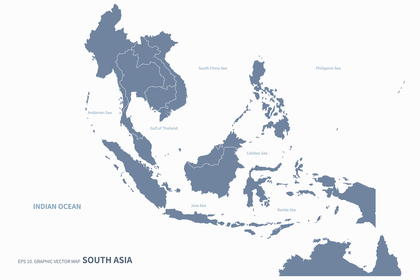
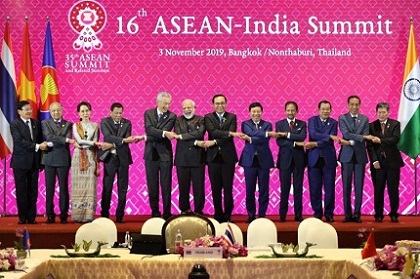
The 35th summit of the Association of South East Asian Nations, held in Bangkok early in November, showed that a shifting geostrategic landscape notwithstanding, “ASEAN centrality” in the region is a top priority with members. It also served as a backdrop for three summits that ASEAN held on November 4 with China, U.S. and India
shutterstock_1408705082 Courtesy: Shutterstock
14 November 2019

U.S. law tackles Chinese investments

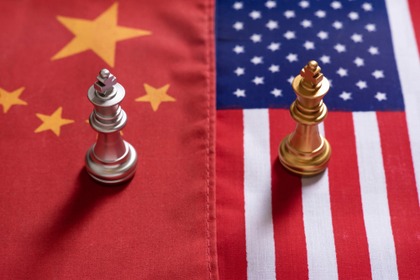
The Committee on Foreign Investment in the United States (CFIUS) is an inter-agency body which reviews in-bound foreign investments for their impact on national security. The Treasury Department recently proposed draft regulations, strengthening it. An analysis of the effect these amendments have had – and their applicability in an Indian context

shutterstock_302486273 Courtesy: Shutterstock
14 November 2019

China’s strategic tech depth in India

In India, China’s tech giant companies and venture capital funds have become the primary vehicle for investments in the country – largely in tech start-ups. This is different from other emerging markets where Chinese investments are mostly in physical infrastructure. Chinese FDI into India is small at $6.2 billion, but its impact is already outsized, given the increasing penetration of tech in India

49012249412_d8b02bb141_c Courtesy: MEA/Flickr
7 November 2019

Goodbye, RCEP

There have been mixed reactions to India’s not signing on to the Regional Comprehensive Economic Partnership. India is often criticised for abstaining from trade agreements and being a protectionist nation, but in fact, the reverse is true. The country’s trade to GDP ratio of 43% is higher than China’s 38% and the U.S.’ 27%. This shows how important trade is for India, particularly if it wants to reach the 2024 goal of being a $5- trillion economy.

48645255438_77e7265a4b_c Courtesy: TICAD7/Flickr
3 October 2019

TICAD 7’s agenda: engaging private enterprise

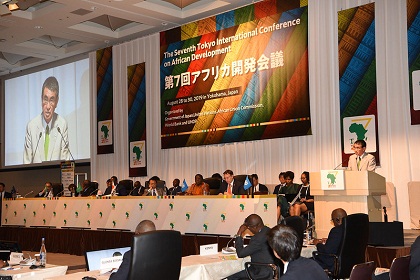
The Seventh Tokyo International Conference on African Development was a departure from earlier editions of it. Japan, which is changing tack as a competitor to China in Africa, held back from publicising the number of heads of state present to prevent any comparisons with other such forums and made no further commitments on Overseas Development Assistance. The accent, instead, was on increasing Japanese private sector engagement

shutterstock_1457421710 (1) Courtesy: Shutterstock
26 September 2019

Quad in the Indo-Pacific

The foreign ministers of the Quad countries meet for the first time in New York today even as the Indo-Pacific has turned into a keenly contested geopolitical arena. Some countries are offering to play a mediatory role while other triangular equations are also undergoing change. An analysis of some of the relationships at work here

shutterstock_1023930217 Courtesy: Shutterstock
22 August 2019

The Telegram phenomenon

The tool used to sustain and coordinate protests is a young, encrypted messaging service called Telegram. Its unique privacy and security features and resistance to the state has made Telegram more popular than its larger rivals, WhatsApp and WeChat. What is this communication phenomenon?