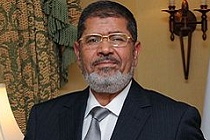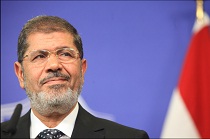
Morsi Courtesy: European External Action Service/ Flickr
3 July 2013

Why Morsi is wrong for his people

The downfall of Egyptian president Mohammad Morsi was partly contributed by those thousands of protesters who disagreed with his view of “Us” and “Them”. Leaders such as Morsi have focused on persecuting those who refuse to share their vision; continuing down this path would have had a negative impact on history

space Courtesy: NASA's Marshall Space Flight Center/Flickr
28 June 2013

Mining and industry in space?

An increase in the global demand for rare earth elements, used in high-technology industries, coupled with limited supplies on Earth, has accelerated extra-terrestrial exploration. International cooperation and competition for these space-based resources will determine the next human footprint and race in space.

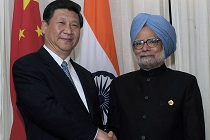
Ministry Of External Affairs, India Courtesy: Ministry Of External Affairs, India
29 March 2013

Beijing banks on BRICS

Indian foreign policy has not yet addressed the ramifications of Chinese economic dominance in BRICS. Nor have we matched China’s engagement within the group to ensure that the BRICS vision of a new international order for emerging economies actually works in their favour.

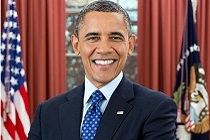
obama Courtesy: Pete Souza/The White House
22 February 2013

The pacific pivot: A decade late and five years too soon

The announcement of the Pacific pivot by the U.S. in 2001 has led to several nations making bold political moves. However, the U.S. isn’t yet ready to be a regional protector against China. What does Washington have to do to prepare itself for the Pivot?

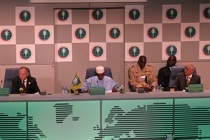
Www.Oic-Oci.Org Courtesy:
23 January 2013

India and the OIC: To join or not to join?

India’s relations with Islamic nations, many of which are members of the Organisation of Islamic Cooperation (OIC), have become even more prolific over the last decade. While India does not visualise becoming a member of a religious international body, many reasons militate against our formally joining the OIC.

U.S. Department of Defense Courtesy: U.S. Department of Defense
11 January 2013

Chuck Hagel: Revising U.S. strategic postures?

The nomination of Chuck Hagel for the post of the U.S. Defense Secretary has garnered severe criticism from Israel and the Jewish lobby. Given the geopolitical changes unfolding in the Middle East and the rest of Asia, what will Hagel’s assumption of office mean for Israel, India and the rest of the world?

morsi Courtesy: Cyfraw/WikimediaCommons
2 January 2013

The chess game in Egypt

Despite heavy opposition from several factions, Egyptian President Mohamed Morsi’s propositions for altering the constitution have been approved. Although the alterations have democratic elements, the liberals and secularists bear responsibility in taking forward Egypt’s journey to complete democracy.

Courtesy: Nilanjana Roy/WikimediaCommons
1 January 2013

India’s Tunisia moment

India’s governance and newest social revolution, led by the country’s youth and middle class, is being watched by the world. But will the incumbent government be able to respond with emotion and convert the movement into tangible policies and institutionalise them? Manjeet Kripalani blogs

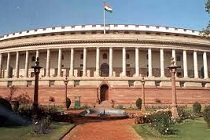
parliament Courtesy: Shwkyn231/Flickr
31 December 2012

India’s foreign policy: A year in review

The year 2012 has been a busy one for foreign policy: from escalating disputes in the South China Sea to alternate financial instruments from the emerging world. India’s foreign policy too has its shown strengths and weaknesses. We present our top foreign policy Hotspots, Sweet spots and Blind spots for 2012.

khameini Courtesy: Dragonfire and Georgethewriter/WikimediaCommons
29 November 2012

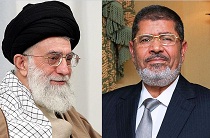
Iran-Egypt: old foes, new competitors

Rivals Iran and Egypt have become the two most important powers in today’s West Asia. Yet, Iran is looking for neither a smooth victory nor a quick failure for Egypt’s rise. Tehran will remain the key regional player, while it’s too early to tell if Cairo is capable of overcoming Iran’s influence.