covid-19: impact on india's digital manufacturing Courtesy: Shutterstock
11 March 2021

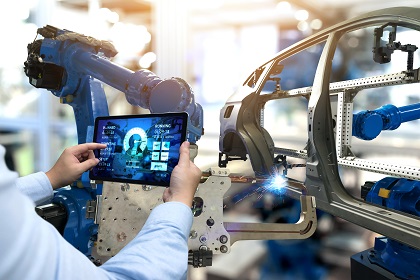
COVID-19: Impact on India’s digital manufacturing

COVID-19 has forced India and its manufacturers to quickly step up their adoption of digital manufacturing processes. There are four elements of this ecosystem already in place – the digital infrastructure, government schemes, academic learning, and a burst of start-ups. This, supported by key policy decisions by the Indian government, will propel Indian manufacturing to higher levels of efficiency, productivity, and competitiveness.

reiszed Courtesy: Shutterstock
4 February 2021

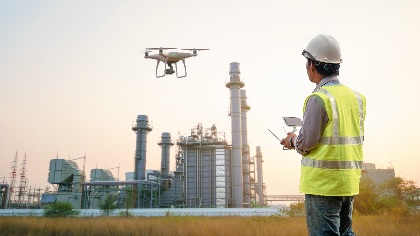
Drones: Regulation drives Innovation

Drones have become vital to the operations of many industries and government organisations across the world. With huge economic opportunity to be derived from the use, manufacture and sale of drones, the Indian government must refine policy and address regulatory lacunae to help boost both technology adoption and drone manufacture in India.

resized intermediary liability Courtesy: Shutterstock
21 January 2021

Regulating Big Tech Intermediaries

Social media platforms such as Twitter and Facebook have come under global scrutiny in recent months following their use to incite or misinform the public. For years, governments around the democratic world have not taken the responsibility to adequately regulate these platforms. Now that may be changing – and it won’t be easy.

3DP Ambika Courtesy: Shutterstock
15 December 2020

Regulations for 3D Printing

With India now considering the creation of a policy to promote additive manufacturing, it is necessary to look at whether this new industry has a conducive regulatory environment, both at the domestic and global level. A key element of additive manufacturing is 3D, rapidly becoming a critical element in industrial and national security. Suitable regulation will ensure that countries that are heavily reliant on China for manufacturing, will have a chance to build their own industrial base

Final Courtesy: Gateway House
19 November 2020

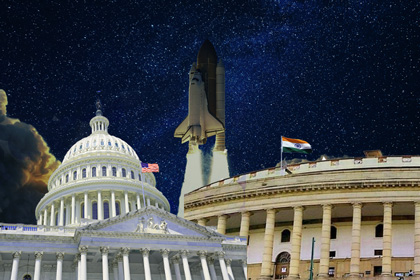
Beyond BECA

India has institutionalized a robust civilian-space agreement with the U.S. through the Joint Working Group on Civil Space Cooperation in 2005 and added a military dimension to it in 2020 when it signed the U.S.-India BECA Agreement. The two countries should now partner to secure each other’s interest in the rapidly-maturing space economy sector.

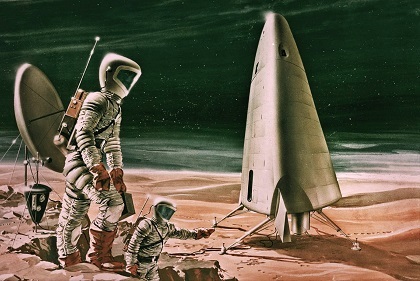
Chai Courtesy: Wikimedia Commons
26 October 2020

India must back Developing World in Space20

The Space20 is the newest sub-forum of the G20 initiated by Saudi Arabia, with the support of the United Nations Office of Outer Space Affairs. India, on its way to the G20 presidency in 2022, should set a comprehensive Space20 agenda for the democratization of outer space, whereby it can share its space growth story with the developing world and achieve its goal to become a global knowledge epicenter.

shutterstock_193919333 Courtesy: Shuterstock
4 September 2020

India on the global digital stage

The depth and complexity of India’s digital citizenry and ecosystem puts it in a unique position to impact global rules on digital governance. An opportunity to assert its influence is coming up with India’s presidency of the G20 in 2022. Work on this agenda must begin now.

CG_Fina; Courtesy: Wikimedia Commons
27 August 2020

An Indo Emirati space partnership

As the world enters the Second Space Age, an Indo-Emirati space partnership can be a lodestar for others. However, it is only the people-to-people connect and the diversity of the innovation linkages between the Emirati and Indian diaspora, that can truly make it a success for science and citizens, and help achieve their aspirations for the 21st century.

shutterstock_777026497 Courtesy: Shutterstock
13 August 2020

We own your Face!

Facial recognition technology has emerged as an important identification tool. Big tech, social media companies and governments around the world use it and hold an unprecedented power over individuals and communities. Its use for surveillance purposes has brought it under public scrutiny. The technology has still not been perfected. Is it really ready for adoption?