An open letter to Pakistan
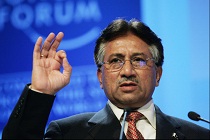
Rather than flounder, “India and Indians really do want Pakistan to win” blogs Prashant Agarwal. Here are five pieces of brotherly advice for our neighbour.
Courtesy: IIP State/Flickr
The current standoff between the Pakistani Government and the Supreme Court is yet another sign of Pakistan’s instable democracy. Will this lead to another transition to military rule? Or will the pillars of the media and the judiciary be able to bring about a balance?
Courtesy: US Mission Geneva/Flickr
Bangladesh Prime Minister Sheikh Hasina's visit to Tripura marks a turning point in India-Bangladesh relations. The two countries share an extraordinary history, but the key to India's engagement with Bangladesh is through Tripura.
Courtesy: nazeah/Wikimediacommons - Ramesh Lalwani/Flickr
The year 2011 saw various events - the Arab Spring, anti- corruption protests, Europe's sovereign debt crisis - transform countries and reshape the world order. Gateway House takes a look at what these events mean for India, and presents India's top foreign policy cheers and jeers for the year.
Courtesy: U.S.ArmedForces/WikimediaCommons
The 'memogate' fiasco in Pakistan highlights, yet again, the tensions that exist between the country’s political establishment and the Pakistan Army. While the final acts of this maneuvering are being played out, will the all-powerful Army continue to push the civilian government into a corner?
Courtesy: Jawad Zakariya/WikimediaCommons
Imran Khan, leader of the Pakistani political party Tehreek-e-Insaaf, means well, and has the support of many in his country. But without any solid reforms manifesto, and almost no one in his party to implement his plan, what really are his chances in the upcoming elections?
Courtesy: Michael Trolove/WikimediaCommons
Growing instability in the region make the planned Turkmenistan-Afghanistan-Pakistan-India (TAPI) gas pipeline seem more like a burden than a solution to India’s hunt for alternative energy sources. Is it wise for India to move ahead with the $7.6 billion project?
Courtesy: Gateway House
In this compendium of essays, Gateway House examines the terrorist attack carried out on Mumbai on 26 November 2008, and its aftermath.
Courtesy: aloshbennett/Flickr
As events of the 26/11 attacks and similar others, retreat from the collective memory, they remain very much part of the lives of the victims and their families. How and why is it important to adopt a rights-based approach towards victims and perpetrators?
Courtesy: Ministry of External Affairs, Government of India
The U.S., post-9/11, has made large strides with their homeland security. In contrast, what has India done to counter terrorism? How have Indo-Pakistan relations unfolded?