India-Myanmar: A New Impetus
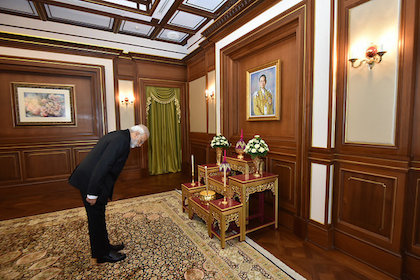
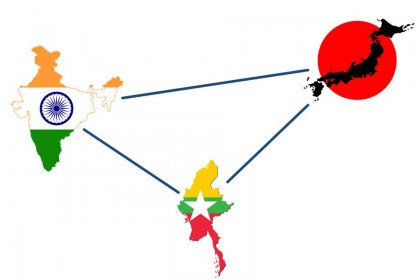
This report of Gateway House's Policy Trip to Myanmar recommends how India can participate in Myanmar’s emerging market and enhance India’s trade and strategic interests in Asia
Courtesy: Gateway House
This report of Gateway House's Policy Trip to Myanmar recommends how India can participate in Myanmar’s emerging market and enhance India’s trade and strategic interests in Asia
Courtesy: Spike Call U.S Navy/Wikimedia Commons
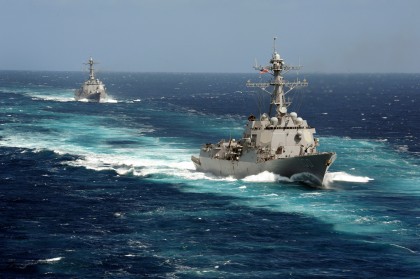
The Indian Navy, through multi-lateral exercises, is increasing its sphere of influence and becoming a regional force. Yet, it needs to be supported by policy decisions that enable it to achieve its potential as a state-of-the-art establishment and a powerful tool in India’s diplomatic repertoire
Courtesy: Prime Minister's Office
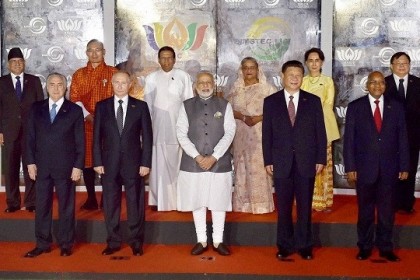
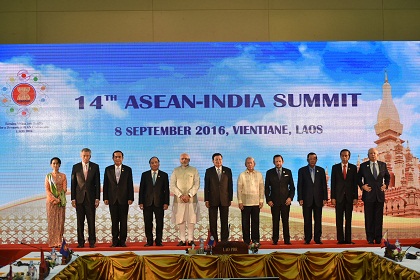
The India-ASEAN Free Trade Agreement in services and trade will allow India to leverage its competitive offerings in IT, finance, among other fields. But the pact has proved elusive so far due to the open squabbling between ministries. The deal now looks set to come through only after the new government takes over
Courtesy: Gobierno de Chile/Wikimedia Commons
Can India integrate more fully into the global economy and energise its trade by joining the Trans-Pacific Partnership? Or will negotiating an entry require significant concessions, not necessarily in India’s interests? These outcomes will depend on how TPP framework itself develops – inclusively or exclusively
Courtesy: European Southern Observatory
Recent developments indicate that Pacific Alliance member states have their gaze firmly set upon Asian-Pacific and ASEAN economies. Can a Pacific Alliance deal with China or ASEAN serve as a powerful incentive to force the ratification of the Trans-Pacific Partnership (TPP) through the U.S. Senate?
Courtesy: Rigues/Flickr
A recent UN report praises governments for promoting the right to food. At the same time, India’s Food Security Act will encounter resistance at the WTO meeting in Bali in December. Can India play an exemplary role in the global power struggle over food security?
Courtesy: generalising/Flickr
The India-Japan alliance needs to be viewed through a prism broader than that of "containing" China, and by treating the Indian and Pacific oceans as a single entity. Such an alliance has the potential to strengthen the geopolitical security of India and Japan, along with that of all their allies and associates
Courtesy: Ministry of External Affairs, India
In the coming years, India’s greatest strategic challenge in the Indian Ocean region may not be the development of power projection but the quality of the strategic relationships that it can build in the region. The extents to which India will be recognised as a regional leader depend on these relationships.
Courtesy: Martyn Wright/Flickr
The two leading maritime powers among Indian Ocean states, India and Australia – which will take over from India as Chair of the IOR-ARC at its ongoing meeting in Perth – can consolidate a strategic partnership that spans the Indo-Pacific
Courtesy: Systemman, Erin A. Kirk-Cuomo/Wikimedia Commons
The U.S. government shutdown and President Obama’s absence gave China immense diplomatic and political space at the APEC and East Asia Summit meetings. China’s declaration of a “de-Americanised” world may be premature but the crumbling old order is doing little to dispel this notion