A time for concerted action among Quad countries: Gateway House Task Force Report
Group identifies areas of potential economic and technological cooperation between four like-minded democracies in the Indo-Pacific


Group identifies areas of potential economic and technological cooperation between four like-minded democracies in the Indo-Pacific
 Courtesy: The Times of India
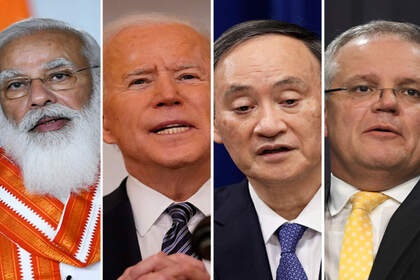
In an interview with Garrison Moratto of The New Diplomatist, Amb. Rajiv Bhatia, Distinguished Fellow, Foreign Policy Studies, counters China's claims that the Quad is an "Asian NATO." He highlights how the India-U.S.-Japan-Australia Quadrilateral initiative aims to increase cooperation in the Indo-Pacific on international law and security. This podcast delves into the history of the Quad's formation, current strategic characteristics, and future geopolitics, ahead of the fall in-person Leaders' Summit in the U.S.
 Courtesy: CNBC-TV18 (Youtube)
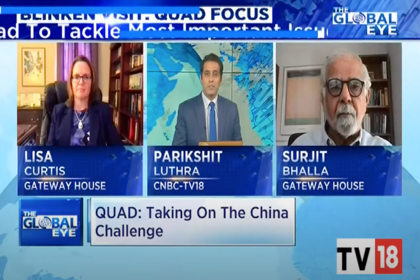
On 30 July 2021, Lisa Curtis and Surjit Bhalla, co-chairs of the Gateway House Quad Economy and Technology Task Force, spoke to CNBC-TV-18 on the various channels of cooperation between the Quad countries in technology, supply chains and undersea cables, and the need to counter China's dominance in the Indo-Pacific.
 Courtesy: Flickr
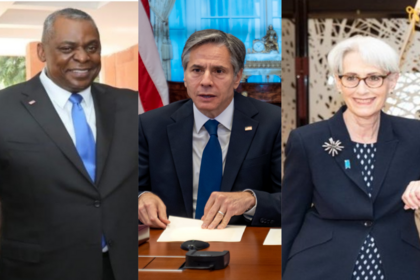
Three senior U.S. officials visited Asia in July in a well-choreographed diplomatic outreach strategy by the Biden administration. The U.S is willing to prioritise the Indo-Pacific and counter China. Asia cannot afford to be a reticent bystander.
 Courtesy:
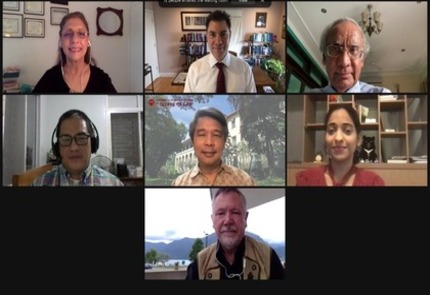
On 15 July, Gateway House co-hosted a webcast with Konrad-Adenauer-Stiftung (KAS) on 'Countering China’s Maritime Grey Zone Activities'. The panel discussed the potential strategies that smaller nations in the region can adopt to overcome the challenges of Chinese maritime grey zone activities, and the role of regional maritime powers in capability-building of maritime law enforcement agencies.
 Courtesy: Shutterstock
The Quad countries are preparing for an autumn summit in Washington, which will provide an opportunity to discuss multilateral cooperation in various sectors. Four dimensions which merit closer attention and are crucial to the group's future are the Indo-Pacific strategies of European countries and the EU, partnerships with ASEAN and its members, closer India-U.S. ties and maritime security issues in the Pacific.
 Courtesy: Reuters
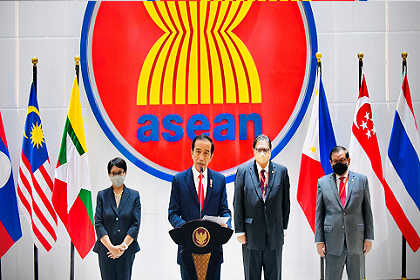
Since the military coup in Myanmar on February 1, violence and protests have broken out across the country and are continuing. Supported by India and Japan, ASEAN has played a key role, by calling the emergency summit in Jakarta. It has bridged internal gaps and helped navigate the international community to a reconciliation of the crisis. India must continue support to such efforts, which aim for immediate and long-term peace.
 Courtesy: European Union
The EU’s Indo-Pacific strategy comes better late than never. But it has to step gingerly. It cannot antagonize China, wants to build on the legacy of its members’ colonial past, give the region the infrastructure it needs, and make the trade agreements that it wants. Is it achievable?
 Courtesy: Gateway House
The Task Force led by Gateway House will study economic and technological cooperation between the four like-minded democracies in the Indo-Pacific.
 Courtesy: Common Wealth
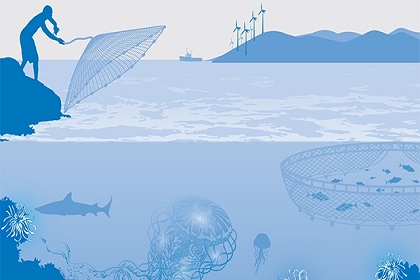
The Indian Ocean Region (IOR) presents a unique opportunity to develop a Blue Economy, with security, sustainability and business profitability as its three pillars. An IOR Defence Ministers' Conclave held on 4 February provided a platform to discuss regional cooperation, linking development with defence, and emphasized India's pivotal position within the IOR.