Bandung conference  (3) Courtesy: PTI
24 April 2025

Bandung Principles and the path ahead

Amid polycrises, from pandemics to wars and trade wars, the global order is in flux, with the contours of the new order still unclear. As the world marks the 70th anniversary of the historic Bandung Conference, this article analyses how its Ten Principles still resonate in today's fractured geopolitical landscape and offer a roadmap for equity, inclusivity, and balance.
World Leaders Courtesy: East Asia Forum
17 April 2025

Multipolarity is gaining ground

The traditional power structures of ‘unipolarity’ or ‘bipolarity’ prevalent over the past 80 years are no longer appropriate to describe the current global order, with more countries increasingly supporting the evolving multipolar world. With the old ‘rules-based’ order becoming less relevant, emerging powers like India have an opportunity to draft more equitable rules to match their multipolar intentions.

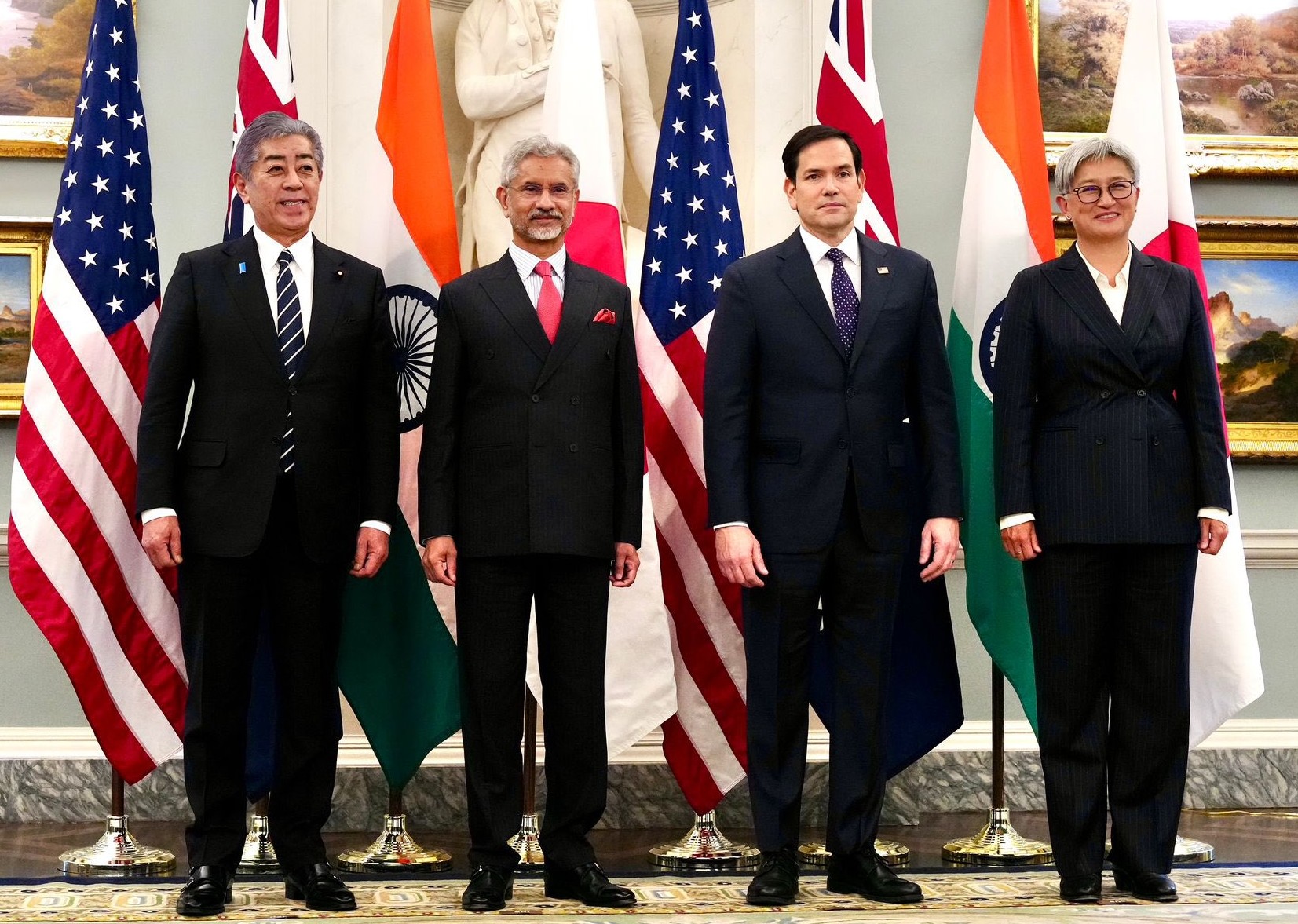
Quad meeting Courtesy: X
13 February 2025

Where is the Quad heading in 2025?

The first plurilateral meeting attended by new U.S. Secretary of State Marco Rubio was the Quad, a day after assuming office. The meeting reinforced the commitment to the Indo-Pacific but with the change in government, the Quad's trajectory in 2025 remains a question. Part of the answer lies in its past interactions, while the rest depends on how the U.S. and India will approach China.

OladXModi Courtesy: Getty Images
21 March 2024

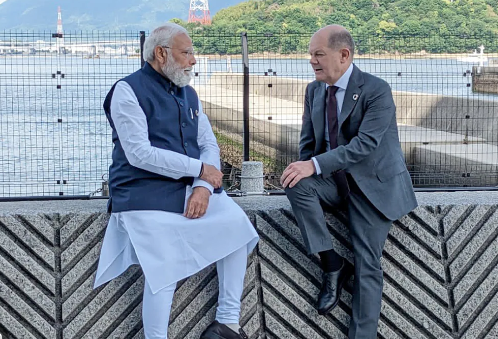
Still not weatherproof

Germany is India's largest trade and economic partner in the EU, but the relationship with France is a class apart, given its strength in military aviation and willingness to be a differentiated member of the West. Must this remain so? If Germany and the EU would be more understanding of India’s democracy and its role in upholding a rules-based order, their relations would be greatly improved.

EmmaLouiseDiscussion Courtesy: Getty Images
21 March 2024

‘BRICS wants to challenge the G7′

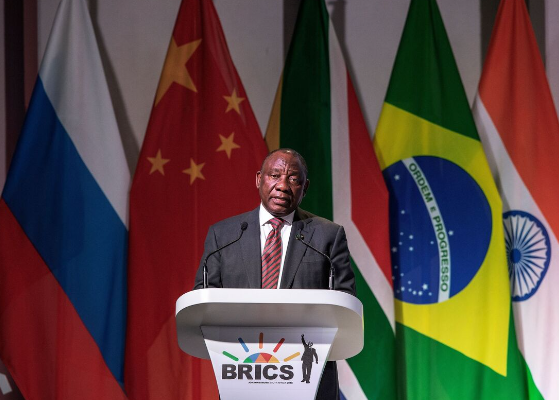
With South African presidential elections slated for late May, South African opposition politician and Shadow Minister for International Relations and Cooperation, Emma Louise Powell shares her views on the future trajectory of BRICS, the credibility of the African Union (AU) on the continent, South Africa’s relations with China, and her country’s stance on key global issues.

Russian_BRICS_Chairship Courtesy: Official Internet Resources of the President of Russia
4 March 2024

BRICS under Russian chairship

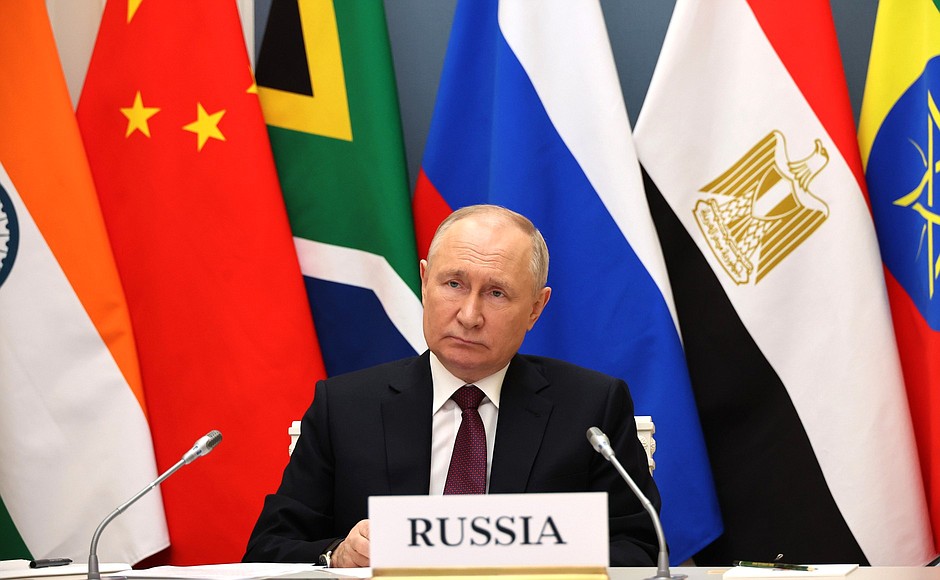
Russia took charge of BRICS in January 2024 at a point of inflection in geopolitics and expanding influence for the bloc. As chair, Moscow aims to bolster cooperation along the lines of the BRICS’ three pillars to shift power away from the West and explore ways to engage potential members. Though China seems onboard, for India, neither of these pursuits must proceed too aggressively.

20231118_TWLDD002 Courtesy: The Economist
4 January 2024

Reading the tea leaves for 2024

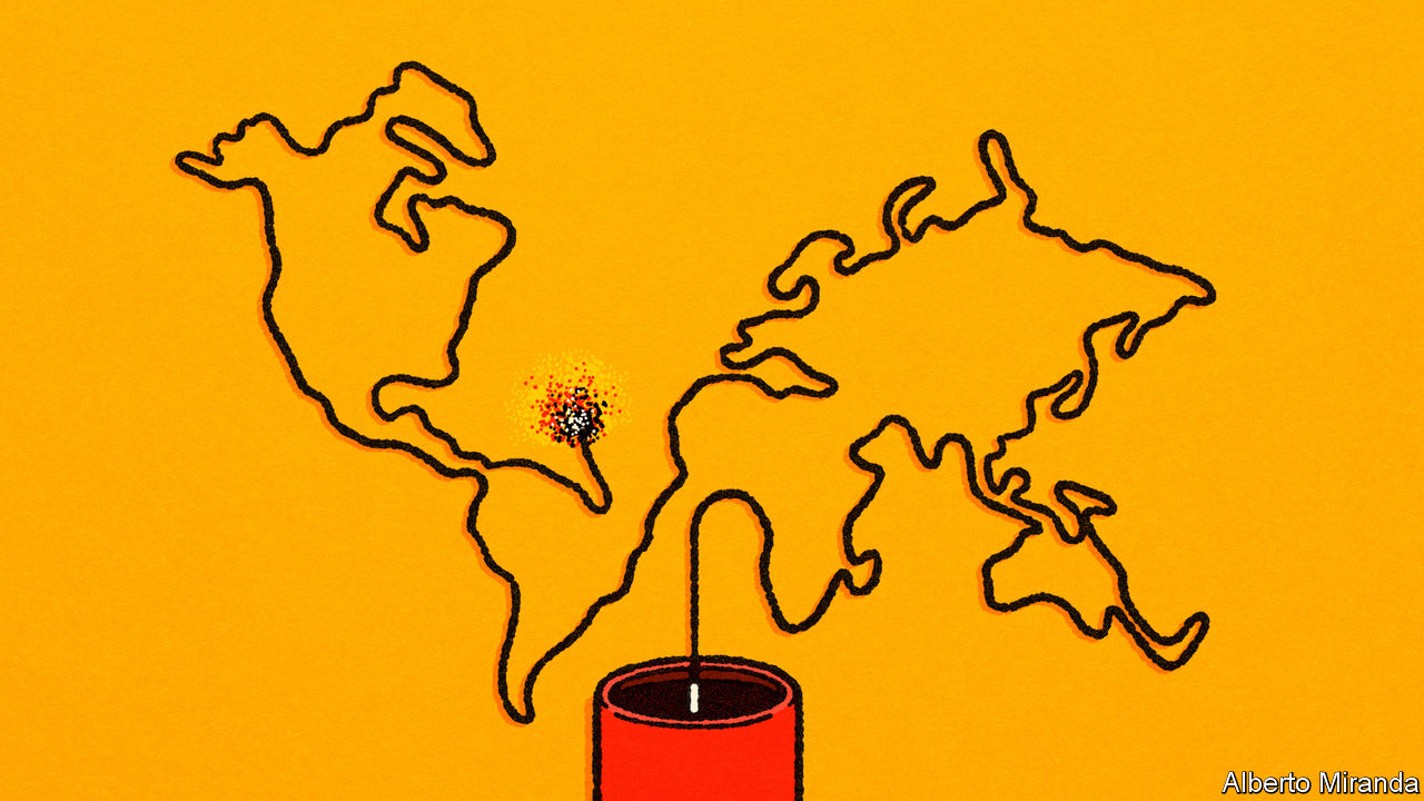
After a year affected by a sustained polycrisis, global geopolitics in 2024 remains a delicate dance between hope and realism. Ongoing conflicts in Ukraine and Gaza cast uncertain shadows, while Taiwan and the South China Sea present potential flashpoints. Indian diplomacy will have to navigate old and new challenges, while promoting India’s expertise in digital technology, as also managing its own upcoming parliamentary elections.

Screenshot 2023-11-29 at 1.52.17 PM Courtesy: Gateway House
30 November 2023

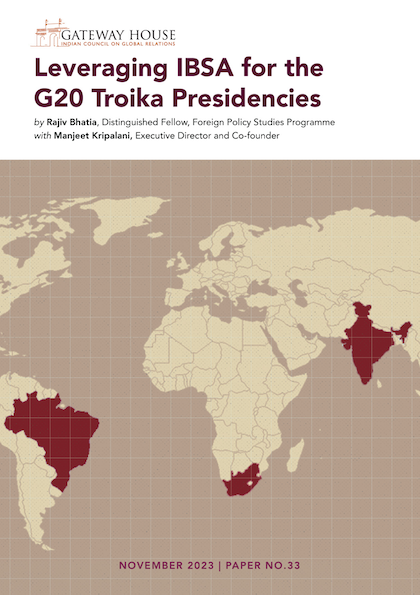
Leveraging IBSA for the G20 Troika Presidencies

On December 1, 2023, India will hand over the G20 Presidency to Brazil. The G20 troika will now comprise the three IBSA countries – India, Brazil, South Africa – till November 2025. This trio has an agenda in common and with the G20, such as multilateral reform, energy transitions and digitalisation. IBSA should use its mechanisms and natural solidarity to advance the interests of the Global South.

G20-1 Courtesy: Times Now
16 November 2023

The road ahead for G20

The outbreak of the Israel-Hamas war less than a month after the conclusion of the New Delhi Summit has heightened the geopolitical anxieties that hovered over India’s G20 presidency year. As the baton passes to Brazil, purposeful action, careful diplomacy and managing conflicting interests will be key to the implementation of the Summit’s commitments.

European Commission President Ursula von der Leyen speaks during a news conference in Brussels on July 15, 2020, after a virtual summit with the Indian Prime Minister. (Photo by YVES HERMAN / POOL / AFP) (Photo by YVES HERMAN/POOL/AFP via Getty Images) Courtesy: CSIS
9 November 2023

Europe’s Challenges in the Indo-Pacific

Europe's increased focus on the Indo-Pacific and the deepening economic and technological collaboration with India offer mutual benefits. However, the EU's ambivalent approach towards China, and the desire of most European states to maintain neutrality in the U.S.-China rivalry might not be sustainable in the long run.