amit Courtesy: wikimedia\commons
27 June 2014

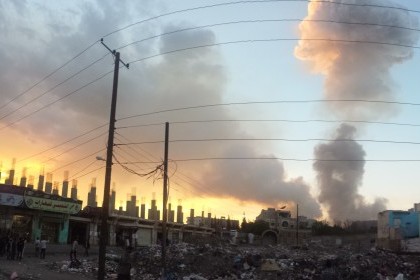
India’s post-Iraq energy options

The growing ISIS-driven violence in Iraq highlights India’s vulnerability to the turmoil in West Asia: we heavily depend on the region for our energy. To insulate the country’s energy security from the upheavals, India must urgently diversify its sources and types of fuel, and develop its own energy ecosystem

Oman India gas route_googlemaps Courtesy: Google Maps
23 May 2014

Oman gas pipeline back in favour

An underwater gas pipeline project connecting Oman with India’s west coast is being resurrected. Several factors explain the renewed interest, including the relaxing of sanctions against Iran and India’s need to counter-balance geopolitical and security considerations dogging other land-based projects

Eu iran Courtesy: European External Action Service
26 November 2013

Iran-P5+1 interim accord: An assessment

On November 24, the P5+1 and Iran reached a consensus on the interim agreement regarding Tehran’s long-disputed nuclear program. How comprehensive is this agreement, and what are its potential upshots for U.S., and West Asia – especially Israel and Saudi Arabia? More importantly, can India play a positive role?

hollande Courtesy: WikimediaCommons
20 November 2013

Badi Soch: France’s bid for relevance

This daily column includes Gateway House’s Badi Soch – big thought – of the day’s foreign policy event. This Badi Soch analyses the implications of France’ kowtowing to Saudi Arabia and Israel’s demands in the P5+1 talks with Iran.

himani Courtesy: counting chest bullets/Flickr
13 November 2013

The new energy price economics

In recent years, U.S. oil and gas imports have declined due to the development of shale resources in the country. How will the production of shale oil, increase in oil production by non-OPEC countries, supply disruptions in West Asia and economic growth in India and China impact global crude oil prices?

ind jap Courtesy: generalising/Flickr
6 November 2013

The new Indo-Pacific core

The India-Japan alliance needs to be viewed through a prism broader than that of "containing" China, and by treating the Indian and Pacific oceans as a single entity. Such an alliance has the potential to strengthen the geopolitical security of India and Japan, along with that of all their allies and associates

UNSC Syria UNSC Courtesy: United Nations
4 October 2013

Decoding the UNSC Resolution on Syria

The recent UNSC Resolution, which mandates the complete destruction of Syria’s chemical weapons, demonstrates that after more than a year, a degree of international agreement on the Syrian issue has been possible. In the evolving situation, Russia will now emerge as a major player

Indira Lyndon Jerchel wikimediacommons Courtesy: Jerchel/WikimediaCommons
24 September 2013

The case for India-Alignment

India often finds itself in the right place at the wrong time or vice versa, as our dogma of non-alignment trumps honest calculations of self-interest in policy-making – rendering it unfavourable. The national interest, hence, calls for selective alignment on some issues with Washington and on others with Beijing

putin assad obama wikimedia Courtesy: WikimediaCommons
20 September 2013

Leadership in the Syrian imbroglio

Can the world aspire to a future where the use of force is not seen as leadership? Can the U.S. and former colonial powers like France and UK, think differently and reject the use of force as first resort? Can China and India craft alternatives?

assadobama Courtesy: Freedom House/Flickr
6 September 2013

Syria: An unwarranted intervention

Despite rising international opposition, U.S. President Barack Obama is ready to penalise the Syrian regime for an alleged chemical attack in Ghouta, Syria, last month. The justifications given by the U.S. for an armed attack are questionable, and such retaliatory action will destabilise the entire region