China’s global proxy game
Afghanistan has become the first significant theatre of effective confrontation between the West and China. But with its deep-rooted economic ties, could the U.S. and NATO actually confront China?
Courtesy: Afghanistan Goverment/WikimediaCommons
Afghanistan has become the first significant theatre of effective confrontation between the West and China. But with its deep-rooted economic ties, could the U.S. and NATO actually confront China?
Courtesy: nazeah/Wikimediacommons - Ramesh Lalwani/Flickr
The year 2011 saw various events - the Arab Spring, anti- corruption protests, Europe's sovereign debt crisis - transform countries and reshape the world order. Gateway House takes a look at what these events mean for India, and presents India's top foreign policy cheers and jeers for the year.
Courtesy: Broddi SigurðarsonFlickr
Today, at the national and regional level, large loopholes still exist in the security system. On the international front, however, there have been a lot more initiatives, yet the apex body of the UN remained silent post-26/11. Were they justified in holding back?
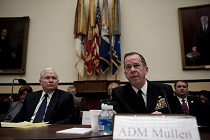
Courtesy: Chairman of the Joint Chiefs of Staff/Flickr
The 'double-dealing' of the U.S. and Pakistani army - all with the ambition of military dominance - has significantly aided various terrorist groups. After 26/11, there is no place to hide for the Mike Mullens and countless others who have been apologists for the Pakistan army and the state it controls.
Courtesy: isafmedia/Flickr
Last May, U.S. citizen David Headley confessed to being a spy for the Lashkar-e-Taiba. What no one has tackled yet is whether there are other Headleys out there whose actions threaten India, or any other country. Even with thousands of intelligence agencies scouting for terrorist activities, are we really safer?
Courtesy: PMO
Creating a neighbourhood of compatible interests in South Asia isn’t easy, especially when intra-regional trade accounts for only 5% of total trade in the region. However, the region has seen considerable progress in the past year. India is well poised to lead the change, starting with the upcoming SAARC summit.
Courtesy: PMO
NATO’s poor strategy in Afghanistan has failed to quell the Taliban. Now, India will begin to train the Afghani military, and has proven with its light force tactics in Kashmir that it is better suited for the role than NATO forces.
Courtesy: PMO
Indian Prime Minister Manmohan Singh’s speech at the UN General Assembly has put Indian perceptions on the record and clearly outlined India’s independent foreign policy. India came out unequivocally in support of the Palestinian struggle & reiterated its traditional stance of respecting countries’ sovereignty.
Courtesy: WTCTributeinLight/WikimediaCommons
A change has come about after 9/11: the ideologies grouped as “Al Qaeda” has morphed, from a group directed by a few individuals, it is now disaggregated. Due to this change, NATO is empowering it's future foes in the Arab world by its continued belief in the camouflaged jihadis.
Courtesy: PMO
Indian Prime Minister Manmohan Singh’s visit to Dhaka was, by and large, a success; but poor internal coordination hampered the greater possibilities of the visit. India and Bangladesh can now explore new prospects, on maritime issues, oil and gas and environmental concerns in the Sundarbans.