maxresdefault Courtesy: Youtube
4 February 2016

The world in 2016

The world has witnessed a number of upheavals in the past few years, precipitating widespread global political turbulence stemming from geo-economic instability. Over the next couple of months, Gateway House experts will attempt to deconstruct these events and how India and its foreign policy can work to take advantage of these trends.
admin-ajax (3) Courtesy: Wikipedia
28 January 2016

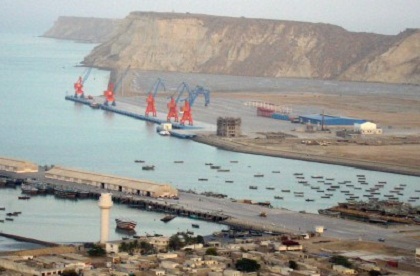
Gwadar and “the String of Pearls”

Is China actively building up its maritime presence in the Arabian Sea, to dominate vital sea lanes and perhaps encircle India with a chain of naval bases? There can be little doubt that China views Gwadar as a potentially useful asset. China, however, will know better than anyone that Gwadar has two considerable limitations.

syriawar Courtesy: Flickr / Foreign and Commonwealth Office
13 January 2016

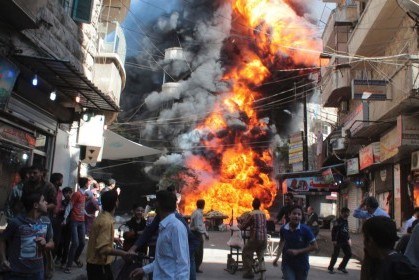
Ramifications of Saudi mass execution

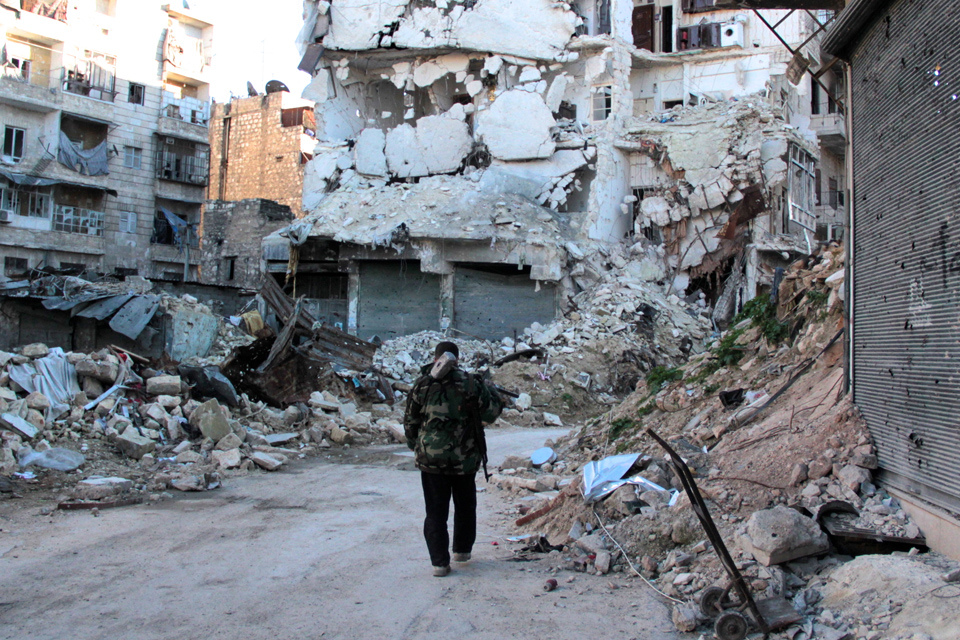
By executing an influential Shia cleric among 47 other prisoners, Saudi Arabia has increased the possibility of prolonging conflict in West Asia. The country’s actions have stirred up its differences with Iran, thereby diminishing the possibility of finding political solutions to the civil wars in Syria and Yemen.

Swaraj Ghani Courtesy: MEA / Flickr
5 January 2016

India+APTTA = regional prosperity

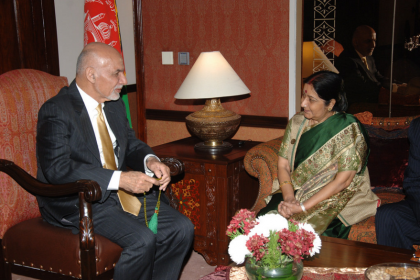
If India enters the Afghanistan-Pakistan Trade and Transit Agreement, as external affairs minister Sushma Swaraj said at conference in Islamabad in December, it will boost regional trade and connectivity—both priorities of the Modi government. But Pakistan stridently opposes India’s entry into the agreement. What are the alternatives?

Air_strike_in_Sana'a_11-5-2015 Courtesy: Wikipedia
24 December 2015

Coalition of the unwilling

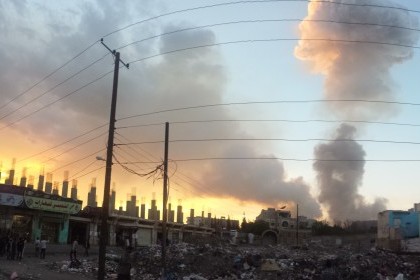
On 14 December, Saudi Arabia announced the formation of an anti-terrorism coalition of 34 Islamic countries. But with key potential partners such as Algeria, Lebanon, and Pakistan refusing to join, the hastily-assembled group has put Saudi credibility in the spotlight instead of deflecting western criticism of the kingdom’s inaction against Sunni jihadism

Victor_Dubreuil_-_'Money_to_Burn',_oil_on_canvas,_1893 Courtesy: Victor Dubreuil / Wikipedia
15 December 2015

The Gulf storm ahead

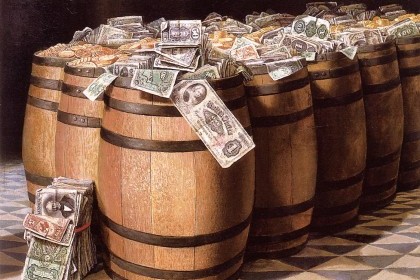
The GCC finds itself engulfed by a perfect storm – due to the oil price fall and the re-emergence of Iran on the world scene. While the GCC is forced to undertake politically challenging reforms and confront the regional challenge of Iran, there lies a great opportunity for India to strengthen their economic as well as security ties.

Remise_du_Prix_Sakharov_à_Aung_San_Suu_Kyi_Strasbourg_22_octobre_2013-04 Courtesy: Claude TRUONG-NGOC
13 November 2015

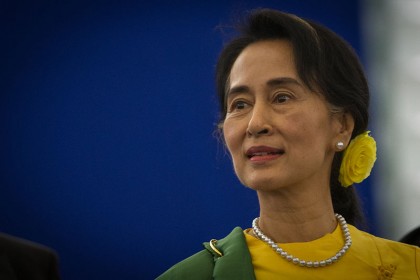
Myanmar after elections: what next?

The elections in Myanmar finally come to a close with Suu Kyi-led NLD’s landslide victory. The military establishment has accepted defeat. Suu Kyi, who can't be the president, has made it clear that she would be 'above the president'. How should India read Myanmar now and act to safeguard its interests?

U.S. Mission / Eric Bridiers Courtesy: Wikipedia
8 October 2015

UNSC and sanctions: a balanced role

The sanctions against Iran impacted the country’s oil, banking, aviation, and other sectors, and had a major humanitarian impact. But neither is armed attack a more suitable method in most instances to address allegedly recalcitrant states. What then is the middle ground? And can the UNSC assume a more proactive role in this context?

Handshake_between_Narendra_Modi_and_Nawaz_Sharif Courtesy: Wikipedia
3 September 2015

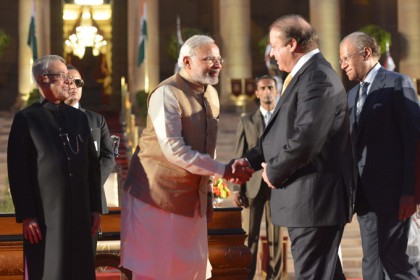
Pakistan’s denial regime

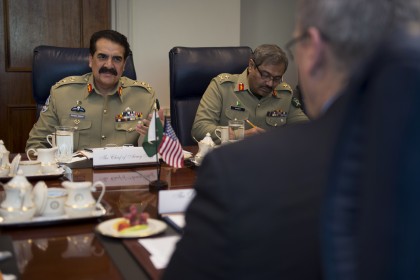
The cancellation of the August 23-24 meeting of the national security advisors of India and Pakistan follows a pattern of unrealistic expectations raised and then quickly dashed. This is compounded by Pakistan’s long history of denial on numerous issues. It may be time for both countries to abjure high-profile diplomacy and turn to small confidence-building measures.