Badi Soch: Staying put in Afghanistan
This daily column includes Gateway House’s Badi Soch – big thought – of the day’s foreign policy events. Today’s focus is on the recent terror attack near the Indian Consulate General building in Jalalabad

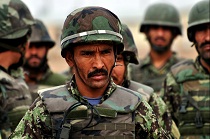 Courtesy: Helmandblog/ Flickr
This daily column includes Gateway House’s Badi Soch – big thought – of the day’s foreign policy events. Today’s focus is on the recent terror attack near the Indian Consulate General building in Jalalabad
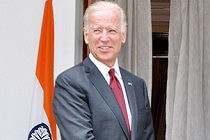 Courtesy: Ministry of External Affairs, India
U.S. Vice President Joe Biden’s visit to India this week comes at a time when the India-U.S. bilateral relationship has gone seemingly adrift. Can this visit, which comes just months ahead of the Indian general elections, rejuvenate the relationship which is rooted in long-term common strategic interests?
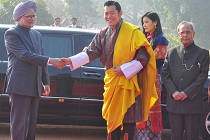 Courtesy: MEAphotogallery/ Flickr
The opposition People’s Democratic Party in Bhutan won the National Assembly elections held on July 13 taking another large step towards democracy. However, India became the unwitting subject of campaign discourse after the government abruptly halted fuel subsidies to the country
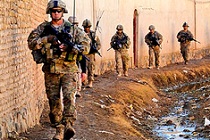 Courtesy: Senior Airman Sean Martin, U.S. Air Force/Wikimedia Commons
Kabul Diary is a compilation of experiences and observations by Gateway House’s Rajeshwari Krishnamurthy, who is visiting Afghanistan. In her fourth entry, she writes about the possible consequences for the country and its neighbours if the U.S. completely withdraws its troops in 2014
 Courtesy: Gateway House
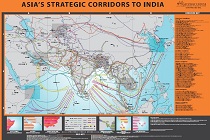
The map – Asia’s Strategic Corridors to India – has emerged from Gateway House’s study of India’s strategic links with other parts of Asia. It highlights the progress India has made in forging multiple links with six strategic regions – Central Asia, West Asia, East Africa, South-East Asia, East Asia, and our immediate neighbourhood
 Courtesy: Wikimedia Commons
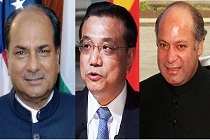
Both Indian Defence Minister A.K. Antony and Pakistani Prime Minister Nawaz Sharif visit China this week. However, their objectives are different. Antony visits China to bring up security issues in the aftermath of the Depsang incursion, while Sharif makes his visit in hope of bettering his flailing economy
 Courtesy: World Economic Forum/ Flickr
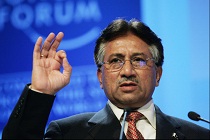
This daily column includes Gateway House’s Badi Soch – big thought – of the day’s foreign policy events. Today’s focus is on why prosecuting former President General Pervez Musharraf has serious implications for regional stability
 Courtesy: openDemocracy/Flickr
Hassan Rohani’s victory in the June 14 presidential election has demonstrated a growing urge among Iranians for democracy, freedom and integration with the outside world. Will Rohani be able to create an environment where pragmatic policies and national interests take precedence over revolutionary zeal?
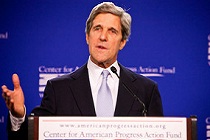 Courtesy: Center for American Progress Action Fund/Flickr
The U.S. Secretary of State’s visit to India comes at a time when India is witnessing significant realignments in its domestic politics while the U.S. is busy tackling its cyber-spying allegations. Amidst these preoccupations, will the upcoming India-U.S. talks churn out substantive outcomes?
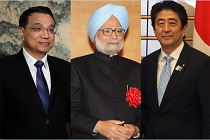 Courtesy: Ministry of External Affairs, India
While the recent India-Japan Joint Statement contains significant breakthroughs, the China-Pakistan Joint Statement reveals the absence of warmth between India and China. With the current flurry of bilateral exchanges, India is fine-tuning its approach to emerging regional realities, as are others.