Pritzker: pragmatic dealmaker?
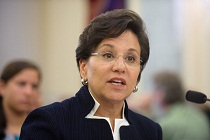
Penny Pritzker, U.S. commerce secretary is the new element in the India-U.S. bilateral dialogue. Her business skills have brought a shine to her ministry at home and perhaps she can have the same effect in Delhi

 Courtesy: Commerce department\US govt
Penny Pritzker, U.S. commerce secretary is the new element in the India-U.S. bilateral dialogue. Her business skills have brought a shine to her ministry at home and perhaps she can have the same effect in Delhi
 Courtesy: U.S. Navy photo/Journalist 1st Class Todd Macdonald
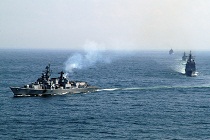
India’s invitation and the subsequent participation of the Japanese navy in the Malabar 2014 exercise is a sign of the deepening of the political-security relationship between India and Japan. However, an actual fruition of the potential requires both the administrations to be more flexible, especially on the nuclear deal and defence purchases
 Courtesy: IBtimes.com
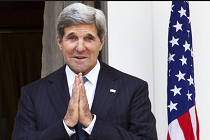
On the eve of his departure to India for the fifth India-U.S Strategic Dialogue, U.S. Secretary of State John Kerry outlined a roadmap of partnership between the two countries. While mentioning some of the ongoing concerns of the U.S government, he said this was a moment to chart a new course in the bilateral relationship
 Courtesy: wikipedia\commons
Four years ago, U.S. President Barack Obama announced that the India -U.S. relationship would be "one of the defining partnerships of the 21st century". However the relationship hasn’t matched up to the rhetoric and bilateral ties hit a low in 2013. Forthcoming high profile engagements between the two suggest the tide might be changing
 Courtesy: Wikipedia\commons
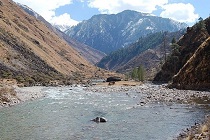
Indian Prime Minister Narendra Modi hit all the right notes in his landmark visit to Nepal this week. Modi’s announcement of hydropower being a key area of synergy in the bilateral will help India solve its electricity shortage and also provide the country a renewable energy import from a friendly neighbour
 Courtesy: Gateway House
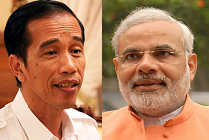
The recent election in Indonesia gives India a chance to evaluate the many points of comparison between the two diverse and vibrant democracies. Both will face similar challenges, and so Indonesia may be a better parallel as well as partner than China – the usual model cited for development
 Courtesy: Flickr
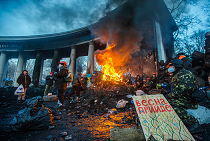
Eastern Europe has seen tensions rise, increasing violence and a hardening of stands. Only the softening of the stark “either/or” choice currently being demanded by western powers as well as Russia will put an end to the precarious tightrope walking of east European governments and prevent their citizens from becoming victims of increased regional instability
 Courtesy: Wikipedia
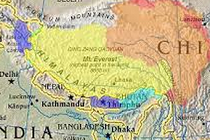
India’s external affairs minister Sushma Swaraj is in Nepal this week in line with the government’s commitment to prioritise ties with neighbours. Ties between India and Nepal have not been smooth with Nepal seeking a review of the 1950 Treaty of Peace and Friendship signed between the two countries
 Courtesy: WIkimedia\Commons
Neelam Deo, Director, Gateway House, talks about the implications of the UN tribunal’s recent ruling on the India-Bangladesh maritime boundary dispute. In this interview, she also examines how India can follow up on the decision, what it could mean for our energy imports, and how it will impact global perceptions
 Courtesy:
The rising number of anti-Muslim attacks in Sri Lanka has grave security implications for South Asia, including India. The Mahinda Rajapaksa government must take steps to address the situation immediately, even if it comes at the cost of losing votes