Finding common ground to counter terror
India and China have divergent approaches to terrorism emanating from Pakistan. How can New Delhi prod Beijing to act on its concerns about the terrorist infrastructure in Pakistan?

 Courtesy: DVDSHUB/Flickr
India and China have divergent approaches to terrorism emanating from Pakistan. How can New Delhi prod Beijing to act on its concerns about the terrorist infrastructure in Pakistan?
 Courtesy: Flickr/CreativeCommons
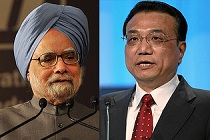
Chinese Premier Li Keqiang’s visit to India next week is unlikely to fast-track a resolution of the Sino-Indian territorial dispute. Li may suggest confidence-building mechanisms on the border, but these proposals need scrutiny. China’s border agreements with other neighbours are indicators of what India can expect
 Courtesy: WikimediaCommons
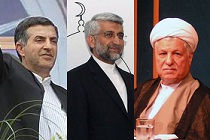
The 11th Presidential election of Iran will be held on June 14, 2013. Why will this election be a test for the Islamic Republic’s stability? What are the factors at play that make this election critical; and more importantly, why must India monitor it closely?
 Courtesy: Al Jazeera English/Flickr
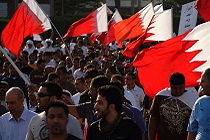
Two years ago, during the Arab Spring uprisings in several West Asian nations, youth and pro-democracy movements flared up on the Persian Gulf island of Bahrain. In light of these events, this paper assesses how Bahrain’s policies toward its Shia constituency have affected relations between Sunni and Shia groups.

This daily column includes Gateway House’s Badi Soch – big thought – of the day’s foreign policy events. Today’s Badi Soch looks at how secularism is faring in South Asia.
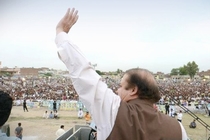 Courtesy: Martin H./WikimediaCommons
Will former Pakistani Prime Minister Nawaz Sharif prove to be his country’s saviour, one that can make Pakistan the ambitious transit economy it can be? However, the most needed and least controversial angle from which India and Pakistan’s new government can begin to engage is through business and trade.
For the first time since 1947, Pakistan, on May 11, succeeded in transitioning from one elected government to another. Gateway House interviews Arun Nanda, Director, Mahindra Group, on the prospects of India-Pakistan trade in the new political environment.
This daily column includes Gateway House’s Badi Soch – big thought – of the day’s foreign policy events. Today’s focus is on the elections and new government in Pakistan.
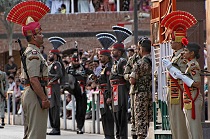 Courtesy: rwoan/Flickr
Pakistan’s national elections will take place in the backdrop of a troubled economy, severe energy crisis, and frequent terrorist attacks. Can these problems be solved if the next leadership agrees to open its territories for trade and transit purposes between India and Afghanistan?
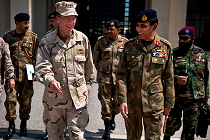 Courtesy: United States Navy
Gateway House’s Ambassador Neelam Deo, in a debate, titled ‘The civil-military equation in Pakistan has begun to tilt in favour of civilians,’ argues in her closing remarks that Pakistan will need sympathy and support as it confronts the complex choices that the democratisation process continually throws up.