.png)
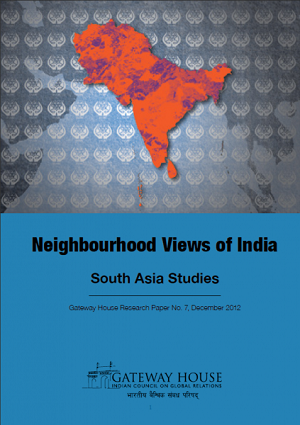
Neighbourhood Views of India
In the past few years, the SAARC region has seen promising engagements in mutual cooperation between nations. For these developments to hold, new ideas must be discussed

In the past few years, the SAARC region has seen promising engagements in mutual cooperation between nations. For these developments to hold, new ideas must be discussed
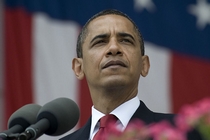 Courtesy: U.S. Navy
U.S. President Barack Obama will certainly have the benefit of continuity in his second term, but he has a range of impending crises to address immediately - be it to avert the so-called fiscal cliff before the end of the year when automatic cuts kick in or plan for the military drawdown from Afghanistan.
 Courtesy: VOA/WikimediaCommons
In a recent speech, U.S. Presidential candidate Mitt Romney criticised incumbent President Barack Obama's foreign policies, and called for U.S. supremacy. However, it seems apparent that Romney wouldn’t usher in a foreign policy revolution if elected.
Though some countries like Russia gained a strong foothold in Central Asia and the Caucasus post-1991, India has been a late-comer. Gateway House interviews former Ambassador to Azerbaijan Debnath Shaw to discuss India’s energy interests in the region, the Shanghai Cooperation Organization and the TAPI pipeline.
 Courtesy: Embassy of India, Washinton D.C.
The third India-U.S. Strategic Dialogue saw more talk of ‘mutual capabilities’ than of a mere alliance. The larger endeavour in the bilateral is to find the right fit as partners, where both countries can preserve their strategic autonomy and benefit from their unique positions in the international community.
 Courtesy: Ministry of External Affairs, India
U.S. Secretary of State Hillary Clinton's recent visit to China, India, and Bangladesh is keeping with the U.S. pivot to Asia. The choice of countries has strategic significance for the U.S., where India is flagged as balancing the rise of China, and Bangladesh as a strategic base in the Bay of Bengal.
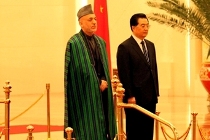 Courtesy: Afghanistan Goverment/WikimediaCommons
Afghanistan has become the first significant theatre of effective confrontation between the West and China. But with its deep-rooted economic ties, could the U.S. and NATO actually confront China?
 Courtesy: nazeah/Wikimediacommons - Ramesh Lalwani/Flickr
The year 2011 saw various events - the Arab Spring, anti- corruption protests, Europe's sovereign debt crisis - transform countries and reshape the world order. Gateway House takes a look at what these events mean for India, and presents India's top foreign policy cheers and jeers for the year.
 Courtesy: Chairman of the Joint Chiefs of Staff/Flickr
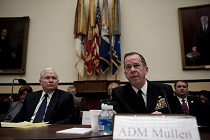
The 'double-dealing' of the U.S. and Pakistani army - all with the ambition of military dominance - has significantly aided various terrorist groups. After 26/11, there is no place to hide for the Mike Mullens and countless others who have been apologists for the Pakistan army and the state it controls.
 Courtesy: isafmedia/Flickr
Last May, U.S. citizen David Headley confessed to being a spy for the Lashkar-e-Taiba. What no one has tackled yet is whether there are other Headleys out there whose actions threaten India, or any other country. Even with thousands of intelligence agencies scouting for terrorist activities, are we really safer?