Indian Foreign Policy in 21st Century
The following remarks were given by Ambassador Rajiv Bhatia, Distinguished Fellow, Foreign Policy Studies, Gateway House as Distinguished Guest Lecturer at IIM Tiruchirappalli on February 3, 2019

 Courtesy: MEA/Flickr
The following remarks were given by Ambassador Rajiv Bhatia, Distinguished Fellow, Foreign Policy Studies, Gateway House as Distinguished Guest Lecturer at IIM Tiruchirappalli on February 3, 2019
 Courtesy: Flickr/GovernmentZA
South African president Cyril Ramaphosa, who is in India this week as the chief guest on Republic Day, and Prime Minister Modi both have elections on their minds, but the considerable diplomatic stakes in the bilateral relationship warrant his visit at this time
 Courtesy: MEA Flickr
The following remarks were given by Ambassador Rajiv Bhatia, Distinguished Fellow, Foreign Policy Studies, Gateway House as the chair at a panel discussion on 'Geopolitics in the Indo-Pacific: Implications on Maritime Security for India and Vietnam', organised by the Centre for Indo-Pacific Studies, SIS, Jawaharlal Nehru University on January 22, 2019.
 Courtesy: MEA Flickr
Norwegian prime minister Erna Solberg’s visit to India earlier this week had a central focus: strengthening economic and technological cooperation in the Blue Economy. This is an area in which her country has considerable expertise and with which Indian business needs to collaborate in managing industries, such as oil, shipping, fisheries and aquaculture in a ‘green’ way
 Courtesy: MEA Flickr
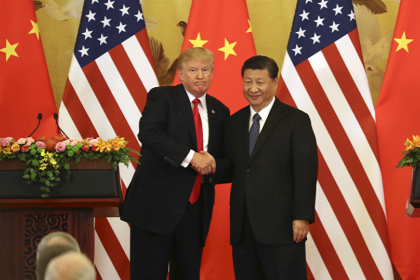
The imperative for India to move away from its non-aligned posture is now, especially if it wants to be consequential in the global reordering underway. This will play out in the contention between the U.S. on one side, and China and Russia on the other.
 Courtesy: Sputnik News
Speakers at the seventh Atlantic Dialogues, held in Morocco earlier this month, discussed what the challenge to western dominance and China’s expansionism meant for their political and economic future
 Courtesy: Gateway House
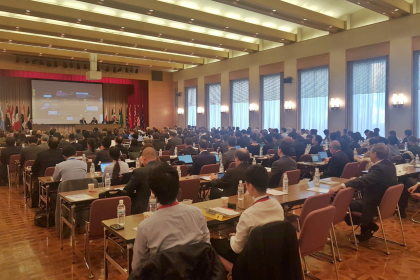
The Think20 Inception conference, held in Tokyo on December 4-5, 2018, kicked off the research process for 2019 for the leading think tanks from G20 countries that work on issues of global economic governance. The author participated in the conference as an observer.
 Courtesy: MEA Flickr
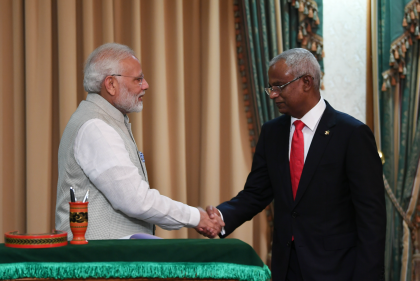
Maldives president Mohamed Solih comes to India this week, fresh from his election win and with a host of good intentions. His aim is to recast the bilateral and restore balance in Maldives’ external relations after the previous president’s China-centric leanings. Such a reversal may not emerge instantly
 Courtesy: Nikkei Asia
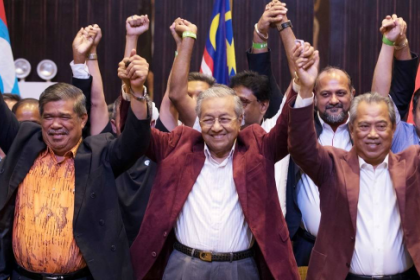
Six months after Malaysia’s parliamentary elections, its domestic affairs are still untidy. The government is combating corruption, but not bringing in constitutional reform. A successor’s name is not emerging clearly either. But Prime Minister Mahathir Mohammad’s foreign relations priorities – principally, Japan and China – are in order
 Courtesy: Ministry of Foreign Affairs, China
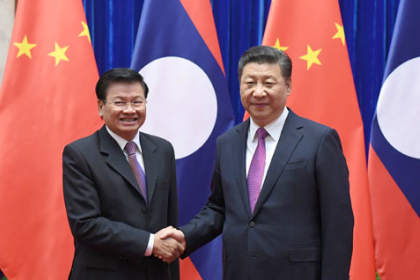
Laos has come a long way from being an exotic kingdom and scene of violent conflict to relative political stability and pragmatic external relations. With External Affairs Minister Sushma Swaraj currently on a visit to Laos, this is the time for the two countries to focus on scaling up bilateral cooperation