Gandhi spinning Courtesy: gandhiserve.org
2 October 2012

Replacing Keynes with Gandhi

Gandhi’s little-known work on what it means to be truly civilized may be crucial to the future of our species. There seems to be an absence of a moral framework that serves as the basis of our pursuit of wealth & pleasure. Can such a framework guide us through contemporary economic and identity-related conflicts?

wall street volker article Courtesy: Alex E. Proimos/Flickr
24 August 2012

Why we need the Volcker Rule

Front running is a form of insider trading, where investment banks use customers' trading information to trade for themselves, ahead of their clients. This practise results in huge losses to the investors, and abates trust in financial markets. How can the Volcker Rule contain this practice on a global scale?
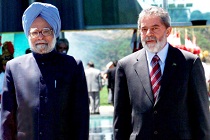
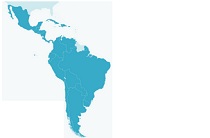
democracy in motion latam leaders Courtesy: PMO
9 August 2012

From profligacy to pragmatism

India seems to be treading down the path of fruitless populism that crippled many countries in the past, most notably in Latin America. But like Latin America, India too can embark on a course-correction by implementing pragmatic economic policies alongside progressive but results-driven social spending.

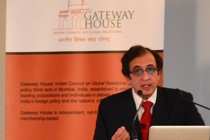
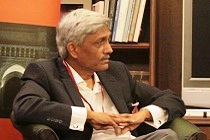
saran1 - Copy Courtesy: Gateway House
7 August 2012

The health of India’s financial sector

Is India's growing external debt a cause for concern? Are India's public sector banks too big to fail? Gateway House interviews former Whole Time Member of SEBI, Prashant Saran, to discuss the health of India's financial sector.

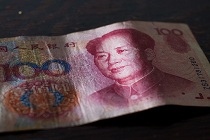
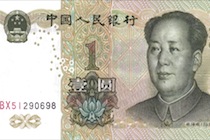
renminibi2 Courtesy: rahims/Flickr
16 July 2012

China’s Achilles’ heel

China is quick in providing loans to execute domestic and international business plans, and returns are often forgone in the quest to own market share. Faced with an economic slowdown, will Beijing be able to sustain such unconventional economic policies? Or will its banking sector prove to be its Achilles' heel?

Can BRICS swaps save the rupee copy Courtesy: Flickr/t3rmin4t0r
1 June 2012

The case for BRICS swaps

Banks around the globe would be wise to take a second look at what now could be the most significant agreement in international finance since the Euro: the BRICS currency swap. Though certain geopolitical risks are involved, could this free India from unpredictable currency fluctuations?

anoop singh interview Courtesy: Gateway House
11 May 2012

IMF interview: How the European crisis will affect India

As India’s growth slows, it becomes increasingly important to enact reforms so it can return to its intended growth rate of 9%. Gateway House’s Hari Seshasayee interviews Anoop Singh, Director of Asia and Pacific at the IMF, to discuss the impact of the Euro zone crisis on India and the way forward for Asia.

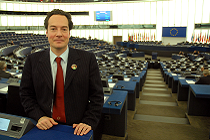
botopoulos Courtesy: www.botopoulos.gr
28 March 2012

“Greeks do not want to leave the Eurozone”

Kostas Botopoulos, Greece’s point-man in money markets, speaks to Gateway House's Akshay Mathur about Greece's bailout process, building consensus within the European Union, the reforms demanded by stakeholders and what it all means for India and the global economy.