Decoupling from China
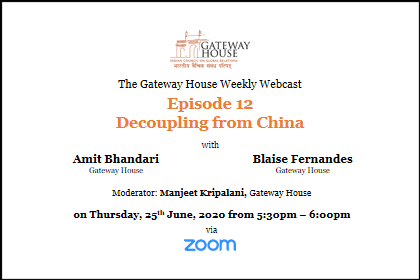
Amit Bhandari, Fellow, Energy & Environment, Gateway House was in conversation with Blaise Fernandes, Director, Gateway House. This discussion was moderated by Manjeet Kripalani, Executive Director, Gateway House.

 Courtesy: Gateway House
Amit Bhandari, Fellow, Energy & Environment, Gateway House was in conversation with Blaise Fernandes, Director, Gateway House. This discussion was moderated by Manjeet Kripalani, Executive Director, Gateway House.
 Courtesy: Gateway House & CIGI
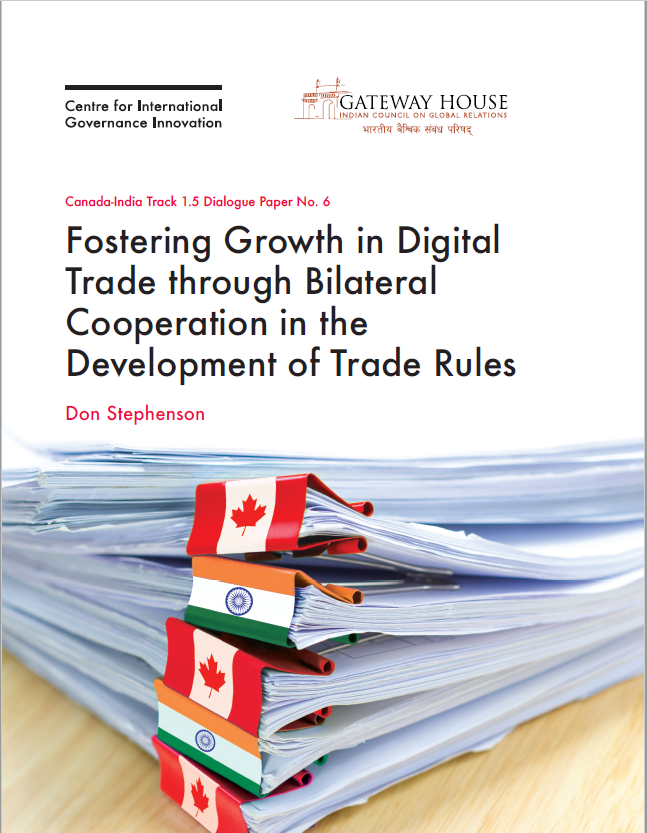
The shifting trends in trade, especially given the growth in communications capacity and reduced cost of computing have altered traditional economic development. India and Canada have a shared commercial interest in E-trade. Both countries need to align their resources to frame trade rules of the new digital economy, to mutual benefit.
 Courtesy: Gateway House & CIGI
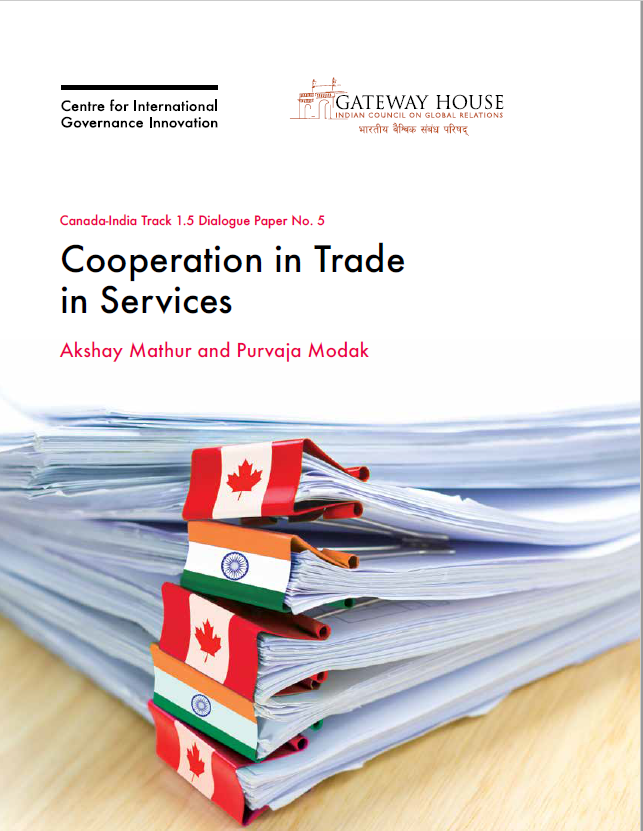
The shift in the global trend from trade in goods to trade in services, especially digital services has focused attention on the necessity of a modern and robust regulatory framework for it. The bilateral steps by India and Canada outlined in this paper can feed into current efforts by multilateral institutions to develop a universal framework for capturing services trade data.
 Courtesy: MEA/Flickr
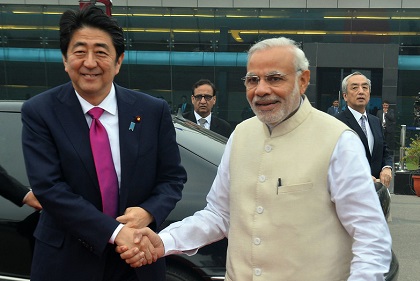
Japan has determined $ 2.2 billion for rehabilitation of industries exiting China. Prime Minister Modi’s new stimulus package, close to 10% of GDP, could be the impetus Japan needs to refocus FDI to India
 Courtesy: Gateway House
Amit Bhandari, Energy & Environment Fellow, Gateway House; Blaise Fernandes, President, Indian Music Industry Association; Ambika Khanna, Senior Researcher, International Law Programme, Gateway House discuss the reaction to China’s increased investment in HDFC, the depth and motive for China's investments in India, and the new FDI rules put in place by the government to protect strategic investments in the country.
 Courtesy: Shutterstock
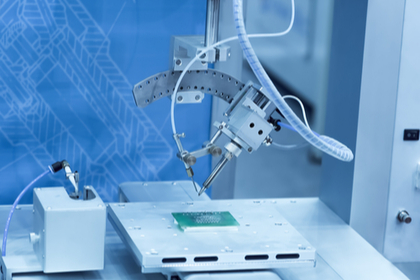
The COVID-19 pandemic has exposed the deficiencies of India’s precision instrument import-dependency and the global supply-chain vulnerabilities of international high-tech manufacturing giants. New Delhi can incentivise such companies to manufacture under the Make in India and Assemble for the World in India programmes
 Courtesy: Gateway House
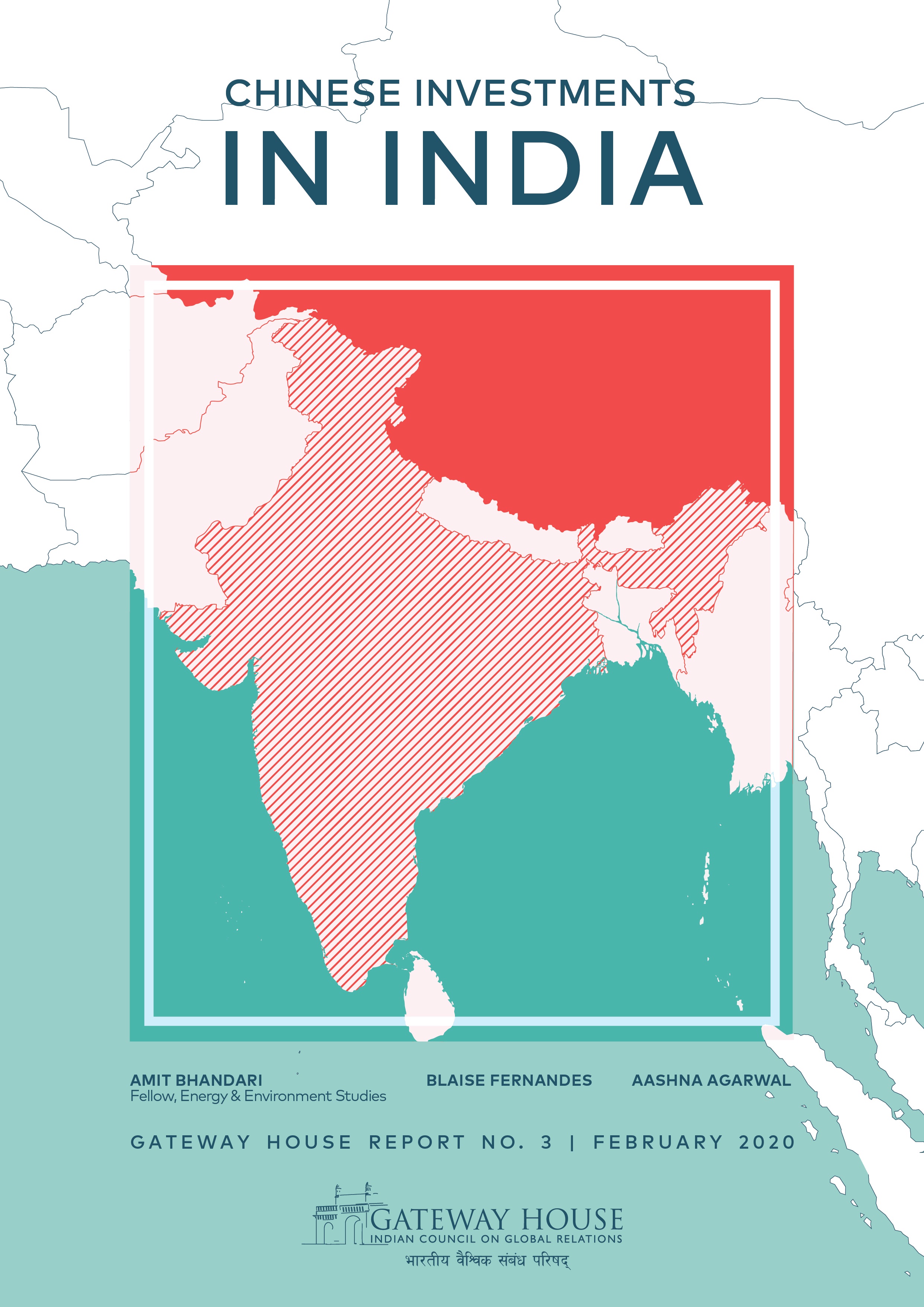
Over the last five years, China has quietly created a significant place for itself in India – in the technology domain. While India has refused to sign on to China's Belt and Road Initiative (BRI), this report shows India's positioning in the virtual BRI to be strategically invaluable for China. Nearly $4 billion in venture investments in start-ups, the online ecosystem and apps have been made by Chinese entities. This is just the beginning; there is more to come.
 Courtesy: Gateway House
Over the last five years, China has quietly created a significant place for itself in India – in the technology domain. While India has refused to sign on to China's Belt and Road Initiative (BRI), this map shows India's positioning in the virtual BRI to be strategically invaluable for China. Nearly $4 billion in venture investments in start-ups, the online ecosystem and apps have been made by Chinese entities. This is just the beginning; there is much more to come.
 Courtesy: MEA/Flickr
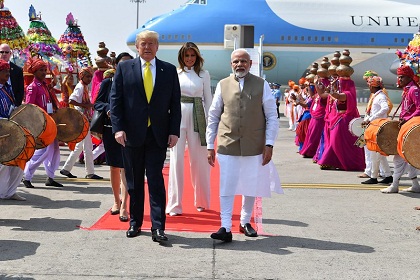
The outcome of the U.S. presidential elections could have a significant impact on the deepening Indo-U.S. bilateral. The partnership has grown substantially in the last two decades resulting in a deepening of economic and strategic relations. Defence dominates the strategic partnership and also stimulates the economic engagement. The newly signed BECA agreement is a testament to this. The next U.S. administration's policies will be critical for India, given repeated Chinese incursions into Indian territory on the Line of Actual Control at the border, the U.S.-China rivalry and China's ambitions to dominate Asia. Gateway House has an extensive repository of primary research, analysis and reporting on the Indo-U.S. bilateral, addressing issues such as trade, technology exchange and defence cooperation.
 Courtesy: MEA/Flickr
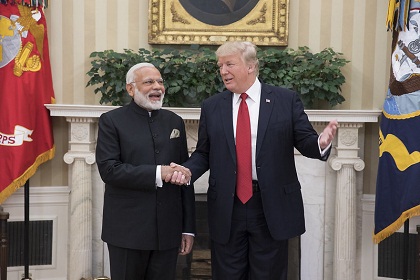
In the run-up to President Trump’s visit to India on 24-25 February 2020, Ambassador Neelam Deo, Director and Co-founder of Gateway House, discusses in this interview how he has made balanced trade a global issue, but given substance to the India-U.S. defence bilateral, sharpening the concept of the Indo-Pacific and the Quad’s profile