Koerber Stiftung (5) Courtesy: AFP
23 October 2025

India and Indonesia guide southern consensus

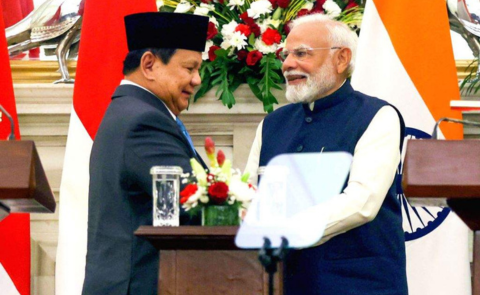
India and Indonesia sit at the heart of the Indo-Pacific, and participate  in multiple global and regional frameworks that ensure developing countries remain part of governance debates. The two countries can use these platforms to craft a southern consensus, a framework for cooperation that prioritises resilience, equality and cooperation over competition and coercion. This can reduce vulnerabilities among developing countries and strengthen them against future disruptions.

Koerber Stiftung (4) Courtesy: Gateway House
23 October 2025

Thai-Cambodia border resolution eludes ASEAN

The Thai–Cambodia border dispute, which erupted anew in July, is 70 years old, and there’s no resolution in sight. Both nations have differing political ambitions: Thailand seeks to reclaim former territories while Cambodia aims to retain its sovereign rights. This contestation requires a regional political resolution, but Malaysia’s ASEAN chairmanship failed to forge consensus. Can the new chair, the Philippines, resolve it?

Koerber Stiftung (3) Courtesy: Getty
16 October 2025

Labour Corridors: India-Russia’s Next Bet

The labour movement in the India-Russia corridor is a new element in the bilateral. It is already visible in the Delhi–Moscow flights. The usual students and tourists now share the cabin with welders, salon workers, and builders, many on their first overseas assignment. The trend signals a shift in Russia’s migration geography and opens a corridor linking India’s skill base with Russia’s industrial demand.

AFP (1) Courtesy: ANI
16 October 2025

Uncertainty around the Quad

The Quad summit is expected to be hosted by India in the second half of 2025, possibly in November. However, the grouping faces turbulence that transcends the current flow of India-U.S. relations. The relevance of Australia and Japan, too, needs to be factored in. Beijing considers the Quad as “the Asian NATO” that aims to contain China. Since the commencement of Trump 2.0, the grouping has been struggling to redefine its role and mandate.

Koerber Stiftung Courtesy: Koerber Stiftung
16 October 2025

Bandung at 70, still hopeful

While the Bandung Conference’s vision remains unrealised, its spirit can be an inspiration to reform and innovate in the international system as well as to ensure the survival of multilateralism – not only for today’s multi-aligned descendants of the conference participants but also for countries in Europe and beyond.

Screenshot 2025-10-13 103335 Courtesy: Körber-Stiftung
13 October 2025

Bandung at 70: Multilateralism in a New Era of Multi-Alignment

The world is facing multiple crises which are shaking the foundations of multilateralism. The West’s structures are faltering, and the need for effective and equitable cooperation is greater than ever. Seventy years after the 1955 Bandung Conference, its principles of sovereignty, territorial integrity, cooperation and solidarity remain vital. This report revisits Bandung’s relevance for today’s reform efforts, urging renewed Global South–Europe collaboration for a sustainable global future.

Website articles  (10) Courtesy: Metro Vaartha
9 October 2025

Unseen opportunities in UK-India trade

UK Prime Minister Keir Starmer is in India Oct 8-9, to discuss geopolitics with his Indian counterpart and also to boost bilateral trade. The UK-India Comprehensive Economic and Trade Agreement (CETA) signed in July 2025 marks a milestone in the relationship. The deal, however, omits reference to the creative industries which contribute significantly to UK GDP and play a vital role in the UK-India corridor.

The Tontine Coffee House Courtesy: The Tontine Coffee House
9 October 2025

Russia-America age-old energy rivalry in India

In the late 19th century, Bombay was a key import and transshipment port for Russian kerosene. The city’s market was dominated by the Russian product, with American kerosene in a distant second place. The jousting for Indian market share between the two nations unfolded amid geopolitical tensions between Great Britain and Imperial Russia – and gave the U.S. a decisive edge.

Ivan Courtesy: Gateway House
8 October 2025

Unfolding Geopolitics Episode 23 | India renews engagement with Afghanistan

Afghanistan’s Foreign Minister Amir Khan Muttaqi will visit India on October 10, marking the first high-level Taliban visit since the group took over Kabul in 2021. Nayanima Basu discusses the purpose of this visit and the importance of engagement with Afghanistan. She explains the roles of China, which seeks business; Pakistan, which pursues political interests; and the U.S., which has a renewed interest in Bagram Air Base and its return to the country it abandoned.

Koerber Stiftung (2) Courtesy: IndoIndians
6 October 2025

The unbreakable Indonesia-India bond

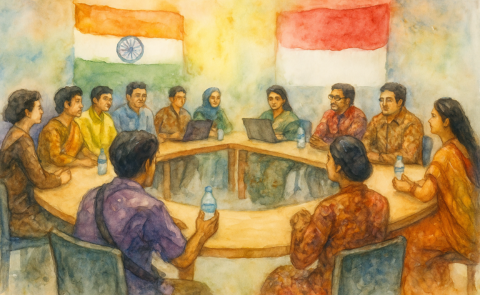
India and Indonesia are bound by history, culture, trade, and shared values. Their relationship must now add a new dimension — higher education and research. Both nations have long relied on outdated Western models. With a tech-savvy generation and receding colonial memory, the two largest democracies must build research bridges and empower students to become the leaders, innovators and humanitarians of tomorrow.