India-Japan: opposites that attract
The reason for the two countries’ continued good relationship? They share strategic interests and universal values even if they have divergent ways of thinking

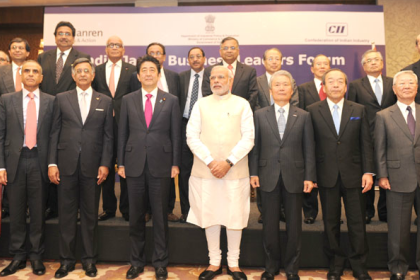 Courtesy: PM India
The reason for the two countries’ continued good relationship? They share strategic interests and universal values even if they have divergent ways of thinking
 Courtesy: MEA Flickr
The imperative for India to move away from its non-aligned posture is now, especially if it wants to be consequential in the global reordering underway. This will play out in the contention between the U.S. on one side, and China and Russia on the other.
 Courtesy: Sputnik News
Speakers at the seventh Atlantic Dialogues, held in Morocco earlier this month, discussed what the challenge to western dominance and China’s expansionism meant for their political and economic future
 Courtesy: Gateway House
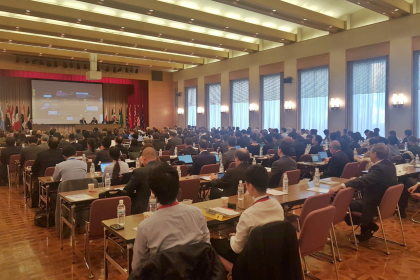
The Think20 Inception conference, held in Tokyo on December 4-5, 2018, kicked off the research process for 2019 for the leading think tanks from G20 countries that work on issues of global economic governance. The author participated in the conference as an observer.
 Courtesy: MEA Flickr
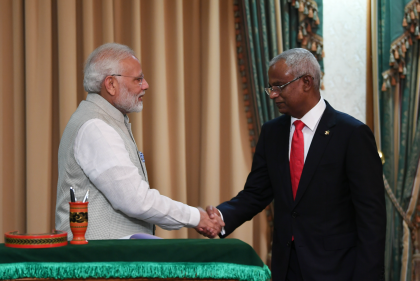
Maldives president Mohamed Solih comes to India this week, fresh from his election win and with a host of good intentions. His aim is to recast the bilateral and restore balance in Maldives’ external relations after the previous president’s China-centric leanings. Such a reversal may not emerge instantly
 Courtesy: Nikkei Asia
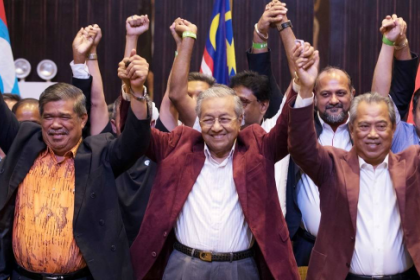
Six months after Malaysia’s parliamentary elections, its domestic affairs are still untidy. The government is combating corruption, but not bringing in constitutional reform. A successor’s name is not emerging clearly either. But Prime Minister Mahathir Mohammad’s foreign relations priorities – principally, Japan and China – are in order
 Courtesy: India Times
The recent opening of the Kartarpur corridor in Punjab and the release of a Canadian parliamentary report on the security breach during Prime Minister Justin Trudeau’s India visit are important developments. They present a good opportunity for New Delhi to step up cooperation with Ottawa on countering terrorism and violent extremism
Academic and columnist M.D. Nalapat, in this interview with Manjeet Kripalani, speaks of how a tardy bureaucracy has brought about “a too-cautious” policy towards the U.S. and China as opposed to the former Gujarat chief minister’s greater openness in consulting people before handing over policy implementation to the bureaucracy. He also discusses the prime minister’s shrewd approach to South Asia, the dependable warmth of the Japanese and a range of other topics
 Courtesy: Foreign Affairs
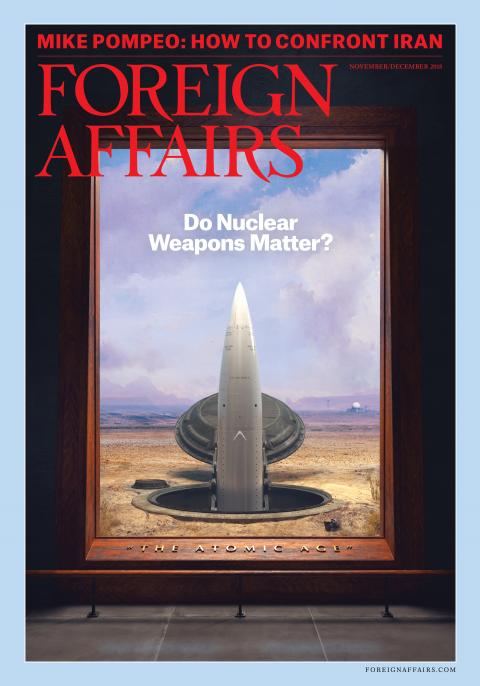
Experts estimate the likelihood of a U.S.-Chinese nuclear crisis as “somewhere between nil and zero.” This assurance is misguided. The United States' signature approach to conventional warfare would be a potential recipe for nuclear escalation.
 Courtesy: NTNU
The emergence of the Fourth Industrial Revolution depends on the availability of rare- earth minerals, which occur extensively on the ocean floor of the Indo-Pacific. The technology to exploit this is available only to some countries currently: the global agreement on this must be fair and safeguard India’s future interests, says the author of this blog