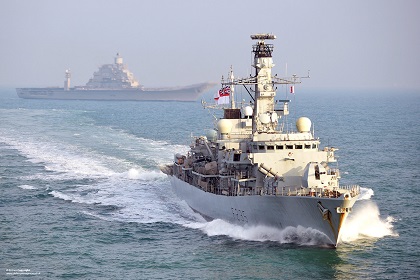
HMS Monmouth is pictured with the Indian aircraft carrier INS Vikramaditya during the vessels transit through the English Channel.

The 4,900 tonne frigate met up with the newest Indian aircraft carrier  – weighing in at a massive 45,000 tonnes and helped her safely through the busy English Channel.
 
Originally built for the Russian Navy as a modified Kiev class aircraft carrier, called Baku in 1987, India procured her in 2004 and she was accepted by the Indian Navy in a commissioning ceremony in November 2013.  

Following successful sea trials in July 2013 and aviation trials in September 2013 the carrier began her long journey to her new home of India escorted by auxiliary INS Deepak and Talwar class frigate INS Trikand.


-------------------------------------------------------
© Crown Copyright 2013
Photographer: LA(PHOT) Dean Nixon
Image 45156377.jpg from www.defenceimages.mod.uk Courtesy: South Asian Voices
6 April 2023

The U.K.’s Indo-Pacific push

The UK has been admitted to the Comprehensive and Progressive Agreement for Trans-Pacific Partnership or CPTPP, a significant step forward for its efforts in achieving its Brexit goals. The benefits will be more strategic than economic, as it gives the UK a place in the new ‘Atlantic-Pacific’ region.

cc 2 Courtesy: Shutterstock
27 July 2022

Climate Change, the convenient culprit

Unusual rains or snow? Flooding? Drought? It seems that climate change alone is to blame for any anomaly taking place anywhere in the world, be it hydrometeorological or anthropogenic. It’s a convenient culprit for besieged leaders seeking to escape responsibility towards their citizens, and it undermines the scientific evidence of climate change.

matsya Courtesy: Times of India
23 December 2021

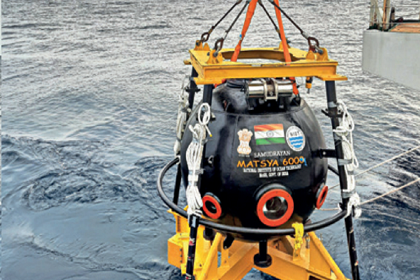
India’s Deep Ocean Mission for innovation

In 2021, India expedited budgetary clearances to activate its Deep Ocean Mission. Most mission projects are currently confined to the network of institutions operating under the Ministry of Earth Sciences. To truly shine, they must follow the model of developed economies where ocean innovation clusters are public-private partnerships, to focus on attaining India’s strategic objectives.

AUKUS spurs EU's Indo-Pacific ambitions Courtesy: EuroNews
25 November 2021

AUKUS spurs EU’s Indo-Pacific ambitions

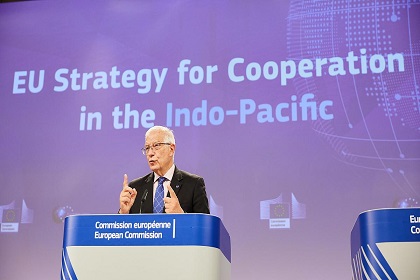
The news of the EU's much-awaited Indo-Pacific strategy was overshadowed by the Australia-UK-U.S. military alliance, AUKUS. Eight weeks later, tempers are cooling off as the U.S and EU signed agreements at COP26. So, are transatlantic good times back on track? Has AUKUS put a permanent spanner in the wheel of the EU’s Indo-Pacific outreach?

virgin spaceport Courtesy: UAE Space Agency
18 November 2021

UAE: Aerotropolis to Astropolis

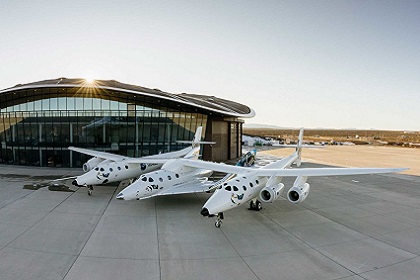
After successfully developing Dubai and Abu Dhabi as aerotropoli or cities around an aviation hub the United Arab Emirates aims to become an astropolis, a hub of space tourism and human spaceflight. There is ample scope for UAE to cooperate on this with India, which is also its comprehensive strategic partner.

Portuguese string of ports Courtesy: Diu Vanza Darji Samaj UK
28 October 2021

The Portuguese string of ports

Five hundred years before the ‘string of pearls’ or strategic naval bases surfaced as part of China’s global dominance plan, Imperial Portugal was a naval power which tried to impose its hegemony over vast swathes of the Indian Ocean. What informed this grand vision of a 16th-century Portuguese seaborne empire?

The Bay of Bengal: The next battle Courtesy: Shutterstock
28 October 2021

Bay of Bengal: Building tech connectivity

The Bay of Bengal is a natural bridge between South and South-East Asia, which New Delhi seeks to optimise. But progress on India's Act East policy has been slow, creating a space for China's Belt and Road Initiative to step into. While India cannot match China’s cheque-book diplomacy, it can use its start-up industry to pursue a combination of physical, technological and financial projects to improve regional connectivity.

resized final mint Courtesy: Shutterstock
4 February 2021

A space sector bull run

The maturing private space sector in the U.S. has learned to raise money from the market in the form of sectoral equity-traded funds. Such financing mechanisms will keep the U.S. ahead in the global space economy, which is slated to grow manifold from $430 billion now to $4 trillion by 2040. India's fledgling private space ecosystem, financiers, and stock exchanges can learn from the U.S. and do the same for India's newly reformed private space sector.