A world of uncertainties & unease
Speakers at the seventh Atlantic Dialogues, held in Morocco earlier this month, discussed what the challenge to western dominance and China’s expansionism meant for their political and economic future

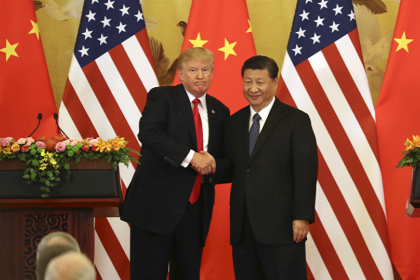 Courtesy: Sputnik News
Speakers at the seventh Atlantic Dialogues, held in Morocco earlier this month, discussed what the challenge to western dominance and China’s expansionism meant for their political and economic future
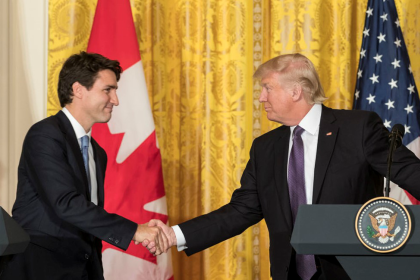 Courtesy: Wikimedia Commons
The United States, Europe and the Asia Pacific today form Canada’s tripartite foreign policy priorities. The ASEAN is its sixth largest partner, which was not so 20 years ago, but economic engagement with India – still small, compared to China and Japan – has scope to grow
 Courtesy: IIM, Indore
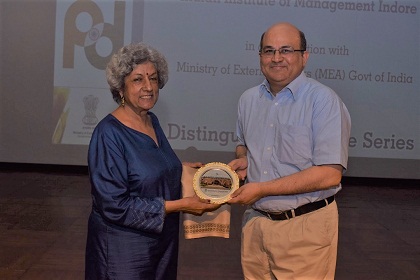
The world order that came about in the aftermath of World War II was a western-oriented construct that has become obsolete in many ways. The changes underway offer India an opportunity to participate in the crafting of political and economic institutions that are more pertinent to the emerging geopolitical equations
Courtesy: IIM, Indore
This speech was delivered at ‘Industry Meet 2018’, organised by the Indian Institute of Management, Indore, in collaboration with the Ministry of External Affairs, Government of India, on 7 July 2018
 Courtesy: U.S. Department of State/ Flickr
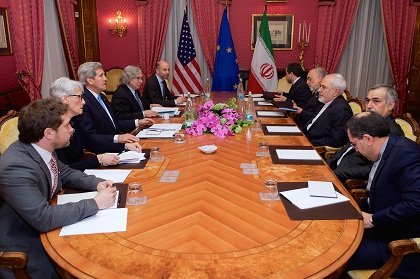
Scrapping the JCPOA will badly bruise Iran’s economy, citizens and foreign relations; it will have an impact on the U.S.’ allies too
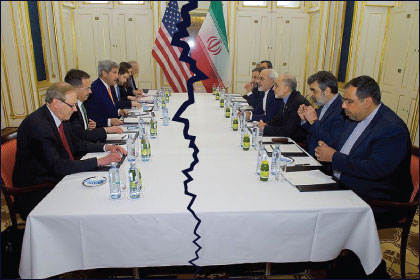 Courtesy: Gateway House
India may end up being the unintended victim of renewed U.S. sanctions on Iran. It will push up the price of oil and cost India billions of dollars annually
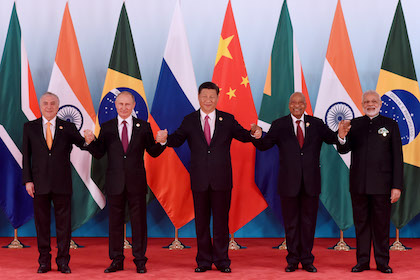 Courtesy: Government of South Africa/ Flickr
Internal political constraints dog it currently, but if overcome, South Africa can be a good chairman to BRICS and IORA in 2018. It also has a tough balancing act to perform between two great Asian powers, China and India
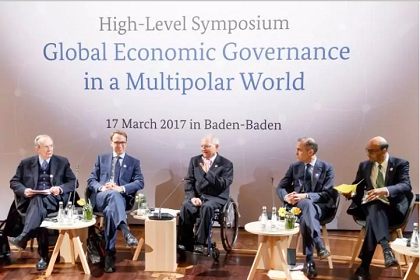 Courtesy: The Telegraph
President Trump’s “America First” rhetoric has eroded support for the commitments that leaders made at previous G20 summits regarding trade: rejecting protectionism and strengthening the multilateral trading system. What implications does this have for global trade? Will the more moderate voices in the administration get heard?
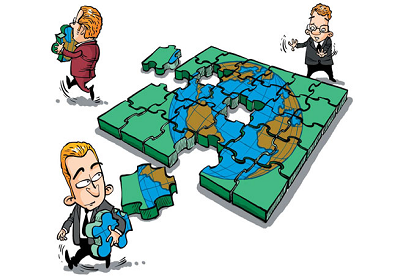 Courtesy: Systemic Alternatives
The contours of globalisation are being reshaped. The Brexit vote and the election of Donald Trump mark a strong anti-globalisation sentiment even as leaders in China, India and Russia successfully marry nationalist rhetoric with a cleverly crafted overseas strategy, premised on the very tenets of globalisation. There seems to be a ‘pause’ in the unbalanced progress of globalisation of the last three decades—and this could have many positive outcomes
 Courtesy: Gateway House
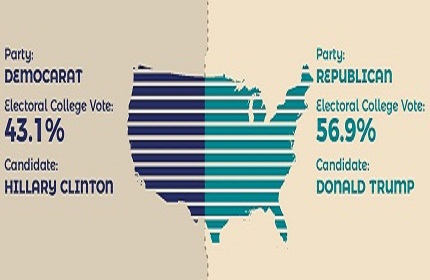
The year 2016 is the year of the divided electorate, so close were some of the election outcomes. Deep divisions lurk within voters coming from ostensibly “liberal” political cultures. The trend looks set to continue in the elections that will be fought in dozens of countries in 2017, where the votes could also be divided. Gateway House analyses these results through this infographic