rk (3) Courtesy: Gateway House
9 April 2026

The future of Persian Gulf oil flows

Following the U.S.–Iran ceasefire and partial reopening of the Strait of Hormuz, energy flows may resume, but uncertainty persists. Robin Mills, CEO of Qamar Energy, and Amit Bhandari, Senior Fellow on Energy, Investments and Connectivity, Gateway House, note that Iran will retain leverage and will continue influencing prices and supply chains. Natural gas shortages will further disrupt fertiliser production and fuel inflation world-wide.
Website articles  (52) Courtesy: AFP
9 March 2026

Iran regime change unlikely

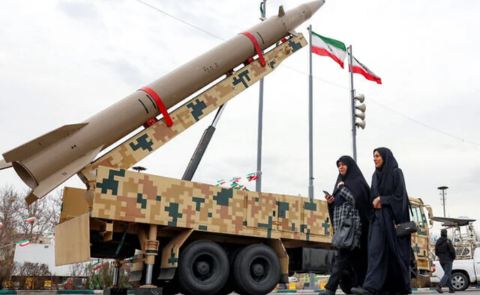
The U.S.–Israel war against Iran will alter the geopolitical landscape of West Asia and adversely impact the global economy, including India. Vali Nasr, Majid Khadduri Professor of International Affairs and Middle East Studies at Johns Hopkins University School of Advanced International Studies, analyses the conflict and its implications in an exclusive conversation with Nayanima Basu.

Website articles  (11) Courtesy: Shutterstock
5 March 2026

West Asia conflict: who benefits?

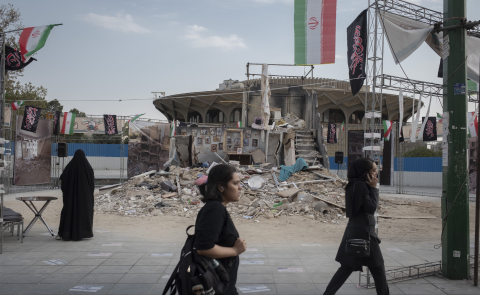
The U.S. and Israel launched precise airstrikes on Iran, targeting nuclear facilities and senior leadership. Their aim is to weaken Iran’s nuclear programme and potentially induce regime change, while Tehran’s priority remains regime survival. The conflict’s duration will depend on whether it remains limited to missile exchanges or escalates into asymmetric warfare.

Website articles  (51) Courtesy: Gateway House
4 March 2026

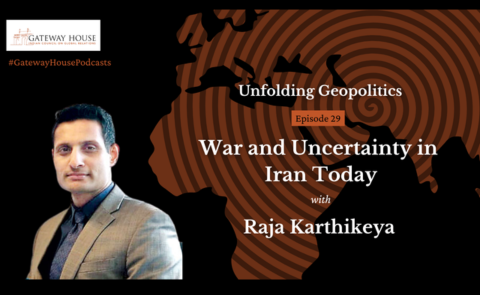
Unfolding Geopolitics Episode 29 |War and uncertainty in Iran today

The assumption that the Iranian public will rise up against its religious and political leadership, seizing the opportunity provided by Israel and U.S. strikes against Iran, may not prove true. Iran’s civilisational structure is resilient, and its educated population may not like being dictated to by the West. Raja Karthikeya, a former international civil servant based in Tehran, examines the escalating U.S.-Israel conflict with Iran, its regional and domestic implications and the tenacity of Iran’s political system amid external pressure.

Latin-America-gaza Courtesy: news.yahoo.com
5 August 2014

Latin America takes a stand

The sharp Latin American response to the Israeli bombings in Gaza, on the back of solid support from the U.S., is attributable to the memory of the atrocities committed by past Latin American military dictators with similar U.S. backing. Their strong response is also a sign of the increasingly independent and assertive Latin American voice on the global stage

Global Stability Map Courtesy: Gateway House
1 August 2012

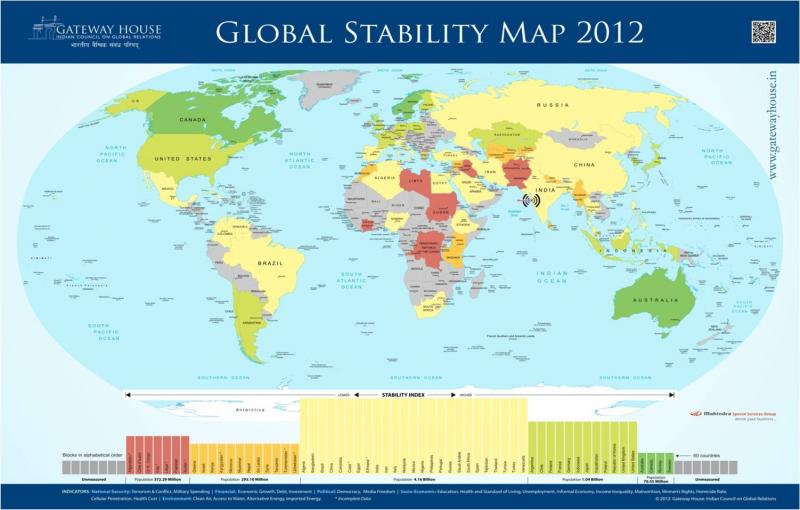
Global Stability Map 2012

Gateway House prepared a Global Stability Map, using 20 differing indicators, to analyze the stability of 60 countries around the world. Using criteria that are important to the emerging economies of the world, the map provides an Indian perspective of the world today.

anna hazare 2 Courtesy: nazeah/Wikimediacommons - Ramesh Lalwani/Flickr
30 December 2011

2011’s Top Foreign Policy Cheers and Jeers

The year 2011 saw various events - the Arab Spring, anti- corruption protests, Europe's sovereign debt crisis - transform countries and reshape the world order. Gateway House takes a look at what these events mean for India, and presents India's top foreign policy cheers and jeers for the year.

the latin road to arab democracy Courtesy: JonathanRashad/Flickr
17 June 2011

The Latin road to Arab democracy

As the Arab world remains engulfed in protests, there may be lessons to be learned from other recent democratic converts. Latin America’s growth story may provide the Arab world with some recommendations on how to address socio-economic issues in the post-revolution scenario.