IMG_6681 - Copy Courtesy: Gateway House
12 July 2018

China’s focus on stability

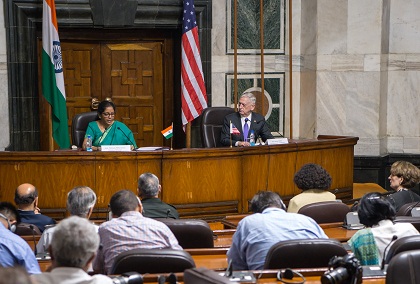
Yuan Peng, Vice President, and Dr. HU Shisheng, director, respectively of the Institute of South & Southeast Asian and Oceanian Studies, China Institute of Contemporary International Relations, Beijing, spoke to Gateway House about working towards ‘the final goal of denuclearisation’, India-China relations since the Doklam stand-off and addressing security concerns raised by the Belt and Road Initiative
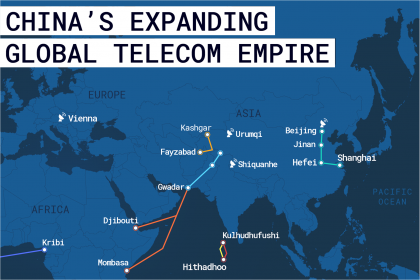
CableMap-web Courtesy: Gateway House
5 April 2018

Version 1: China’s strategic edge in covert communications

China is steadily deploying state-of-the-art communications systems to connect its strategic and economic assets in Asia. It is then linkingthe Asian mainland to Africa, and Africa to South America. The investment spree is rapidly making Beijing a major player in global telecommunications – and ‘informationisation warfare’.

President Trump addresses nation on South Asia strategy Courtesy:
31 August 2017

Trump’s Af policy: too late for impact?

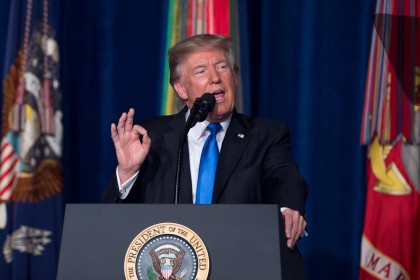
In yet another policy flip, U.S. President Trump announced a new strategy for Afghanistan and South Asia. While committing more troops to the region, he called out Pakistan as a 'safe harbour' for terrorism and called on India to do more. Ambassador Neelam Deo, Director at Gateway House, joins us to discuss the implications of this new direction and what it means for India.

GH_GeoeconomicPushback Courtesy: Gateway House
10 August 2017

Geoeconomic pushback to China

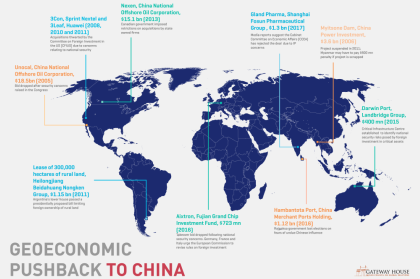
The Indian government may block the acquisition of Gland Pharma by Shanghai Fosun Pharmaceuticals, a move that offers further confirmation of how China’s opaque business model is causing concern worldwide. This infographic shows some high-profile cases of acquisitions by Chinese companies that ran into local opposition

indias-global-energy-footprint Courtesy: Gateway House
14 February 2017

India’s global energy footprint

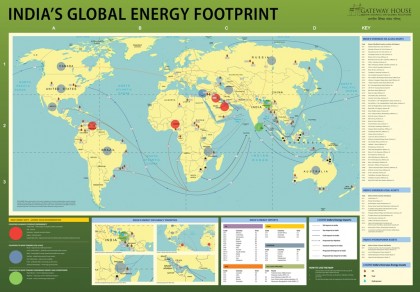
Trends in technology, geopolitics and geoeconomics have dramatically transformed the global energy scenario in the last two years. This means favourable conditions for import-dependent India, which must use the opportunities available to reduce its vulnerability to high energy prices. The jump in oil prices past the $60 mark suggests that India must act with alacrity. India’s Energy Footprint Map offers a profile of India’s global trade and investment in energy, and indicates what India can do to access cheap and reliable supplies