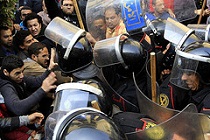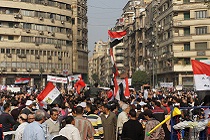
egypt Courtesy: oxfamnovib/Flickr
18 July 2013

Protests in democracies – patterns and problems

Elections are meant to be a suitable recourse in democracies if citizens feel that the government does not represent them. However, the recent protests in Brazil, Turkey and India show that people feel political classes are too far removed from their every day realities to address their grievances

Brazil Protest by Semilla Luz Courtesy: Semilla Luz/ Flickr
2 July 2013

Brazil, Turkey, Occupy and India: What’s up folks?

The protests in Brazil, Turkey, Egypt and India are bound by a common thread of grievances against misuse of government power and corruption. These modern protests show a marked decline in government trust, even though may not always have clear objectives

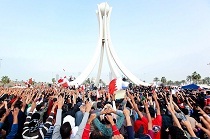
Bahrain Activist/WikimediaCommons Courtesy:
8 February 2013

India navigates the Arab Uprisings

The Arab uprisings show no sign of closure, and have become amorphous. While New Delhi has so far been immunised from the political and religious dimensions of the uprisings, the rise of political Islam, Islamic governance, and continuing instability will impact India.

Www.Oic-Oci.Org Courtesy:
23 January 2013

India and the OIC: To join or not to join?

India’s relations with Islamic nations, many of which are members of the Organisation of Islamic Cooperation (OIC), have become even more prolific over the last decade. While India does not visualise becoming a member of a religious international body, many reasons militate against our formally joining the OIC.

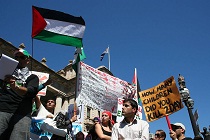
West Asia Courtesy: takver/WikimediaCommons
3 December 2012

Prioritizing West Asia

India is tied to West Asia by economic, religious and political threads. The ongoing social and political flux in the region can have adverse consequences for India and requires a serious rethink of its foreign policy priorities. How can India insert itself usefully into this geopolitical cauldron?

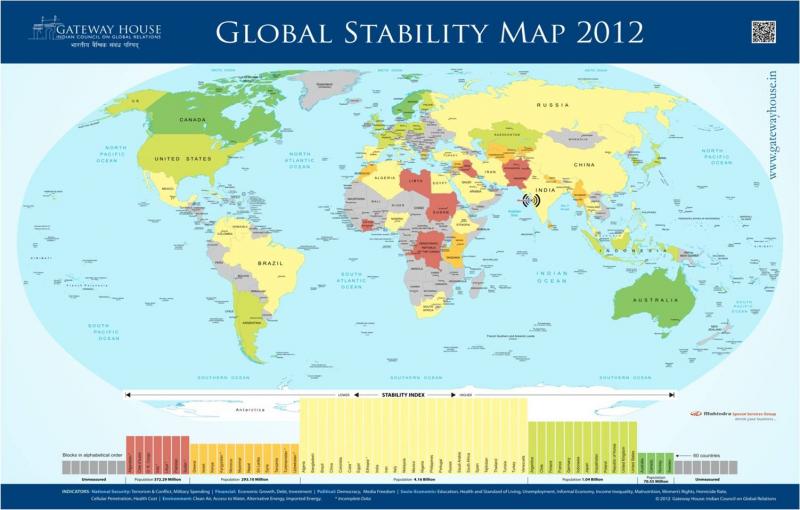
Global Stability Map Courtesy: Gateway House
1 August 2012

Global Stability Map 2012

Gateway House prepared a Global Stability Map, using 20 differing indicators, to analyze the stability of 60 countries around the world. Using criteria that are important to the emerging economies of the world, the map provides an Indian perspective of the world today.

ambassador abhyankar interview Courtesy: Gateway House
8 June 2012

“We are not in the business of ‘civilizing’ nations”

Over the past year, there has been a drastic change in the political scenario in Syria, which is now engulfed with violent sectarian conflict. Gateway House speaks to former Indian Ambassador to Syria, Rajendra Abhyankar, about the changing political scenario and the implications of the ongoing conflict in Syria.

IMG_4820 Courtesy: Gateway House
20 April 2012

Deciphering today’s Middle East

What are the implications for India if Iran is attacked? How effective has the response been by gulf nations to their own protests? Ambassador Talmiz Ahmad, India’s former Ambassador to Saudi Arabia, discusses the dynamics of West Asia with Gateway House’s Alisha Pinto and Azadeh Pourzand.

Courtesy: IAEA Imagebank
9 April 2012

Iran: An opportunity for BRICS

The scope for any process on nuclear talks with Iran to founder on distrust, misunderstanding and political in-fighting in both Tehran and Washington remains formidable. Equally disturbing are the wider political realities. Can the upcoming talks in Istanbul launch a process that can, over time, lead to agreement?