Why India matters
It is time to dust off those preconceived notions about India as dirty and poverty stricken. Investing in India makes a sound Asia-strategic sense when coupled with China.

 Courtesy: Asia Briefing
It is time to dust off those preconceived notions about India as dirty and poverty stricken. Investing in India makes a sound Asia-strategic sense when coupled with China.
 Courtesy: Newsdesk
Alongside the 2012 BRICS Summit in Delhi, this special publication is a collection of articles that addresses important issues of the global agenda, the priorities of BRICS, the policies and competitive advantages of the participants, as well as BRICS institutionalization.
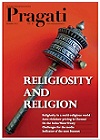 Courtesy: Pragati
Indo-Pak hydro-politics must evolve from endless debates over ‘water division’ and Run-of-River dams to more sustainable efforts like demand management, resource sharing and disaster management.
 Courtesy: India Briefing
Amendments in India's Industrial Policy has brought reduction in the number of industries reserved for public sector. The policy focuses on deregulating the Indian industry and providing it with more freedom and flexibility and facilitating growth within the country’s industry.
 Courtesy: Foreign Affairs
As Indonesia hosts a number of high-level summits this year, it looks set to take its place among the world’s economic superstars. But celebrations are premature: although Indonesia has made great strides, its gains are reversible. To continue to prosper, Jakarta must address rampant corruption and poor governance

India and the United States have grown close very quickly over the last decade. Their commitment towards the war on terror, pursuit of joint energy security, and the prevention of the proliferation of nuclear weaponry are some on a long list of common goals.
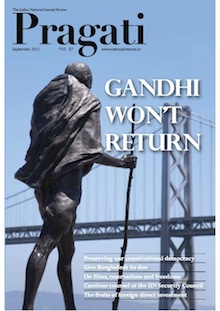 Courtesy: Pragati
India has pursued a careful, well-thought out policy to prove that it can be a responsible permanent member on the UN Security Council.
 Courtesy: Pragati
Both Tokyo and New Delhi see each other as reliable partners, and continue to do so after the Japanese earthquake and nuclear disaster. The Japan-India relations in the post-disaster environment must be understood in terms of humanitarian, economic and strategic dimensions.
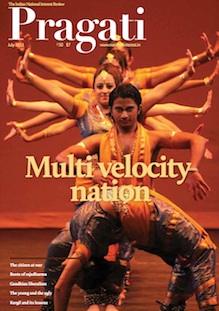 Courtesy: Pragati
On May 1998, as India declared itself as a nuclear weapons state, it also committed its nuclear program to the No First Use of nuclear weapons policy. Consequently, the policy has been viewed as a democratic option, but what does this say about India?
 Courtesy: Pragati
The execution of Osama Bin Laden has led to a decline in international military presence in Afghanistan, opening the door for developmental agencies and regional actors to play a more active role. Can India take advantage of this critical juncture and work towards achieving peace in Afghanistan?