A futuristic agenda for India & Canada
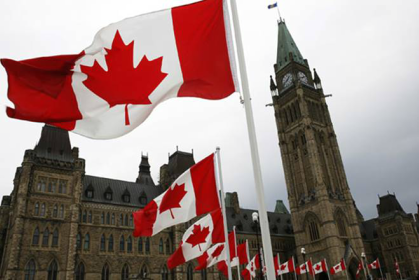
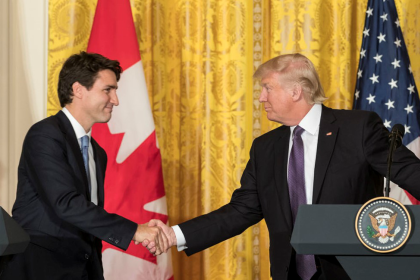
India can draw Canada in a new direction – away from its trans-Atlantic fixation, into the Indo-Pacific and a tech and resources partnership that will benefit both democracies

 Courtesy: Financial Express
India can draw Canada in a new direction – away from its trans-Atlantic fixation, into the Indo-Pacific and a tech and resources partnership that will benefit both democracies
 Courtesy: Wikimedia Commons
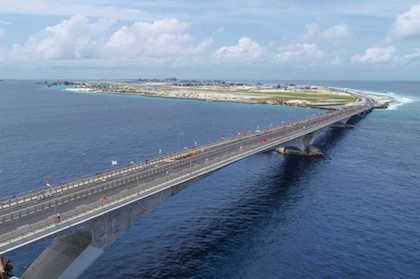
The United States, Europe and the Asia Pacific today form Canada’s tripartite foreign policy priorities. The ASEAN is its sixth largest partner, which was not so 20 years ago, but economic engagement with India – still small, compared to China and Japan – has scope to grow
 Courtesy: Competitive India
'Strategic OFDI’ is outward foreign direct investment made by nations in their strategic interests. China leads the way, but the U.S. has also just announced a new agency for strategic OFDI. It will now gain increasing salience in global foreign policy.
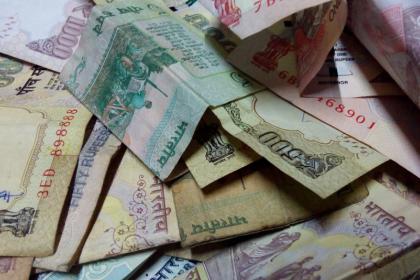
Economist Surjit S. Bhalla, who sits on the Prime Minister’s Economic Advisory Council, says all currencies, not just the rupee, have fallen against the U.S. dollar. Speaking to Gateway House’s Manjeet Kripalani, he elaborates on some diplomatic and domestic tools to stem the fall, even in an election year
 Courtesy: Gateway House
America is increasingly using sanctions as a geopolitical tool against its rivals, Russia, Iran and Venezuela. These countries are important partners for India, which needs to find ways around unilateral American sanctions.
 Courtesy: Zee News
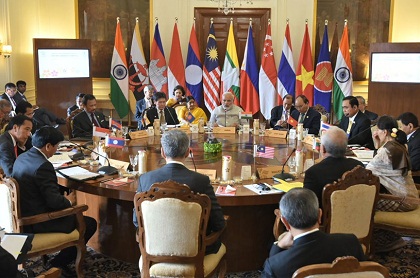
Indonesia and Malaysia appreciate India’s leadership role in the Indo-Pacific, but are also aware of all that keeps it from delivering on its commitments. A policy visit to the two countries enabled a closer look at some key issues, such as ASEAN’s centrality, the Quad and India’s stand on the Regional Comprehensive Economic Partnership
 Courtesy:
Our Director, Amb. Neelam Deo, was interviewed by Energy Intelligence for an article “India: Walking a U.S.-Iran tightrope”. “By cutting imports, India has demonstrated that it is willing to work with the US, but it can’t completely stop buying from Iran,” Neelam Deo, director Read more
 Courtesy:
The postponing of high level ‘2+2′ talks are setbacks, but they could be temporary, said our security expert Sameer Patil in an interview with The Wall Street Journal’s South Asia Bureau Chief, Bill Spindle. Read the full article here.
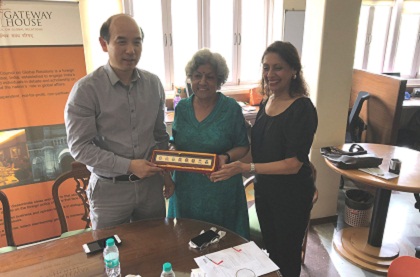
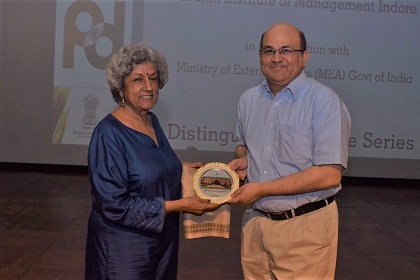
Yuan Peng, Vice President, and Dr. HU Shisheng, director, respectively of the Institute of South & Southeast Asian and Oceanian Studies, China Institute of Contemporary International Relations, Beijing, spoke to Gateway House about working towards ‘the final goal of denuclearisation’, India-China relations since the Doklam stand-off and addressing security concerns raised by the Belt and Road Initiative
 Courtesy: IIM, Indore
The world order that came about in the aftermath of World War II was a western-oriented construct that has become obsolete in many ways. The changes underway offer India an opportunity to participate in the crafting of political and economic institutions that are more pertinent to the emerging geopolitical equations